CastleFürstenwalde

Old Bischofsschloss (Fürstenwalde)
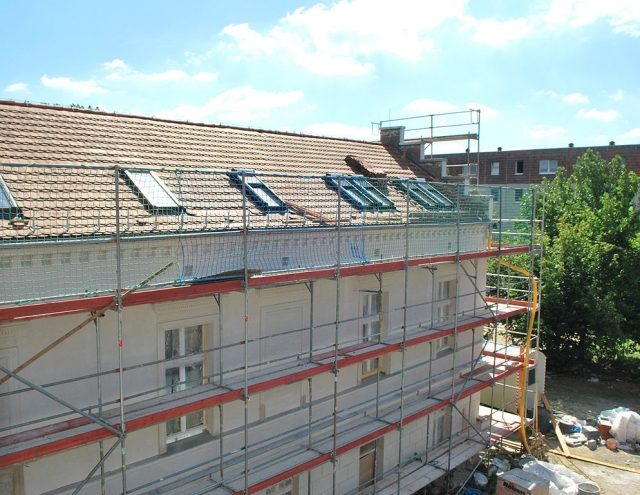
Old Bischofsschloss (Fürstenwalde)

Cultural Events

Restaurant

Apartments

The Bishop's Castle Fürstenwalde, also known as Bishop's Castle, is located in the center of the city of Fürstenwalde/Spree opposite the cathedral. After years of decay, it has been undergoing renovation since January 2011.

After its founding in the 14th century, Fürstenwalde quickly developed into one of the wealthiest cities in the Margraviate of Brandenburg. The earliest references to Fürstenwalde Castle date back to 1365. The bishop's seat at that time was still Lebus. After the destruction of Lebus Cathedral, the cathedral chapter decided in Frankfurt in 1373 to move the bishop's seat to Fürstenwalde. The resolution describes the new seat as "the pleasant and populous city of Fürstenwalde, strongly and well-equipped with walls, towers, fortifications, and moats." Twelve years later, the Pope gave his approval.

The first Bishop of Fürstenwalde, Johann V. (von Borschwitz), appointed by the Pope in 1397, expanded the castle. He became known for vehemently advocating for the condemnation of the pre-reformer Jan Hus. The Taborites, a radical wing of the Hussites, also attacked Fürstenwalde during their campaigns, destroying and plundering the cathedral. In 1446, the reconstruction of St. Mary's Cathedral began with its 68-meter-high tower.

During the Reformation, there were several years of disputes between the bishop and the Protestants. Georg von Blumenthal, appointed Bishop of Lebus in 1524, particularly fought against the Reformation. In 1528, he narrowly escaped an attack by Brandenburg nobles on the episcopal castle. The attackers plundered the castle, cathedral, and city. Martin Luther disapproved of this attack. The nobility increasingly tended towards the Protestant faith or at least tolerated it. Thus, Protestants were also allowed to preach in Fürstenwalde, initially in the Heiligengeistkirche, and since 1567 also in the cathedral. The bishop and the canons increasingly lost their influence and renounced their estates in favor of a life annuity.

Princely officials then administered the estates of the diocese, with the Bishop's Castle serving as the seat of such a domain office. In 1576, it burned down and was subsequently only poorly maintained.

The main part of the actual castle disappeared around 1850. In its place, a factory building was erected, which initially served as a brewery, later as an oil and edible fat factory. After the First World War, the building was initially a department store; between 1947 and 1990, it housed storage and administrative rooms for the State Wholesale Trade of the GDR. After the fall of the Berlin Wall, the sculptor and ceramist Friedrich Stachat took on the factory building and, together with the cultural association and the city, developed the current cultural center.

After the demolition of the actual castle, a castle-like building component remained. It was located directly on the moat as part of the old city fortifications. The small windows facing the moat, still visible in a photograph from the late 19th century, document its fortress character. Further evidence of the building's function includes parts of the old city wall on the property and the "Weichhaus" (a half defensive tower), which is to be partially re-excavated. The old moat disappeared due to backfilling only in the 1960s. Another sign of the building's former purpose is the tower base, which can still be recognized by a circular room in the cellar.

The building initially belonged to the factory, then was converted into a residential house in 1891. Another conversion, which created the 2nd upper floor - the tower - and presumably the stepped gables, took place in 1905.

The building was now called the "Apothecary's House," indicating its first user. During the expansion, extensions were built on the west and south sides, as well as large windows. The north tower must have been demolished long before and replaced by an extension of the living quarters on the ground floor.

After 1995, the city made efforts to address the increasingly dilapidated building and had the roof renewed. However, no possibility of use emerged. For a long time, the city considered whether the museum or a gallery should move in. The city then decided on the building of the former cathedral school as the seat for the museum. There was no money for an additional gallery. Thus, the Bishop's Castle was finally sold to a private individual. His renovation plans proved to be unfeasible, so he sold the building again in mid-2009.

Renovation of the Castle+

The new owners began renovating the building in 2011, which is being restored in the 1900 style with elaborate stucco. This will create four apartments, as well as a photo studio and a restaurant for locals and visitors, especially cycling tourists.

The historic vaulted cellar and the base of the former tower with its walls up to three meters thick will be authentically preserved and will serve for events in the future.

Take Mobile History with you

You are reading this text for free. Premium adds what matters on the road: descriptions read aloud, sites found through your camera, whole regions taken offline.

  • Every description, including the ~17,700 Premium sites
  • Audio guide: have descriptions read to you on location
  • AR finder: see sites through your camera, with distance and bearing
  • Unlimited saved sites

14 days free, then from €2.99 a month. Cancel anytime.

Source: Wikipedia · Licence: CC BY-SA 4.0

This description draws on the facts documented in the linked Wikipedia article; Wikipedia content is licensed under CC BY-SA 4.0. Wording and editing: Mobile History.

Location: 52.3576, 14.0665