The remains of the roman Arena can be visited
Ancient BuildingRoma
Amphitheatrum Castrense
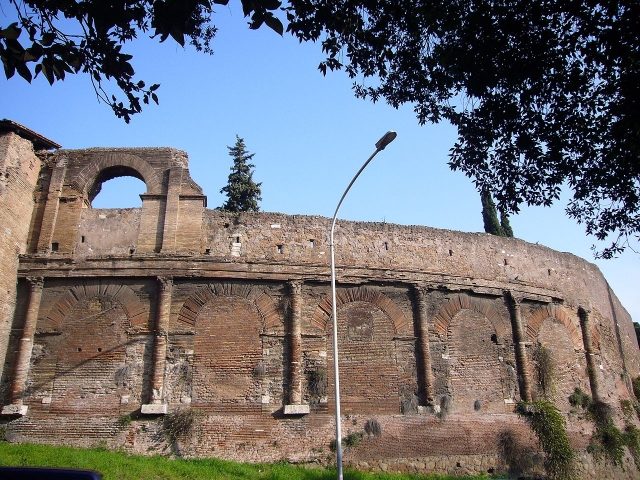
The Amphitheatrum Castrense in Rome is, alongside the Colosseum, the only surviving amphitheater in the city. It is distinguished by its construction from fired bricks and was once part of an imperial palace complex.
History+
The construction of the amphitheater is dated to the first half of the 3rd century AD, likely under Emperors Elagabalus and Alexander Severus. It was built in the gardens of the Varii family, which later came into imperial possession and were expanded into the Sessorium, an imperial palace. The amphitheater, with its approximately 3500 seats, served the imperial court. In the 16th century, Pope Paul IV had the upper stories dismantled to use the remaining wall as a defensive structure. Under Emperor Aurelian, the amphitheater was integrated into the Aurelian Walls, which encircled Rome.
Want to learn more about this site?
The full description is available with Premium — plus offline packages, audio guide and high-resolution images.
- Every description, including the ~17,700 Premium sites
- Audio guide: have descriptions read to you on location
- AR finder: see sites through your camera, with distance and bearing
- Unlimited saved sites
14 days free, then from €2.99 a month. Cancel anytime.
Already Premium and still locked?
Sign-in works per address. On mobilehistory.app you need to sign in once separately — your Premium then applies here too.
Sign in →Source: Wikipedia · Licence: CC BY-SA 4.0 · Image: http://de.wikipedia.org/wiki/Datei:Esquilino_-_Anfiteatro_Castrense_1000921.JPG
This description draws on the facts documented in the linked Wikipedia article; Wikipedia content is licensed under CC BY-SA 4.0. Wording and editing: Mobile History.
Location: 41.8878, 12.5151