To be privately owned
CastleBamburgh
Bamburgh Castle
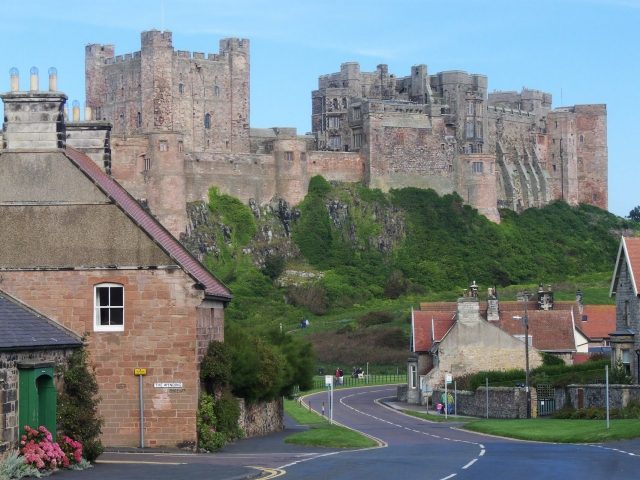
On a basalt outcrop on the Northumberland coast in England, Bamburgh Castle is situated. Its long history, stretching back to Anglo-Saxon times, and its architecture make it a historical structure.
History+
Settlement in the area around Bamburgh is presumed to date back to the first century BC. However, the castle's history truly began in 547, when the Anglo-Saxon King Ida of Northumberland, also known as Ida the Flamebearer, ordered the construction of an initial fortification made of wood and hedges. At that time, Bamburgh served as the capital of the Kingdom of Northumberland, which extended from the River Humber to the Firth of Forth. King Ida's grandson, Ethelfred, renamed the settlement Bebbanburgh in honor of his wife Bebba, from which the current name is derived. The castle's present structure partly originates from the Norman period. A feature is the large keep with its three to four-meter-thick walls, likely built under Henry II. The Normans were renowned for their fortress construction, and the castle withstood numerous attacks, including the siege of 1095 by William II and further assaults during the Wars of the Roses. In 1464, Bamburgh Castle, held by the House of Lancaster, was captured by Richard Neville, Earl of Warwick, and severely damaged by cannon fire, with only the Norman keep surviving.
Source: Wikipedia · Licence: CC BY-SA 4.0 · Image: Colin Jackson
This description draws on the facts documented in the linked Wikipedia article; Wikipedia content is licensed under CC BY-SA 4.0. Wording and editing: Mobile History.
Location: 55.6091, -1.7106