ChurchDresden-Briesnitz

Briesnitzer Church
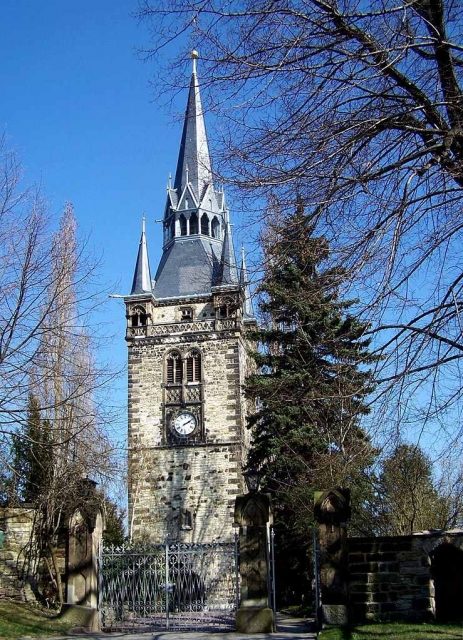
Briesnitzer Church

The church can be visited

The Briesnitz Church is a historic building in the Dresden district of Briesnitz. The house of worship, one of the oldest churches in the upper Elbe valley, is a protected monument.

First Church Building

The history of the Briesnitz Church dates back to the 11th century. The first simple chapel was probably built around 1050 on an elevation above the Elbe riverbank and was associated with the Briesnitz Burgward. Previously, there was likely a Slavic sanctuary at this site. The originally Romanesque building was one of the first early Christian churches in Saxony and played a major role in the Christianization of the upper Elbe region. The new church was consecrated to the Mother of God, Mary. In the course of increasing settlement in the region, Briesnitz became the seat of an archdeacon in the 12th century, who was responsible for ecclesiastical administration and jurisdiction. In the Middle Ages, a total of 26 surrounding villages were subordinate to the church, also using the adjacent churchyard as a burial ground.

In 1223, this church was destroyed during fighting over the Burgward. Some wall remains and foundations were incorporated into a barn building around 1550, which existed until the 18th century. In 1993, these were uncovered during road construction work and have since been visible as an archaeological monument directly next to Meißner Landstraße.

Second Church Building

In the middle of the 13th century, a new, larger church was built approximately 150 meters away, at the current location on a mountain spur, which, despite later structural changes, has largely retained its original form to this day. After the Christophorus Church in the Dresden district of Wilschdorf, it is the second oldest preserved sacred building in the city area. The oldest building components are in the Gothic choir, where a trefoil-shaped, tripartite east window can still be seen. The nave followed around 1470, and the tower was completed in 1502. After the Reformation, Briesnitz lost its function as an ecclesiastical center. The church was converted into an evangelical house of worship in 1539 and structurally altered. In 1602, a fire destroyed parts of the building and the tower, which received a new appearance with a Renaissance gable during reconstruction. In 1680, two galleries were installed in the nave. The tower and church were a popular motif for painters and draftsmen during the Romantic period. Depictions of the Briesnitz Church are known from Adrian Zingg, Caspar David Friedrich, Ludwig Richter, and Christian Friedrich Gille, among others.

Renovation in the 19th Century

In 1881/82, the parish decided on a complete renovation of the church in the Neo-Gothic style. The reason was significant structural defects in the roof truss and the tower. The architect Gotthilf Ludwig Möckel was commissioned with the renovation work. Möckel initially tried to convince the community to preserve the historically valuable tower, but without success. Ultimately, it was partially demolished and replaced in the upper part by a new construction with a Gothicizing spire and four smaller corner turrets. The painted wooden coffered ceiling with depictions from the Old Testament had to make way for the redesign of the nave. Some paintings were sold by the parish to the owner of the Tolkewitz dance hall "Donaths Neue Welt" and only returned to the Briesnitz Church in 1934. In place of the old coffered ceiling, Möckel installed a brick vault, and the interior was designed in the Neo-Gothic style. In the course of this renovation, the nave was raised by 1.80 meters. The consecration of the renovated church took place on April 16, 1882.

In 1897, the neighboring village of Cotta, and in 1912, other villages, separated from the Briesnitz parish and formed their own parishes. Since 2006, the Briesnitz Church has belonged to the newly formed Dresden-West parish. Extensive renovation work took place between 1979 and 1983 and again from 2007.

Furnishings+

Interior Furnishings

The Briesnitz Church has a number of artistically and historically valuable furnishings. The oldest is a trefoil-shaped choir window behind the altar, dating from pre-Reformation times. Also from around 1500 are a Mary window (now in the sacristy) and some wooden sculptures that once adorned a Mary altar. In addition, there are paintings of former pastors of the community. In the tower vestibule, some tombstones of earlier Briesnitz pastors, originating from the old churchyard, can be seen. A baptismal font was brought into the church in 1595. The pewter bowl in the baptismal font commemorates Pastor Dominicus Eber, who served from 1603 to 1647.

Organ

In 1622, the church received its first organ, a work by the organ builder Salomon Schmidt from Dippoldiswalde. In 1856, this was replaced by a new instrument from the organ building company Jahn. In 1995, Jehmlich Orgelbau Dresden installed a new organ into the historic organ case from 1882. It has 32 stops, two manuals, and a pedal division with mechanical action, as well as 2,315 organ pipes.

Bells

The three steel bells in the tower date from after the First World War and were cast in Lauchhammer. They replaced the earlier bronze carillon from 1602, which had to be surrendered for armaments purposes in 1917. Two of the bronze bells were melted down, the third was sold to the Greifendorf parish. In 1920, the Briesnitz parish acquired three new steel bells.

Take Mobile History with you

You are reading this text for free. Premium adds what matters on the road: descriptions read aloud, sites found through your camera, whole regions taken offline.

  • Every description, including the ~17,700 Premium sites
  • Audio guide: have descriptions read to you on location
  • AR finder: see sites through your camera, with distance and bearing
  • Unlimited saved sites

14 days free, then from €2.99 a month. Cancel anytime.

Source: Wikipedia · Licence: CC BY-SA 4.0 · Image: http://de.wikipedia.org/wiki/Datei:Dresden_Briesnitz_Kirche_4.jpg

This description draws on the facts documented in the linked Wikipedia article; Wikipedia content is licensed under CC BY-SA 4.0. Wording and editing: Mobile History.

Location: 51.0678, 13.6726