Private property
CastleHerrieden
Herrieden Castle
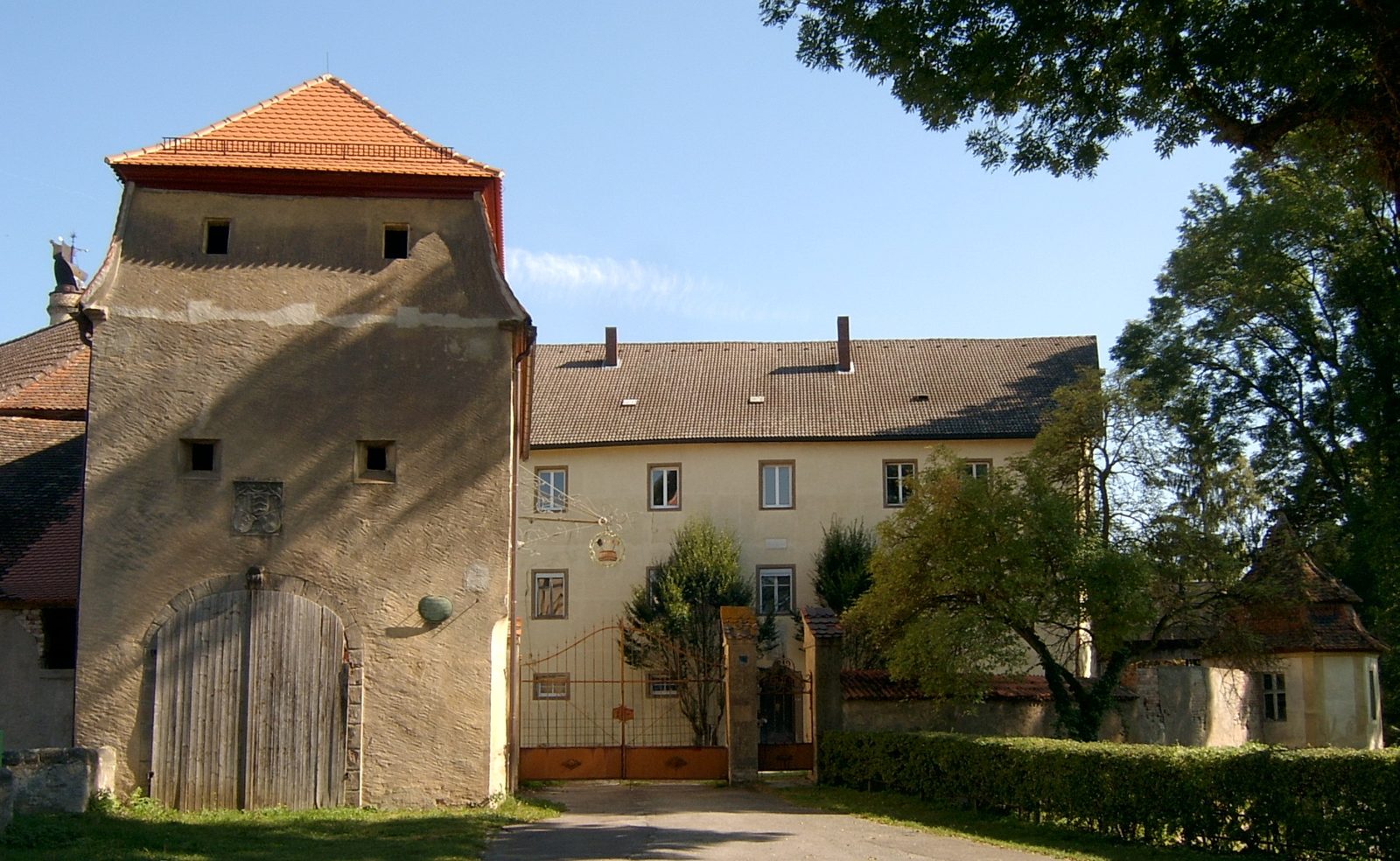
Herrieden Castle, also known as Herrieden Palace, is the ruin of a town castle in the town of Herrieden in the district of Ansbach in Bavaria.
The complex is located on the northeastern edge of Herrieden's old town and, with its extensive fortifications, is part of the city wall and the historic town center. First mentioned in 1122, the castle was the seat of the vogts of the collegiate church of the Diocese of Eichstätt, who were appointed by the Counts of Oettingen. The Lords of Herrieden, documented from 1169, were vassals of the vogts and resided in the castle. In 1314, Louis IV the Bavarian was German king, and at the same time Frederick the Fair had been elected. In this conflict, Herrieden sided with Frederick the Fair and resisted King Louis. In the course of these battles, the fortified place of Herrieden was also besieged by Louis, who received support from the "ballistics experts" from Nuremberg. The defenders under Kraft von Hohenlohe were able to break free from the burning city with a wild counterattack, but the town was stormed after a long siege, and the walls and towers were razed. On March 23 and 24, 1316, King Louis stayed in the camp outside Herrieden. The town was plundered, Louis had the remains of Saint Deocar exhumed, gave a part of them to the Nuremberg support troops, and took a part with him to his Munich residence, where they fell victim to the bombs of the Second World War. In Nuremberg, Deocar became the third city patron alongside St. Sebald and St. Lawrence. Saint Lawrence, patron of St. Lorenz Church, did not offer the same identification, especially since neither his body nor any body part is present in Nuremberg. This explains the growing veneration of Saint Deocarus, confessor of Charlemagne in the 15th century, whose relics have been kept in St. Lorenz Church since 1316. An earthquake in 1356 caused the not yet completed new building to collapse again. In 1358, Charles IV issued a letter of protection for Herrieden in Rothenburg and gave the city the St. Vitus reliquary. By 1383, the castle was provisionally restored so that the Eichstätt vogt could have an official residence. Between 1396 and 1412, Frederick IV of Eichstätt erected a complete new building, as an inscription reports. After 1490, the castle, including the bridge, was destroyed by fire, rebuilt by Bishop Gabriel von Eyb from 1508 to 1510, and burned down again by the Swedes in 1633. Further construction measures took place in 1686 and 1717; before that, it had been converted into the prince-bishop's brewery in 1685, which has been a private brewery since 1806. Between 1811 and 1814, the castle was renovated, in 1877/78 the main building burned down and was rebuilt. In 1907, the keep collapsed, and the main building was renovated in 1952. Further owners mentioned are the Counts of Oettingen and, from the 14th century, the Prince-Bishopric of Eichstätt; since 2009, the city of Herrieden has been the owner.
Source: Wikipedia · Licence: CC BY-SA 4.0 · Image: Siegmar S. · Wikimedia Commons · CC BY-SA 3.0
This description is a machine translation of an excerpt from the linked Wikipedia article. The source text was written by its authors, the translation is by Mobile History; like the original it is licensed under CC BY-SA 4.0.
Location: 49.2337, 10.4999