The remains of the castle ruins can be visited.
CastleArberg
Arberg Castle
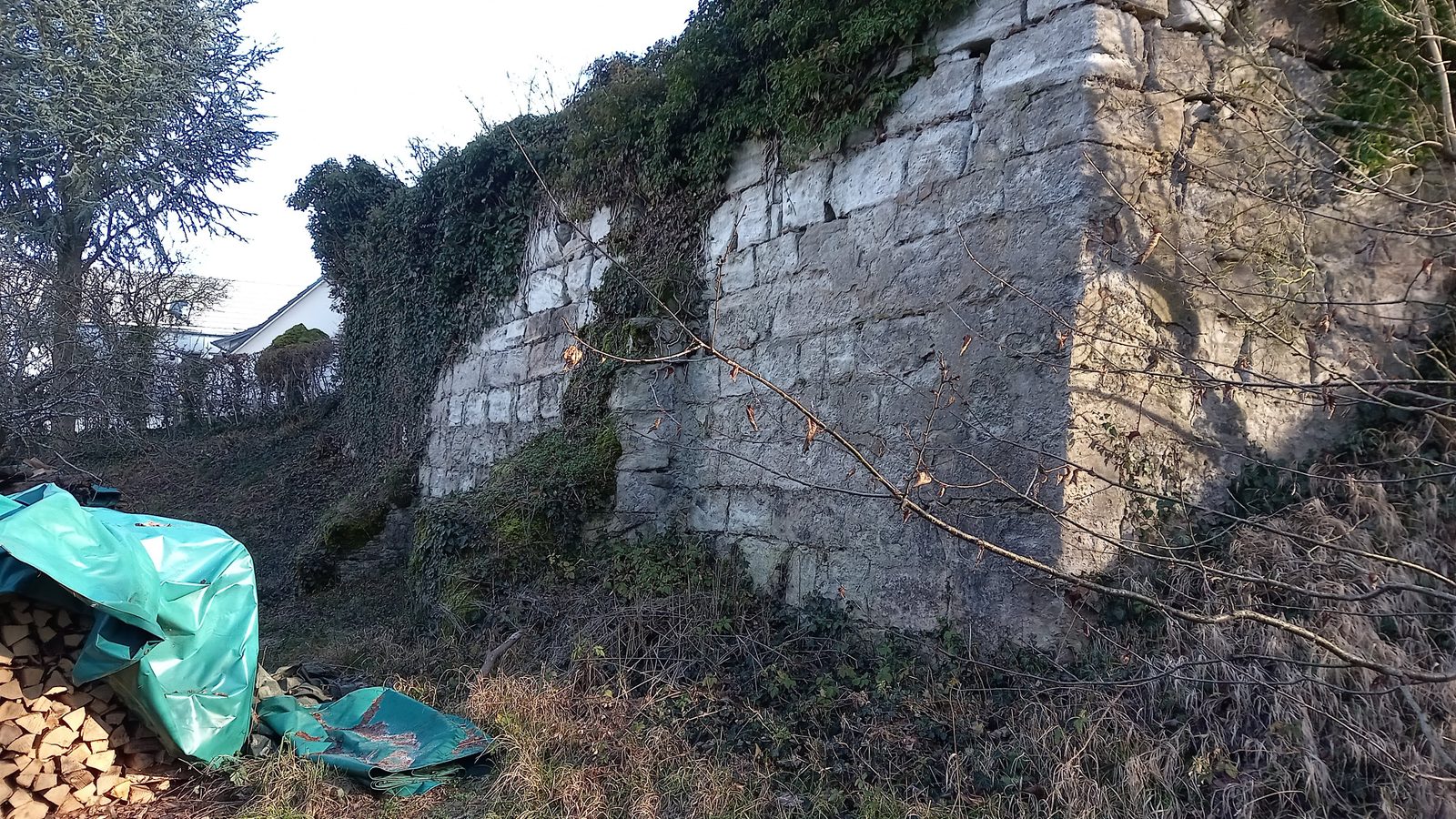
Arberg Castle is a vanished motte-and-bailey castle (motte) immediately southeast of the church in Arberg (Schlossweg 21) in the district of Ansbach in Bavaria.
The castle was presumably built in the 11th century by the Diocese of Eichstätt to administer Eichstätt possessions. For this purpose, they established a cupbearer's office there, with which their ministerials, the Lords of Hofstetten, were enfeoffed in the 13th century. According to Justinus Pedro Johannes Gewin, "H(einrich) de Arberch," mentioned in 1229, was a son of the Eichstätt cupbearer Conrad von Hofstetten. Conrad's brothers were the cathedral canon Heinrich von Hofstetten, Rudiger von Erlinghofen, and Ruger von Dietenhofen. Heinrich I von Arberg's brother, Chunrat, was one of the ministerials of the Counts of Hirschberg and called himself von Hirschlach. The sons of Heinrich I von Arberg were Heinrich II, father of Prior Chunrad von Arberg, Chunrat I von Arberg, and Ulrich von Arberg. Furthermore, the Lords of Arberg were related by blood to numerous other noble families, including the Lords Tannhausen, the Eslers zu Nürnberg, the Lords von Geyern, the Imperial Master Cooks of Rothenburg, the Freiburg noble family Geben, the Lords Stein von Hilpoltstein, and the patricians Gebwin in Heilbronn, to name but a few. Jung mentions a document from 1338 which reveals something about the cupbearer family at the time with "Markolf the cupbearer of Arberch knight and Magret his lawful wife and also I Conrad Lorer his brother and Sophie my lawful wife." Gewin mentions, in addition to the two brothers Markolf and Conrad, a third brother named Heinrich. After the death of Chunrad (IV.), known as Schenk von Arberg, the cupbearer's office passed to Rudiger Schenk von Arberg. He died in 1397.
Source: Wikipedia · Licence: CC BY-SA 4.0 · Image: Markus Schäfer · Wikimedia Commons · CC BY-SA 4.0
This description is a machine translation of an excerpt from the linked Wikipedia article. The source text was written by its authors, the translation is by Mobile History; like the original it is licensed under CC BY-SA 4.0.
Location: 49.1414, 10.6179