The remains of the castle can be visited
CastleMannheim-Lindenhof
Eichelsheim Castle
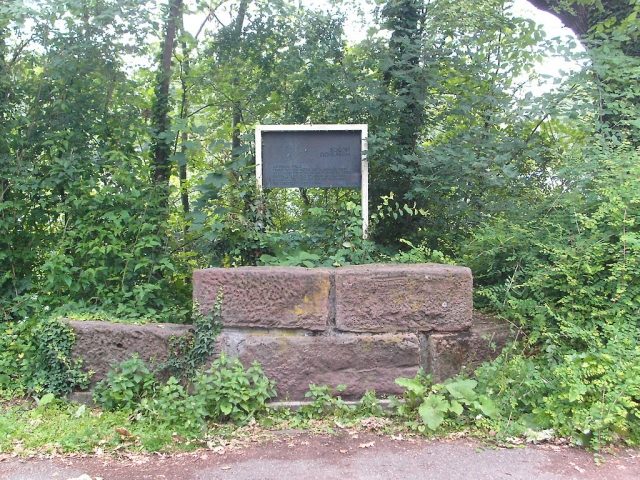
The remains of Eichelsheim Castle, once known as Veste Mannheim, was a customs castle on the Rhine, whose remnants are now found in the Lindenhof district of Mannheim. The complex served as a prison for an antipope at times.
History+
The origins of the Eichelsheim fortification date back to 1265, when it was first mentioned as a customs post with a single tower. Its name is said to refer to the oak forests that once grew in the area. Construction of the castle began in 1353, and in the following decades, the complex was continuously expanded. It also served as a mint for the "Mannheimer Pfennig." A notable episode was the imprisonment of Antipope John XXIII from 1416 to 1419 at the castle. At that time, in addition to residential and administrative wings with a chapel, the complex consisted of a solid tower where the pope was incarcerated. In 1600, the castle was described as a structure with a moat, a fortified gate, and two gate towers, with the core area comprising a water castle with four round towers. During the Thirty Years' War, the castle was besieged by Tilly's troops in 1622 and set on fire by the fortress commander Sir Horace Veer, but the fire was extinguished and repaired by the attackers.
Source: Wikipedia · Licence: CC BY-SA 4.0 · Image: http://de.wikipedia.org/wiki/Datei:Reste_Burg_Eichelsheim.JPG
This description draws on the facts documented in the linked Wikipedia article; Wikipedia content is licensed under CC BY-SA 4.0. Wording and editing: Mobile History.
Location: 49.4739, 8.4641