Cultural Events
CastleWittenburg
Wittenburg Castle
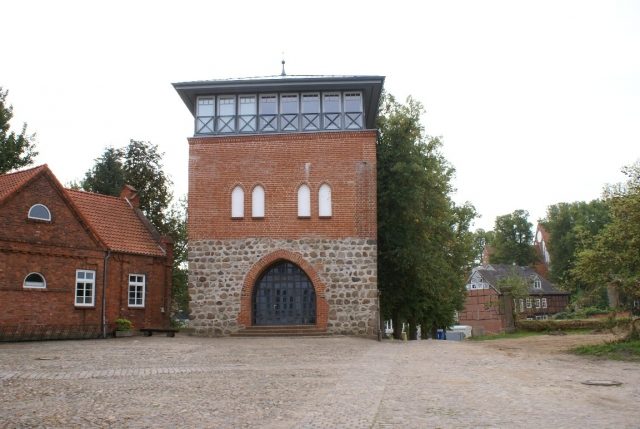
The remnants of the Wittenburg Castle complex are located in the town of Wittenburg in the Ludwigslust-Parchim district of Mecklenburg-Vorpommern, situated at an elevation of approximately 44 meters above sea level.
History+
At the beginning of the 12th century, the area around Wittenburg belonged to the Polabian tribe. In 1142, Henry the Lion enfeoffed Count Henry of Badewide with this land, which thereafter became known as the County of Ratzeburg. Following the destruction of a Slavic castle complex during the Wendish Crusade, a small German settlement emerged, but it was burned down in 1158 by Abodrite troops to free Niklot from captivity. After Niklot's death in 1160, the castle was rebuilt by the Witten family to provide military support to the German exclave in Schwerin. A settlement developed at the foot of the new castle, laying the foundation for the later town of Wittenburg. In 1194, Wittenburg was mentioned as a “provincie” of the County of Ratzeburg. After the Battle of Waschow in 1201, the castle surrendered without a fight to the Schwerin counts. Under Counts Gunzelin II and Henry I, increased settlement began. In 1226, Emperor Frederick II guaranteed Lübeck trade with Wittenburg, which is considered a possible date for the town's founding. In 1230, Wittenburg was listed as a “civitas” in the Ratzeburg tithe register.
Source: Wikipedia · Licence: CC BY-SA 4.0 · Image: Roland Neubert, Halle (Saale)
This description draws on the facts documented in the linked Wikipedia article; Wikipedia content is licensed under CC BY-SA 4.0. Wording and editing: Mobile History.
Location: 53.5139, 11.0723