The remains of the Castle can be visited
CastleFalkenstein
Falkenstein Castle
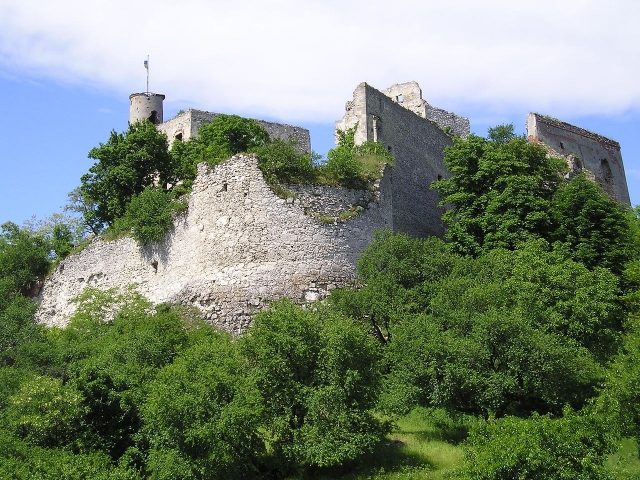
The Falkenstein castle ruin stands on a limestone cliff in the northern Weinviertel, with a view over Southern Moravia. Once built as an imperial fortress, it is now a destination for history enthusiasts and hikers.
History+
Around 1050, the first castle complex was built, likely during the Bavarian colonization under Emperor Henry III and the Counts of Neuburg-Falkenstein. In 1106, the castle probably came into the possession of the territorial prince through the marriage of Leopold III to the emperor's daughter Agnes. It remained a territorial fief until 1571, but was often pledged to various noble families, including the Liechtensteins and the Fünfkirchens. Maximilian II sold the castle in 1572 to Hans Freiherr von Trautson, who expanded it into a Renaissance fortress. In 1539, the castle served as a prison for 150 followers of the Anabaptist movement, who were later to be sold as galley slaves; the chronicler Kaspar Braitmichel managed to escape. During the Thirty Years' War, the castle was captured by the Swedes in 1645 but not destroyed. Its decline began in the late 17th century, when the castle was also used as a quarry. After the extinction of the Trautson line, Falkenstein passed to the Auersperg, later to the Bartenstein, and in 1850 to the Freiherrn Vrints.
Source: Wikipedia · Licence: CC BY-SA 4.0 · Image: https://commons.wikimedia.org/wiki/File:Burgruine_Falkenstein_%28Nieder%C3%B6sterreich%29.jpg?uselang=de
This description draws on the facts documented in the linked Wikipedia article; Wikipedia content is licensed under CC BY-SA 4.0. Wording and editing: Mobile History.
Location: 48.7242, 16.5787