The remains of the Castle can be visited
CastleKalbe
Kalbe Castle
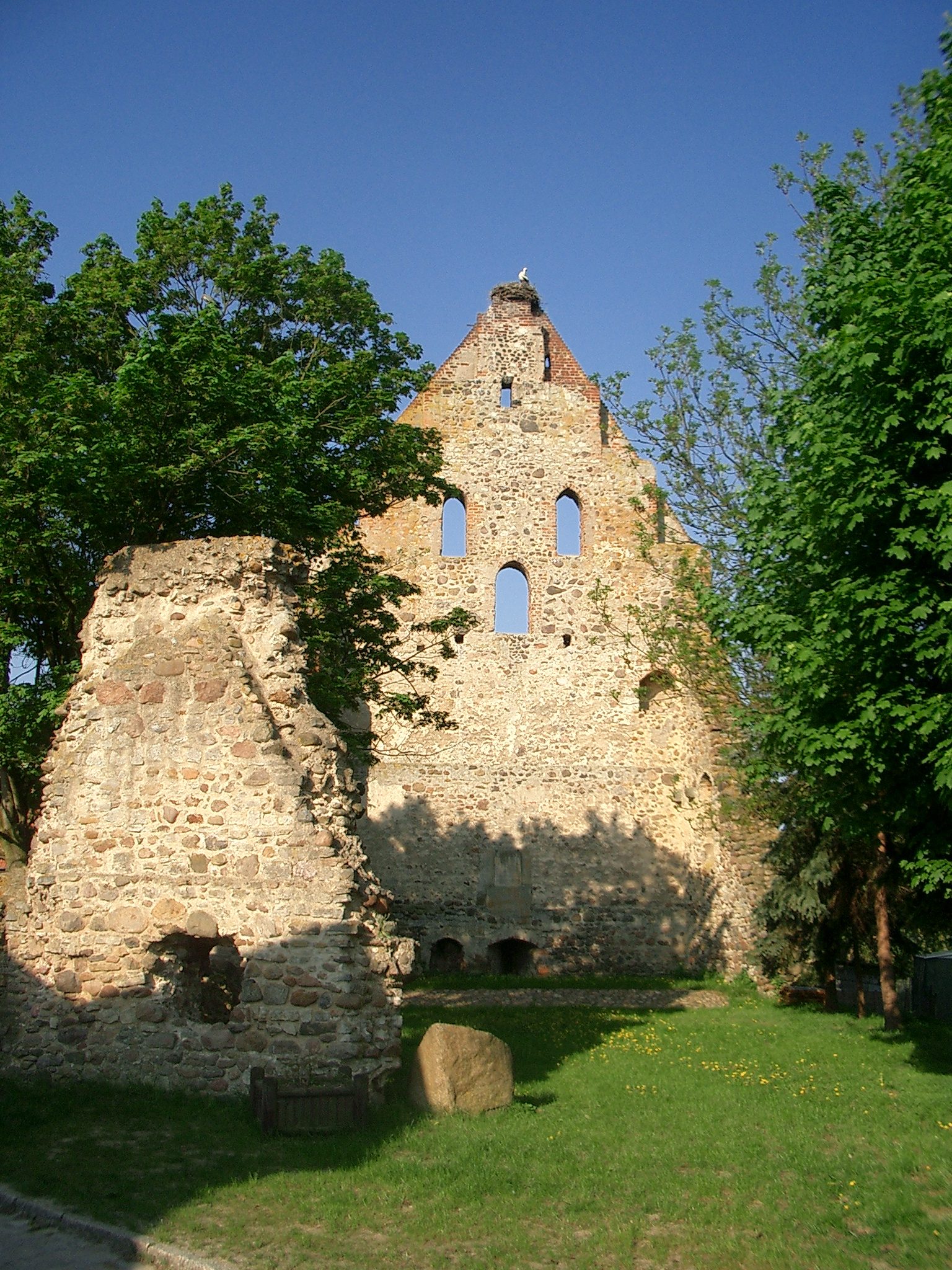
Kalbe Castle, formerly written Calbe, is the ruin of a moated castle between two arms of the Milde in the urban area of the town of Kalbe in the Altmarkkreis Salzwedel in Saxony-Anhalt. The moated castle was built in the 10th century as a Saxon border fortress against the Wends, presumably on the site of a Slavic hillfort in the swamp area of the Milde. A nunnery founded under its protection, which the Obotrites devastated in 983, existed here until 1121. The castle was one of the four Altmark castle districts, which administered sovereign judicial and military districts, alongside Tangermünde Castle, Osterburg and Arneburg. These protected the Frankish-colonized area and the missionary monasteries between the Elbe and the Milde. The castle was well protected from attackers by three moats and four outer baileys and entrenchments. It gave its name to the Marchian noble family von Kalben, which is mentioned in documents in connection with the castle in 1207 and served as ministerials here. At the end of June 1240, the castle was destroyed in the Teltow War and the Magdeburg War, when Margrave Johann I of Brandenburg besieged the complex, to which the wounded Archbishop Wilbrand von Käfernburg of Magdeburg had fled with the remnants of his loyal followers after the heavy defeat of June 24 at the Battle of the Biese. In 1300, the von Kröcher family became feudal lords. After the extinction of the Brandenburg Ascanians, the Welfs took over the Altmark and in 1324 enfeoffed the noble family von Alvensleben, who had bought the lordship from the Kröchers, with the castle. The Alvenslebens then expanded the castle, which was in ruins at the time, into the largest castle in the Altmark; water was brought from the Milde via dams to fill newly dug moats. Thus, the Calbesche Werder with all its villages was transformed into a fortified island defended by outworks. The extensive earthworks and waterworks represented a significant technical achievement. In conjunction with the secured town and the outworks, the fortress offered space for larger armies, whose provisioning was secured by protected pasture and arable land, mills and villages. Only a large siege ring could enclose Calbe.
Source: Wikipedia · Licence: CC BY-SA 4.0 · Image: The original uploader was Björn Gäde at German Wikipedia . · Wikimedia Commons · CC BY-SA 3.0
This description is a machine translation of an excerpt from the linked Wikipedia article. The source text was written by its authors, the translation is by Mobile History; like the original it is licensed under CC BY-SA 4.0.
Location: 52.6540, 11.3964