CastleBad Gleichenberg

Neu-Gleichenberg Castle
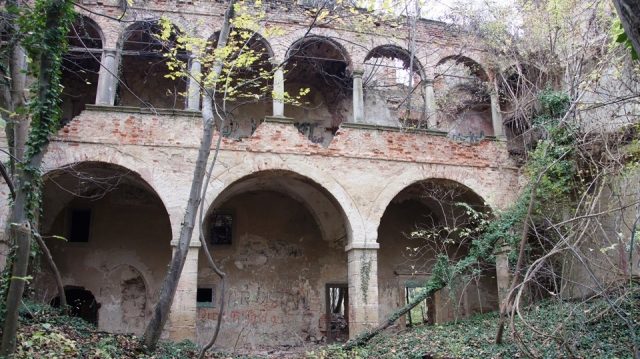
Neu-Gleichenberg Castle

The remains of the Castle can be visited

Ulrich von Walsee began the construction of a new castle in the early 14th century, opposite Alt-Gleichenberg Castle, which had already been destroyed by King Ottokar II in 1269. He appointed burgraves to administer it.

Ulrich von Graben is mentioned as the first, holding this office from 1302 to 1324 and presumably also overseeing the construction of the castle. He also called himself Ulzo von Gleichenberg. The Styrian line of the Walsee family died out with Eberhard VIII in 1365. Gleichenberg passed to Heinrich II von Walsee from the Lower Austrian line Drosendorf-Enzesfeld. In 1393, Ulrich IV von Walsee pledged the lordship to his uncle Bernhard von Pettau, to whom he also bequeathed it in 1400.

Duke Ernst the Iron granted it to his son Friedrich von Pettau in 1423. He was the last Pettau at Gleichenberg. His sister Anna transferred her property rights to the Lords of Schaumburg in 1440. However, the Walsee family insisted on their old claims. After a settlement, King Friedrich III enfeoffed Reinprecht IV von Walsee with the lordship. Gleichenberg came as a pledge to Leutold von Stubenberg in 1450. He had the castle administered by Herrand von Trauttmansdorff. Hans von Stubenberg had participated in Andreas Baumkircher's uprising. Therefore, Gleichenberg was confiscated in 1470 and handed over to Jörg von Reichenburg, who was already residing there as administrator.

Between 1480 and 1490, the castle was occupied by the Hungarians, after which Jörg von Reichenburg received it back. His daughter Wandula, who was married to Wolf von Ebersdorf, inherited him. After her death in 1552, Gleichenberg passed to Sigmund Welzer and his wife Polixenia, who was Wandula's niece. In the years after 1572, Neu-Gleichenberg was expanded and modernized. In 1581, Sigmund Welzer sold the lordship to Hans Friedrich I von Trauttmansdorff, who had the already considerably neglected castle renovated. Under the Trauttmansdorffs, who resided here for over 350 years, the already heavily neglected fortress developed into a habitable castle. However, the expansion of the defensive structures was not forgotten, so that Gleichenberg was one of the most important defensive buildings in Eastern Styria in the first half of the 17th century.

The last male representative of the Trauttmansdorff-Weinsberg family was Count Maximilian Philipp, who died in 1933. With him, the Styrian main line of the Trauttmansdorffs died out. His sister Countess Rosa Dobrzensky von Dobrzenicz inherited the property in Gleichenberg. She gifted it to her daughter Countess Anna Maria von Stubenberg in 1943. In the last days of World War II, the castle, which had been completely preserved and furnished until then, was reduced to ruins by artillery fire. The estate was under forced administration by the Russian occupation forces in the post-war period. The roof structure of the Hexenturm (Witches' Tower) was destroyed by another fire in 1983. The castle was left to its final decay. The castle hill with the ruins now belongs to Count Dr. Hans von Stubenberg.

Take Mobile History with you

You are reading this text for free. Premium adds what matters on the road: descriptions read aloud, sites found through your camera, whole regions taken offline.

  • Every description, including the ~17,700 Premium sites
  • Audio guide: have descriptions read to you on location
  • AR finder: see sites through your camera, with distance and bearing
  • Unlimited saved sites

14 days free, then from €2.99 a month. Cancel anytime.

Source: Wikipedia · Licence: CC BY-SA 4.0 · Image: http://www.wehrbauten.at

This description draws on the facts documented in the linked Wikipedia article; Wikipedia content is licensed under CC BY-SA 4.0. Wording and editing: Mobile History.

Location: 46.8924, 15.8937