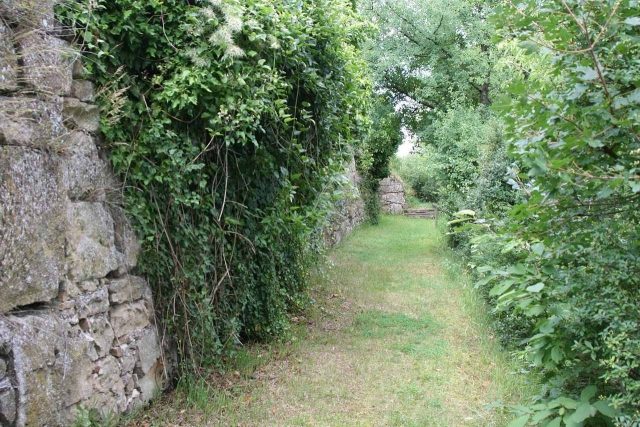
The remains of the Castle can be visited
CastleNeckarsulm
Scheuerberg Castle
The Scheuerberg near Neckarsulm in the Baden-Württemberg district of Heilbronn is a 310.2 m above sea level high mountain of the Sulmer Bergebene, on which a castle with a chapel once stood and which is considered the local mountain of the city.
A chapel on the Scheuerberg was first mentioned in 1264 in connection with a donation by Engelhard IV and Engelhard V of Weinsberg. In the same document, which regulated the rights of the pastor on the Scheuerberg, a castle on the mountain was also mentioned, the construction of which is dated to the period between 1218 and 1250. The main castle is said to have been on the west side of the mountain facing the Neckar, with the outer bailey to the east. The Lords of Weinsberg, who as chamberlains of the Staufer were enfeoffed with the lordship of Scheuerberg, are considered to be the builders. Engelhard VII of Weinsberg sold the castle on May 2, 1335, to Archbishop Balduin of Trier, who at that time was also administrator of the Archdiocese of Mainz and appointed a Mainz bailiff on the Scheuerberg. On May 7, 1484, the Scheuerberg came under Grand Master Reinhard von Neipperg to the Teutonic Order. On April 19, 1525, the castle was burned down in the German Peasants' War.
After the German Peasants' War, the castle on the Scheuerberg was not repaired. The chapel is said to have been in good condition, as services were still held there in 1529. Initially, the keep and extremely massive walls of the castle were still present.
Source: Wikipedia · Licence: CC BY-SA 4.0 · Image: https://commons.wikimedia.org/wiki/File:Neckarsulm_Scheuerberg_Mauerreste_20070730.jpg
This description draws on the facts documented in the linked Wikipedia article; Wikipedia content is licensed under CC BY-SA 4.0. Wording and editing: Mobile History.
Location: 49.1961, 9.2509