CastleWeitensfeld im Gurktal-Wullross

Wullross Castle
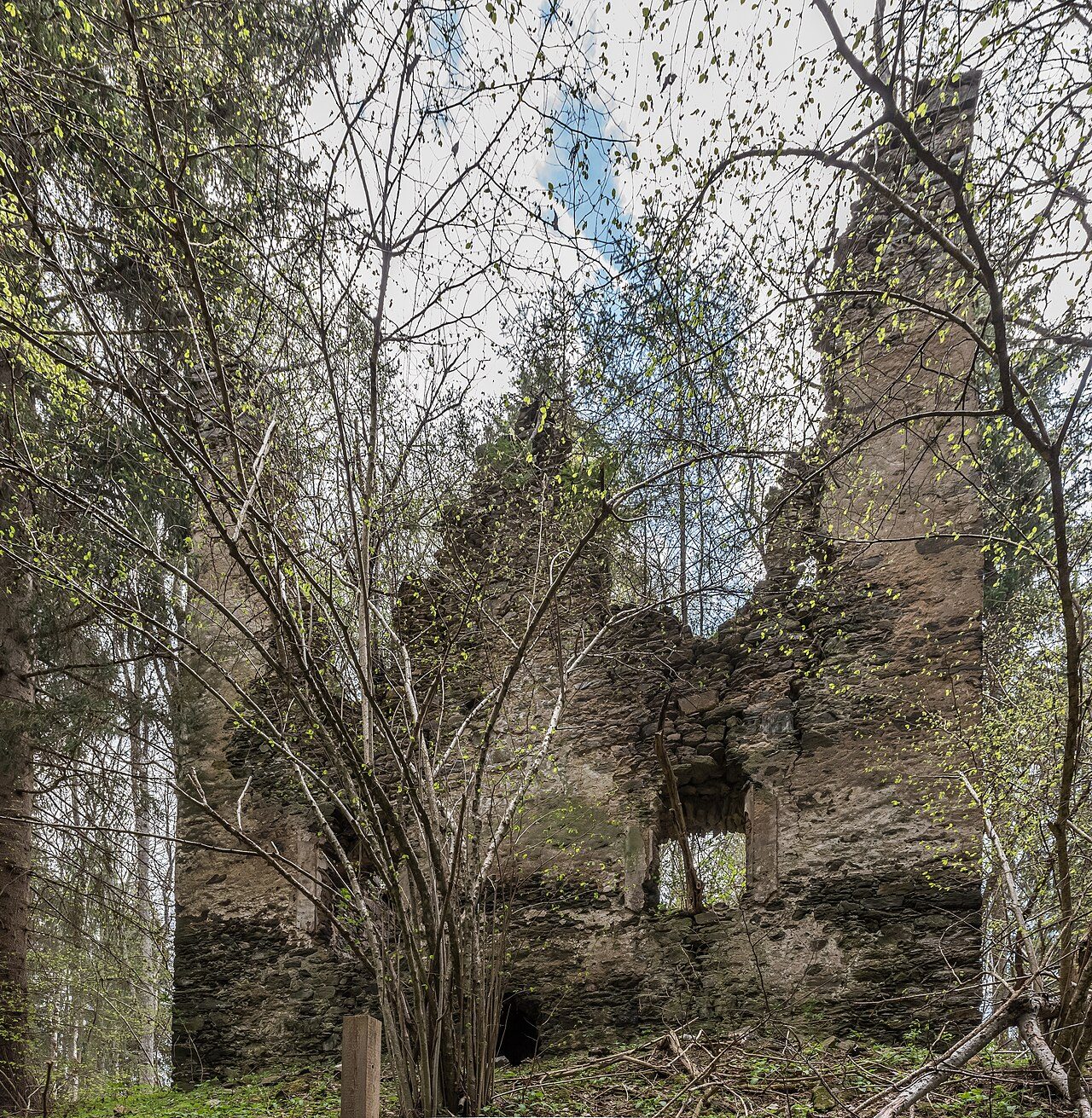
Wullross Castle

The remains of the castle can be visited


The Wullross (Wullroß) castle and palace ruins are the listed remains of two structures in the Inner Wimitz in northern Carinthia. The structures were located at an elevated position (approx. 950 m above sea level) in the so-called Inner Wimitz in the forest between the small settlements of Wullross and Psein in today's municipality of Weitensfeld in the Gurktal. They were built above the road along the Wimitzbach stream.

Wullross was first mentioned in a document around the year 1200 as Woldris, and in 1342 it appears as Volreichs. The name is derived from the personal name Wolrich; in the oldest document, the urbarium of the Gurk Cathedral Chapter, a Waltherus de Woldris is named as the feudal lord. In 1446, Leonhard, the last Wullroß, fell in battle against the Turks. The coat of arms of the medieval minor noble family showed a bull with a nose ring. A well-known namesake was Katherina von Wulroß, abbess of the noble convent of St. Georgen am Längsee in 1402.

Towards the end of the 15th century, Wilhelm Rumpf acquired the castle, who in 1520 participated as procurator of Siegmund von Dietrichstein in the Hoftaiding in St. Veit an der Glan. While his son Wolf Rumpf received the lordship of Weitra as a gift from Emperor Rudolf II, his daughter Barbara Rumpf married the mercury merchant Wilhelm Neumann, an assessor of Wasserleonburg Castle, whereby Wulross came into his possession. The castle chapel, dedicated to Saint Barbara, was described as desecrated in 1578, indicating that the then castle lords were Protestant.

Already in the 16th century, Wullross Palace was built next to the castle, while the medieval structure was left to decay. In 1747, Ferdinand von Egger acquired the property, which remained in the possession of the Egger family thereafter. After a lightning strike set the building on fire in 1818, parts of the now abandoned building collapsed in 1820.

Architectural Description+

Only remnants of a square tower with a side length of about seven meters and the chapel adjoining the tower to the southeast remain of the medieval castle.

The remains of the former Renaissance palace, which was located northwest of the castle, are overgrown with thicket and are difficult to recognize and survey.

Take Mobile History with you

You are reading this text for free. Premium adds what matters on the road: descriptions read aloud, sites found through your camera, whole regions taken offline.

  • Every description, including the ~17,700 Premium sites
  • Audio guide: have descriptions read to you on location
  • AR finder: see sites through your camera, with distance and bearing
  • Unlimited saved sites

14 days free, then from €2.99 a month. Cancel anytime.

Source: Wikipedia · Licence: CC BY-SA 4.0 · Image: Johann Jaritz / CC BY-SA 3.0 via Wikimedia Commons

This description draws on the facts documented in the linked Wikipedia article; Wikipedia content is licensed under CC BY-SA 4.0. Wording and editing: Mobile History.

Location: 46.8142, 14.2128