To be privately owned
CastleSan Polo dei Cavalieri
Castello Orsini-Cesi-Borghese
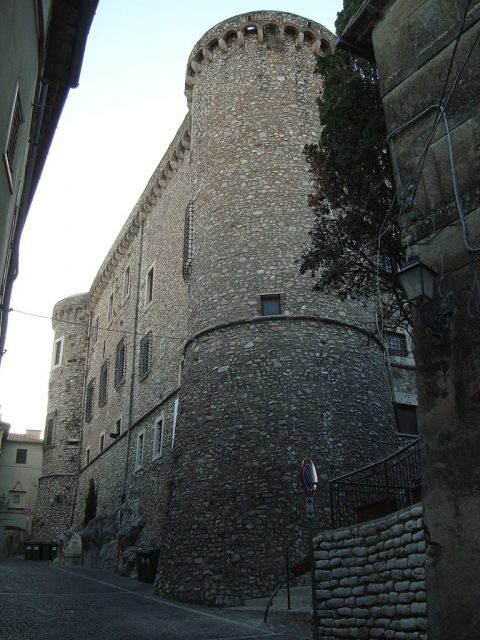
The Orsini-Cesi-Borghese castle is a medieval castle located in San Polo dei Cavalieri, in the province of Rome. Its construction in its current form dates back to the 15th century, on a site documented since the early Middle Ages.
History+
The origins+
The site is attested as fundus Janule as early as 978, as property of the Church of Tivoli. The first explicit mention of a Castrum Sancti Pauli in Jana appears in Pope Gregory VII's bull of 1081, which confirmed it among the possessions of the Abbey of San Paolo fuori le mura. In the 12th century, possession of the castrum was disputed between Tivoli and the Abbey of San Paolo; the dispute was settled in 1143 with the oath of the Tiburtines before Pope Innocent II.
The Orsini+
On May 22, 1390, Pope Boniface IX granted Giovanni Orsini feudal power over the Castrum Sancti Pauli. After the annulment of the Schism's concessions by the Council of Constance, the Orsini regained possession of the castle by purchasing it from the monks of San Paolo on May 4, 1429, with an act confirmed by Pope Eugene IV's bull of 1439. The Orsini began the construction of the current castle, completed around 1439-1440. An octagonal stone cistern was built in the courtyard, surmounted by the Orsini coat of arms, with an inscription attesting to its construction in November 1439 by a certain Mastro Guglielmo. In 1479, Napoleone Orsini had a Statute of the fief drawn up in the vernacular, in five parchment books; the municipal archive of San Polo was destroyed in a fire in 1708, but copies of the town's statutes are preserved in the State Archive of Rome.
The Cesi+
In 1558, Paolo Giordano Orsini sold the castle to Cardinal Pier Donato Cesi for 27,000 gold scudi. The Cesi transformed the fortress into a summer residence, renaming it Palazzo Baronale, and had its halls decorated with frescoes attributed to the workshop of Taddeo and Federico Zuccari. Federico II Cesi (1585-1630), II Duke of Acquasparta and Prince of Sant'Angelo and San Polo, was the founder of the Accademia dei Lincei (1603); Galileo Galilei was associated with it in 1611, to whom Cesi lent particularly intense support in the clash with the ecclesiastical authorities. The fief remained with the Cesi until its cession to the Borghese, which according to Meucci occurred in 1678.
Source: Wikipedia · Licence: CC BY-SA 4.0 · Image: http://commons.wikimedia.org/wiki/File:Castello_Orsini-Cesi-Borghese_de_San_Polo_dei_Cavalieri.JPG
This description draws on the facts documented in the linked Wikipedia article; Wikipedia content is licensed under CC BY-SA 4.0. Wording and editing: Mobile History.
Location: 42.0099, 12.8386