Museum
CastleÉcouen
Château d'Écouen
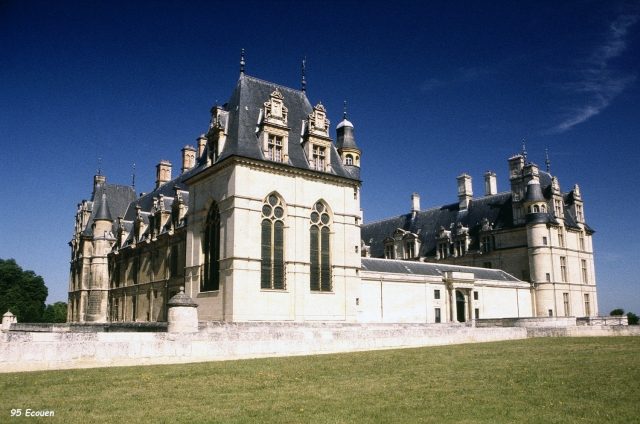
The Château d'Écouen, a 16th-century castle, stands in the French commune of Écouen in the Val-d’Oise department. Today, it is a museum, housing the Musée national de la Renaissance, dedicated to the art and culture of the Renaissance.
History+
Construction of the castle began in 1538 under Anne de Montmorency, Constable of France. An older medieval fortification on the hilltop was demolished to make way for the new building. Original plans envisioned a four-sided structure with corner pavilions. From 1547, Jean Bullant oversaw the completion of the north wing and the design of a colonnaded hall in the south wing. This hall was specifically intended to house two sculptures by Michelangelo, the “Dying Slave” and the “Rebellious Slave,” which Montmorency had received from King Henry II. Following the execution of Henri II de Montmorency in 1632, the castle was confiscated by King Louis XIII and later returned to his half-sister Charlotte, Duchess of Angoulême. In 1797, the west wing was destroyed and replaced in 1807 by a lower structure. In the 1960s, André Malraux decided to house the Renaissance collections of the Hôtel de Cluny in Écouen, leading to the opening of the Musée national de la Renaissance in 1977.
Source: Wikipedia · Licence: CC BY-SA 4.0 · Image: Hervé Rebours
This description draws on the facts documented in the linked Wikipedia article; Wikipedia content is licensed under CC BY-SA 4.0. Wording and editing: Mobile History.
Location: 49.0174, 2.3786