The remains of the Castle can be visited
CastleHyères
Château d'Hyères
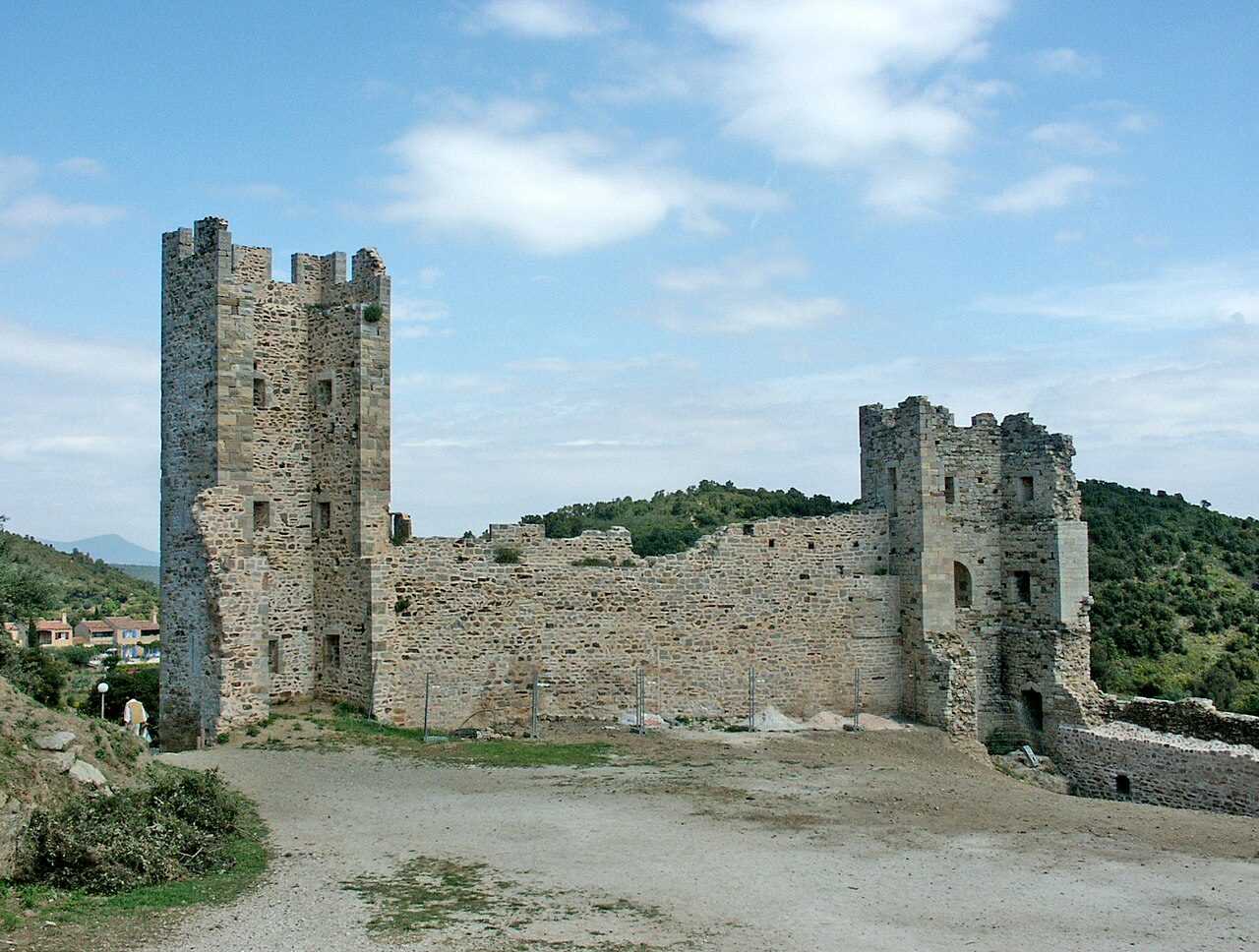
Hyères Castle is a ruined medieval castle located at the top of the Castéou hill (198 m), one of the peaks of the Maurettes, dominating the city of Hyères, in the Var department. The remains of the castle are classified as historical monuments by the 1862 list; the rampart and the old castle have been listed since January 27, 1926. The castle's motto, Arearum Castrum ("the castle of the area") is engraved in the castle entrance. The city was also called by this name in the early Middle Ages[insufficient source].
Location+
The castle dominates the city of Hyères, in the French department of Var.
History+
The Saracens who occupied eastern Provence were driven out of Fraxinet in 972-973 by William, Count of Provence, his brother, Roubaud, the Marquis of Turin and several great lords of Provence, including the lords of Fos (among whom was a certain Pons de Fos). In reward, William offered the current territory of Hyères, La Londe and Bormes to the lords of Fos, already owners of the current territory of Fos-sur-Mer. The first mention of the castle, which was built in the middle of the 11th century by Pons de Fos, dates from 1062, where a castrum (castle) is mentioned. Thirteen years later, in 1074, a castellum (village, therefore probably castle and village, which surely means that inhabitants settled around the castle) is mentioned. It is possible that the castle was built about thirty years earlier, on the site of a previous fortification. In 1254, upon returning from the Seventh Crusade, Saint Louis and his family stayed there. After a military struggle between Ildefons I and Amelin de Fos over the possession of the city and castle of Hyères, the territory finally returned to Charles I of Anjou, Count of Provence, in 1257. The lords of Fos abandoned the castle, the city, its territory and the Hyères islands in exchange for other territories in Provence. The sum of the exchange was estimated at ten thousand Provençal sous. Charles II of Anjou received Queen Jeanne in 1348. From 1423 to 1431, the castle belonged to Arnaud de Villeneuve, of the family of the lords of Trans, and finally from 1481, to the royal domain. In 1524 and 1536, the armies of King Charles V swept through Provence. The first time the castle resisted then was occupied, the second time the castle was spared. During this period, the castle received visits from two kings of France, Francis I in 1530 and, a few years later, Charles IX in 1564. During the Wars of Religion, the city of Hyères remained loyal to the king, but the castle often changed hands. From 1596, the triumph of Henry IV led to the conquest of the city. But it took a five-month siege for the king to succeed in taking the castle. As punishment, it was decided to dismantle the castle, but it was finally his successor, Louis XIII, who had it dismantled in 1620[insufficient source]. The writer George Sand visited it in the 1850s. As of 2014, the city municipality launched an archaeological research program based on regular excavation campaigns.
Source: Wikipedia · Licence: CC BY-SA 4.0 · Image: Denis Biette / CC BY-SA 2.5 via Wikimedia Commons
This description draws on the facts documented in the linked Wikipedia article; Wikipedia content is licensed under CC BY-SA 4.0. Wording and editing: Mobile History.
Location: 43.1241, 6.1244