Municipal offices
CastleSainte-Luce-sur-Loire
Château de Chassay
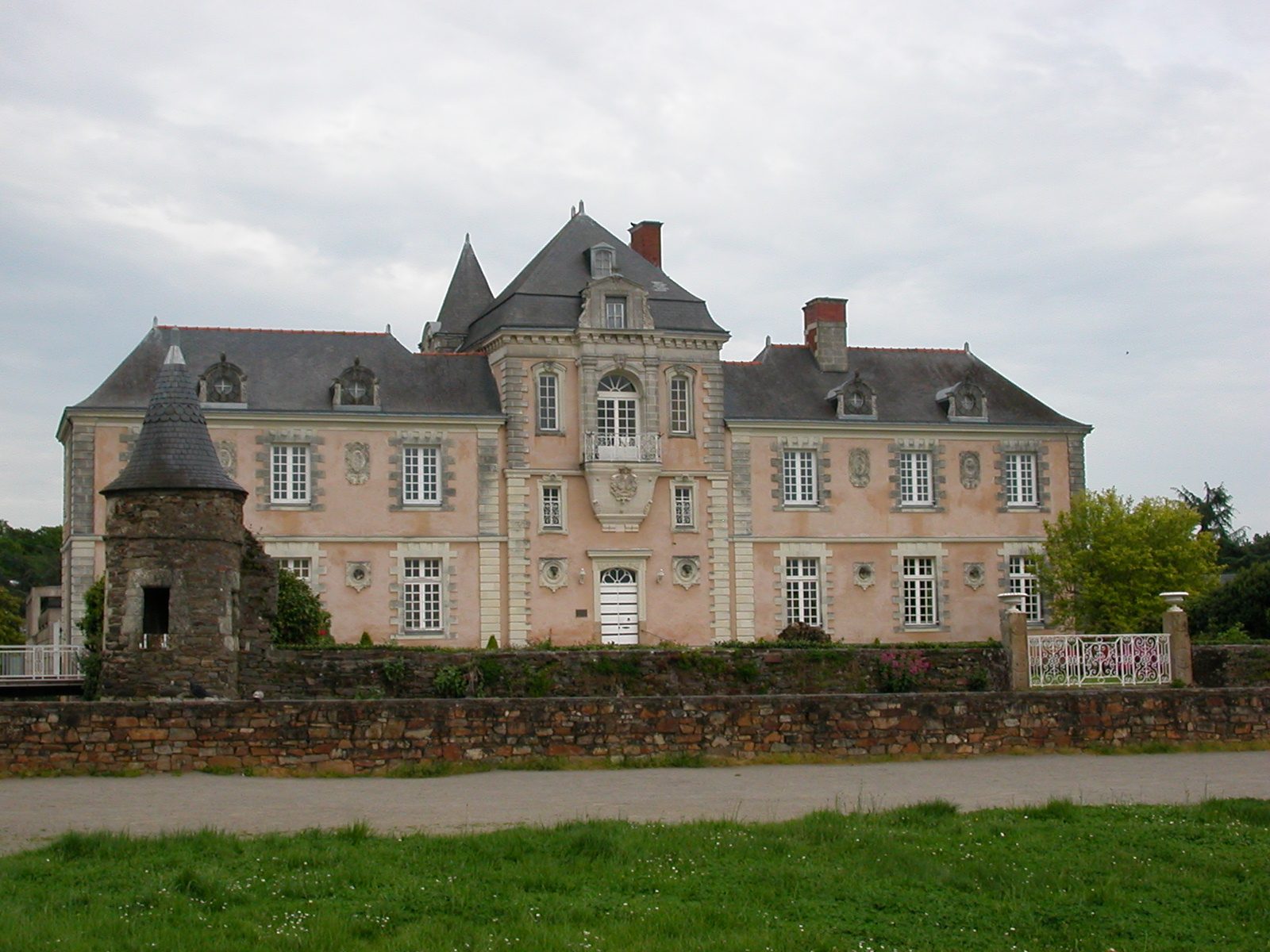
The Château de Chassay (also known as Château du Chassay) is a historic manor located in Sainte-Luce-sur-Loire, in the Loire-Atlantique department of the Pays de la Loire region in western France, near Nantes. It currently serves as the town hall of the commune.
The site has very ancient origins. A Roman villa named Cariacum is said to have stood here on one of the oldest Roman roads in the region leading to Nantes. A castle belonging to the bishops of Nantes is mentioned as early as 1096 under the name Chasseil (later Chassay). In the mid-15th century Bishop Amauri d’Acigné surrounded the building with moats and fortifications during a conflict with Duke François II of Brittany, who confiscated the property and turned it into a hunting pavilion. It was returned to the bishopric around 1500.
The central body of the present château, with its corbelled turrets, was built in the Italian Renaissance style between approximately 1570 and 1590 under Bishop Philippe du Bec. Symmetrical wings were probably added around the mid-18th century. The complex stands on a raised platform with corner turrets, surrounded by moats, a fixed bridge and a water basin; it also includes an old orangery and an interior rotunda surmounted by a dome.
On 13 April 1598 King Henri IV dined at Chassay with the bishop before entering Nantes to sign the Edict of Nantes on 30 April. In the 17th century documents distinguish the “Petit château” (the present building) from a larger “Grand manoir” that was later abandoned and demolished in the 20th century.
Sold as national property in 1791 to the Nantes shipowner Dubois-Violette, the estate passed through several owners, including the Countess of Bondy (from 1827) and the Fremond de La Merveillère family, before being sold in 1956 to an agricultural cooperative. The municipality purchased it in 1974 and installed the town hall there; additional buildings were constructed in 1989.
The château was restored in the 1990s. In June 2024 it was inscribed as a Monument historique, covering the façades and roofs, the garden turrets, the stone enclosure of the water basin, the moats and fixed bridge, the terrace, the orangery and the interior rotunda with its dome.
Take Mobile History with you
You are reading this text for free. Premium adds what matters on the road: descriptions read aloud, sites found through your camera, whole regions taken offline.
- Every description, including the ~17,700 Premium sites
- Audio guide: have descriptions read to you on location
- AR finder: see sites through your camera, with distance and bearing
- Unlimited saved sites
14 days free, then from €2.99 a month. Cancel anytime.
Source: Wikipedia · Licence: CC BY-SA 4.0 · Image: Pymouss44 · Wikimedia Commons · CC BY-SA 3.0
This description draws on the facts documented in the linked Wikipedia article; Wikipedia content is licensed under CC BY-SA 4.0. Wording and editing: Mobile History.
Location: 47.2478, -1.4836