To be privately owned
CastleFitou
Château de Fitou
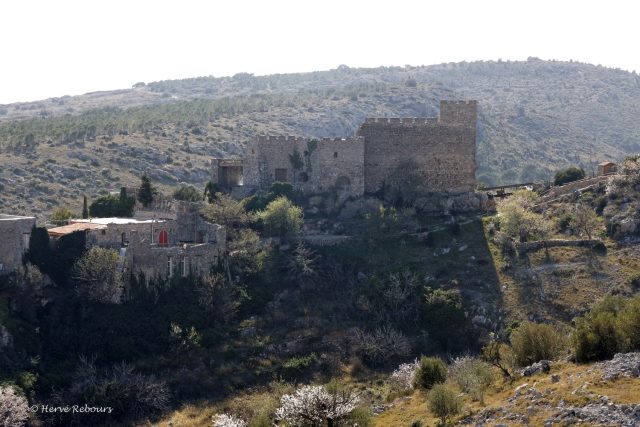
The Château de Fitou is a castle located in Fitou, France.
Description+
Covering approximately 1,000 m2, the castle is situated on a site overlooking the village of Fitou, the Leucate lagoons, and the sea.
Location+
The castle is located in the commune of Fitou, in the French department of Aude.
History+
The construction date of the Château de Fitou is unknown; a Roman villa may have preceded it. By her will dated 990, the Viscountess of Narbonne bequeathed "in vila de Fictorius" to Ermangaud de Narbonne. Its territory extended over more than three thousand hectares. The Perignan family held full seigniorial rights over Fitou and granted titles and rights, which were legitimately their property, to vassals. The castle's territory extended to the border of Salses. Due to its location, the castle was often exposed to the hazards of war; it was besieged, burned, and rebuilt several times. A large number of lords reigned there. After the fall of Montségur Castle and the defeat of the Cathars, the Lord of Niort, a heretic, converted to Christianity and settled in the castle. One of the last acts of war relates that on May 19, 1635, Cardinal Richelieu declared war on Spain. 27 months later, the Spanish advanced on Fitou in two columns: the first, coming from Claira, which had been transformed into a stronghold, consisted of 2,000 infantry and 400 horses; the second came from Salses with 12,000 infantry, drums beating, banners flying, and 1,200 cavalry, cornets at the head.
Source: Wikipedia · Licence: CC BY-SA 4.0 · Image: Hervé Rebours
This description draws on the facts documented in the linked Wikipedia article; Wikipedia content is licensed under CC BY-SA 4.0. Wording and editing: Mobile History.
Location: 42.8936, 2.9771