To be privately owned
CastlePort-Saint-Père
Château de Grandville
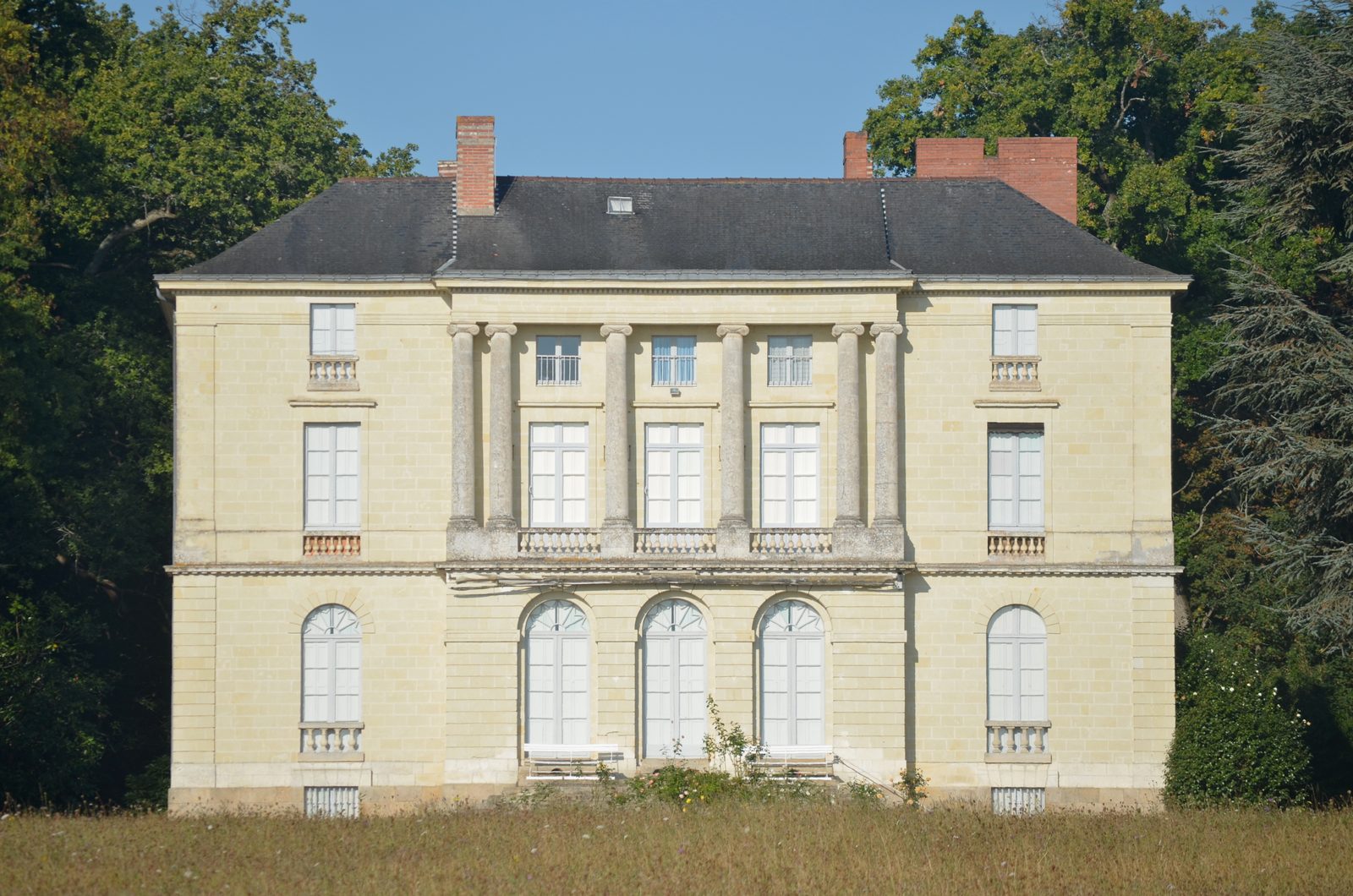
The Château de Grandville is a neo-Palladian villa located in Port-Saint-Père, in the Loire-Atlantique department of the Pays de la Loire region in western France (Pays de Retz). It stands on the Beaulieu hillside overlooking the Acheneau river and the surrounding marshes, north of Lac de Grandlieu, roughly halfway between Nantes and Pornic.
It was built between 1820 and 1825 for Aristide Locquet de Grandville (1791–1853), a local politician who served as mayor of Port-Saint-Père for many years and later sat in the National Assembly. His father, Félix Locquet de Grandville, had been guillotined during the Terror in 1793, and the family’s earlier residence, the Château de La Tour, had burned during the Revolution. Aristide therefore commissioned a new country seat on a commanding site above the marshes.
The architect was the Nantes-based Étienne Jean-Baptiste Blon (also responsible for Place Mellinet in Nantes). Construction was followed by a protracted legal dispute between owner and architect over fees that lasted 23 years. A neo-Gothic chapel was added in 1844 by the diocesan architect Théodore Nau. After 1851 an English-style landscape park was laid out by the gardener Jean-Dominique Noisette.
On Aristide’s death the estate passed by marriage to the Moulin de Rochefort family, then to the Dampierre family, and finally to the d’Argenlieu family, who have carried out recent restorations.
Architecturally the château is a rare example of neo-Palladianism in the Nantes region, inspired by the Venetian villas of Andrea Palladio (notably the Villa Pisani). It features a portico with Ionic columns and a loggia. The main building is accompanied by large outbuildings of the same sober classical style (farm buildings, kitchen garden, dovecote, wash-house and water reservoir).
The façades and roofs were inscribed as a Monument historique in 1992. The wider site, together with the neighbouring Château de Briord, forms a classified natural site (1977). The park and exteriors are open to visitors in summer (mid-July to late August). The château remains private property.
Take Mobile History with you
You are reading this text for free. Premium adds what matters on the road: descriptions read aloud, sites found through your camera, whole regions taken offline.
- Every description, including the ~17,700 Premium sites
- Audio guide: have descriptions read to you on location
- AR finder: see sites through your camera, with distance and bearing
- Unlimited saved sites
14 days free, then from €2.99 a month. Cancel anytime.
Source: Wikipedia · Licence: CC BY-SA 4.0 · Image: Selbymay · Wikimedia Commons · CC BY-SA 3.0
This description draws on the facts documented in the linked Wikipedia article; Wikipedia content is licensed under CC BY-SA 4.0. Wording and editing: Mobile History.
Location: 47.1413, -1.7591