To be privately owned
CastleCarquefou
Château de l'Épinay
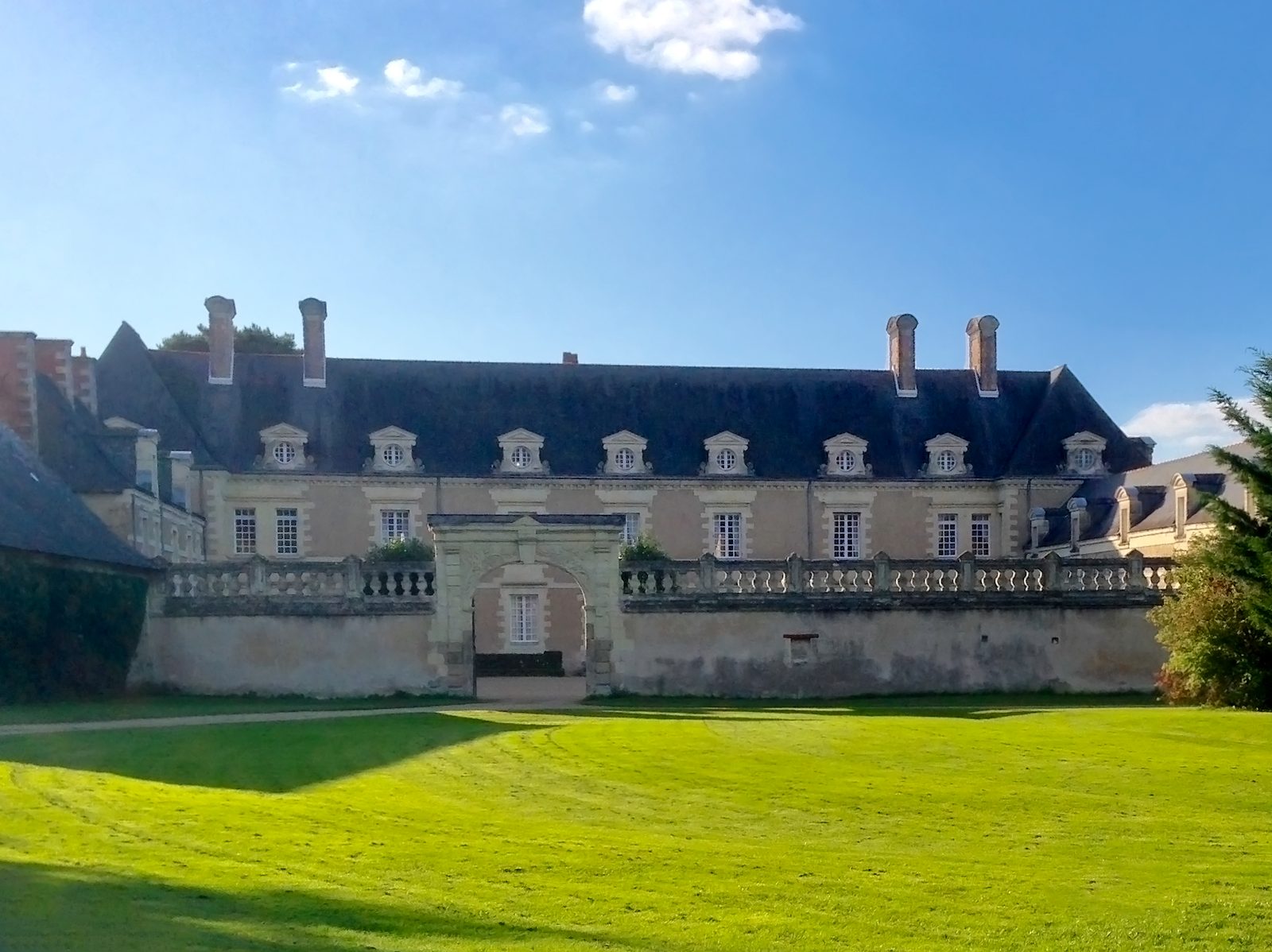
The Château de l’Épinay is a 17th-century residence located in Carquefou, in the Loire-Atlantique department of the Pays de la Loire region in western France, on the northeastern outskirts of Nantes. It now stands within the 67-hectare Golf de Carquefou, created in 1993.
An earlier seigneurial residence existed on the site from at least the late 14th or early 15th century. A first château, purchased by Charles de Harrouys in 1586, stood at the entrance to the town. It was sacked and burned in 1589 by the troops of the Duke of Mercœur during the Wars of Religion; Charles de Harrouys, an opponent of Henri IV, was imprisoned.
Around 1640–1650 the Harrouys family (notably Guillaume / Jean de Harrouys, councillor to the king, magistrate and mayor of Nantes from 1625 to 1627) built a new château, long known as “le nouvel Épinay”, on the site of the former Manoir du Bernier. The design is attributed to the celebrated architect François Mansart. The building has a sober, pure classical exterior. The original interior was rustic in character, with large rooms spanning the full width of the structure, communicating with one another and featuring exposed beam ceilings. A central porch with round arches once allowed carriages to set down passengers under cover; it was later replaced by glazed doors preceded by a perron. A chapel and the lower farm courtyard (basse-cour) were demolished in 1866.
In 1733 Hilarion de Becdelièvre sold the seigneury and château to Michel Taverne, a Nantes merchant. Since that date the property has remained in the same family line through successive marriages: Taverne → Linsens → Boucher d’Argis (Gaspard-Albert Boucher d’Argis was mayor of Carquefou from 1882 to 1899) → de Montbeillard. Members of the de Montbeillard family still reside there (Albert de Montbeillard was mayor of Carquefou in 1941–1943 and 1944–1953; the current occupants are Albert and Sabine de Montbeillard).
The façades and roofs of the buildings surrounding the courtyard, the eastern closing wall and the courtyard itself were inscribed as a Monument historique on 18 June 1963. Together with the Château de la Seilleraye, it is one of only two buildings in Carquefou protected at this level. The château remains private property and is occasionally opened to the public on heritage days.
Take Mobile History with you
You are reading this text for free. Premium adds what matters on the road: descriptions read aloud, sites found through your camera, whole regions taken offline.
- Every description, including the ~17,700 Premium sites
- Audio guide: have descriptions read to you on location
- AR finder: see sites through your camera, with distance and bearing
- Unlimited saved sites
14 days free, then from €2.99 a month. Cancel anytime.
Source: Wikipedia · Licence: CC BY-SA 4.0 · Image: Vincent Valentin · Wikimedia Commons · CC BY-SA 4.0
This description draws on the facts documented in the linked Wikipedia article; Wikipedia content is licensed under CC BY-SA 4.0. Wording and editing: Mobile History.
Location: 47.2878, -1.4903