To be privately owned
CastleBarbechat
Château de la Berrière
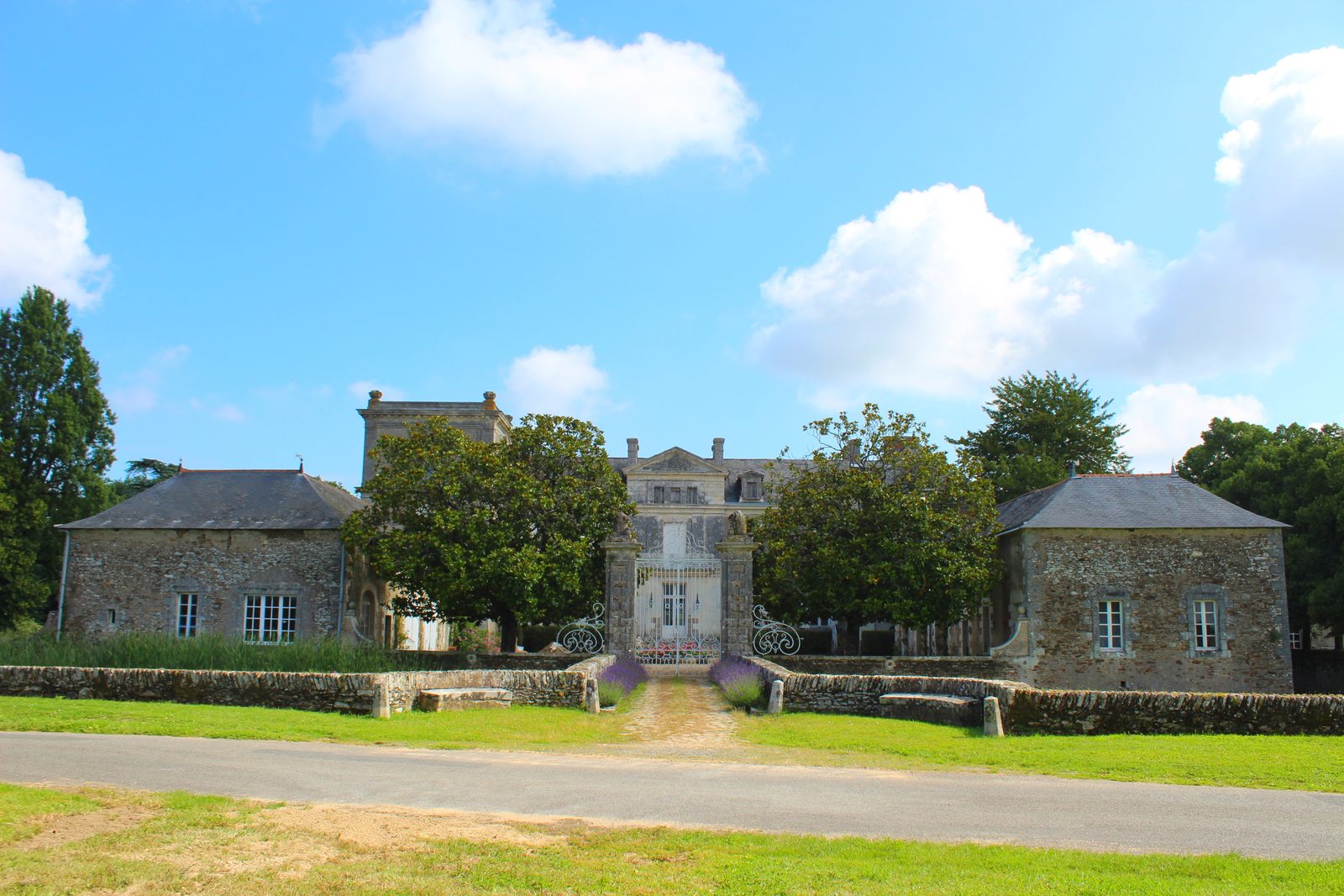
The Château de la Berrière is a historic seigneurial residence located in Barbechat (a delegated commune of Divatte-sur-Loire), in the Loire-Atlantique department of the Pays de la Loire region in western France. It stands in the countryside between the villages of La Chapelle-Basse-Mer and Barbechat, in the Nantes vineyard area, surrounded by fields and vines.
The estate has probable medieval origins and developed as a seigneurial complex from the 14th century. Successive owners included Pierre Eder, the de Goulaine family (Édouard de Goulaine is recorded as seigneur in 1411), the de Vaux and the de Sesmaisons, who transformed the original fortified site with wide water-filled moats into a residential château. In the early 18th century the Bertrand de Cœuvres family enlarged and remodelled it, planted the vineyard and built the annexes.
The main building was partially burned on 10 March 1794 during the War in the Vendée by the “Colonnes infernales”, destroying the west wing and central body. Between 1800 and 1810 (or around 1812) the de Bascher family rebuilt the logis in the Directoire style on the same plan as the earlier 18th-century structure. The family had acquired the property around 1737 and retained it for three centuries. Around 1860 a pentagonal addition was made to house a new staircase; between 1908 and 1912 the painter Joseph de Bascher converted the attic of the west wing into a studio with neo-Renaissance decoration.
The present château is a complete seigneurial domain comprising the Directoire-style main residence, wings of outbuildings framing the courtyard of honour, a basse-cour with service buildings, a 15th-century seigneurial chapel (retaining 16th-century stained-glass fragments), a 17th/18th-century barn, a dovecote, cellars, a hangar and a bakery. The park, remodelled in the early 19th century, includes an old fishpond (vivier) and portals. High-quality neo-classical woodwork survives in the grand salon and library.
The château and its essential elements (platform, moats, bridges, façades and roofs of the main buildings and outbuildings, chapel, barn, dovecote, service buildings and parts of the park) were inscribed as a Monument historique in 2011. It was selected by the Mission Bern (Loto du Patrimoine) in 2017 as a monument in peril. After nearly three centuries in the de Bascher family, the 75-hectare estate was sold in early 2025 to a private buyer. An association of friends continues to support maintenance and organises cultural events, concerts and heritage openings.
Take Mobile History with you
You are reading this text for free. Premium adds what matters on the road: descriptions read aloud, sites found through your camera, whole regions taken offline.
- Every description, including the ~17,700 Premium sites
- Audio guide: have descriptions read to you on location
- AR finder: see sites through your camera, with distance and bearing
- Unlimited saved sites
14 days free, then from €2.99 a month. Cancel anytime.
Source: Wikipedia · Licence: CC BY-SA 4.0 · Image: Nathan Guigand · Wikimedia Commons · CC BY-SA 4.0
This description draws on the facts documented in the linked Wikipedia article; Wikipedia content is licensed under CC BY-SA 4.0. Wording and editing: Mobile History.
Location: 47.2775, -1.3182