To be privately owned
CastleOlonne-sur-Mer
Château de Pierre-Levée
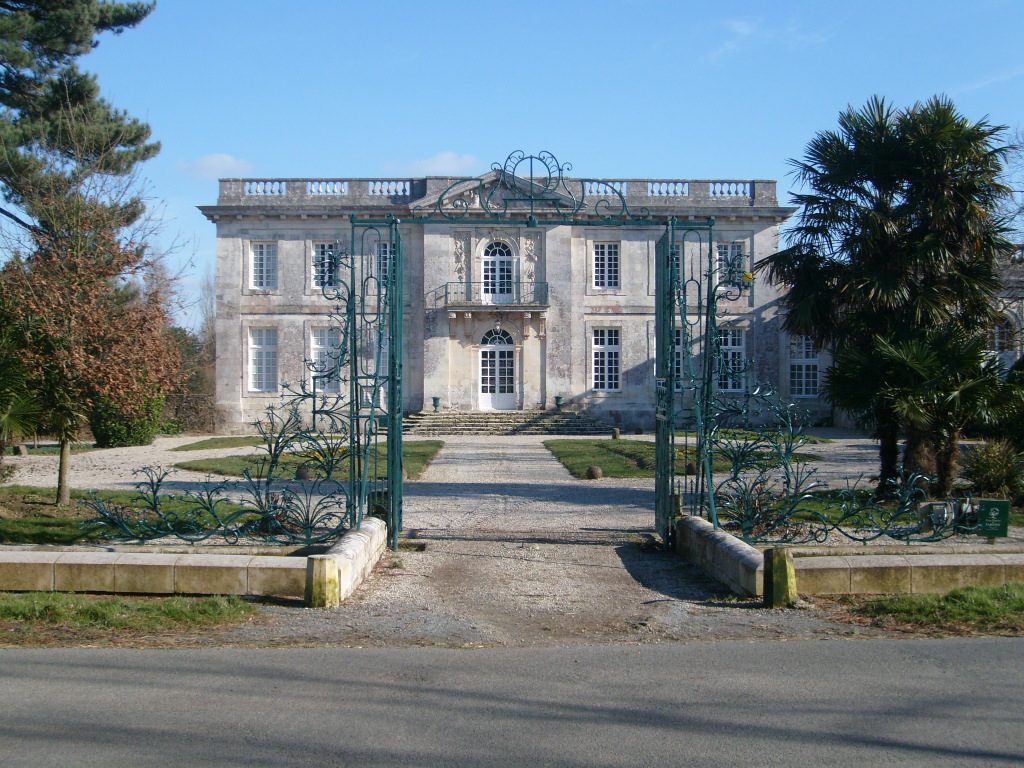
The Château de Pierre-Levée, nicknamed the “Petit Trianon de Vendée”, is an 18th-century residence located in Olonne-sur-Mer (now part of the commune of Les Sables-d’Olonne), in the Vendée department of the Pays de la Loire region in western France, a short distance inland from the Atlantic coast.
The site is a prehistoric landmark. Its name derives from two menhirs (one of granite, one of schist) standing about seven metres apart on the property; they were first recorded in 1070 and are traditionally said to mark the winter solstice and to represent Man and Woman.
The château was built in the third quarter of the 18th century (approximately 1760–1775) by Luc Pezot, a wealthy local bourgeois who successively held the positions of city financier, shipowner, alderman and receiver of the taille. Inspired by the pure lines of the Petit Trianon at Versailles, he deliberately erected a residence of royal ambition at a time when the kingdom stood on the brink of bankruptcy and the population lived in hardship. The architect Nicolas Ducret is associated with the project.
Luc Pezot died without heirs. After the Revolution the estate passed to the Auvynet family; their descendants (connected with the family de La Roche-Saint-André) still own and inhabit the château today.
The façades and roofs of the château, the ground-floor rooms, the walled park (including gates and grilles), the sundial and the outbuildings (except the farm) were classified as a Monument historique on 5 July 1949. The château itself (apart from the already classified parts) had been inscribed on 10 April 1948, and the tree-lined avenue leading to the château together with the wood opposite it were inscribed on 17 June 1949.
The property remains private and is not regularly open to the public, though it opens exceptionally for the European Heritage Days. Since 1987 the gardens have hosted an annual sound-and-light show (Scénographie de Pierre-Levée) in early August. Involving some 200–250 volunteer performers, the spectacle recounts local history from prehistory through the construction of the château, the Revolutionary period in the Vendée and into modern times.
Take Mobile History with you
You are reading this text for free. Premium adds what matters on the road: descriptions read aloud, sites found through your camera, whole regions taken offline.
- Every description, including the ~17,700 Premium sites
- Audio guide: have descriptions read to you on location
- AR finder: see sites through your camera, with distance and bearing
- Unlimited saved sites
14 days free, then from €2.99 a month. Cancel anytime.
Source: Wikipedia · Licence: CC BY-SA 4.0 · Image: Olonnois · Wikimedia Commons · CC BY-SA 3.0
This description draws on the facts documented in the linked Wikipedia article; Wikipedia content is licensed under CC BY-SA 4.0. Wording and editing: Mobile History.
Location: 46.5283, -1.7501