To be privately owned
CastleSaint-Michel-le-Cloucq
Château de Saint-Michel-le-Cloucq
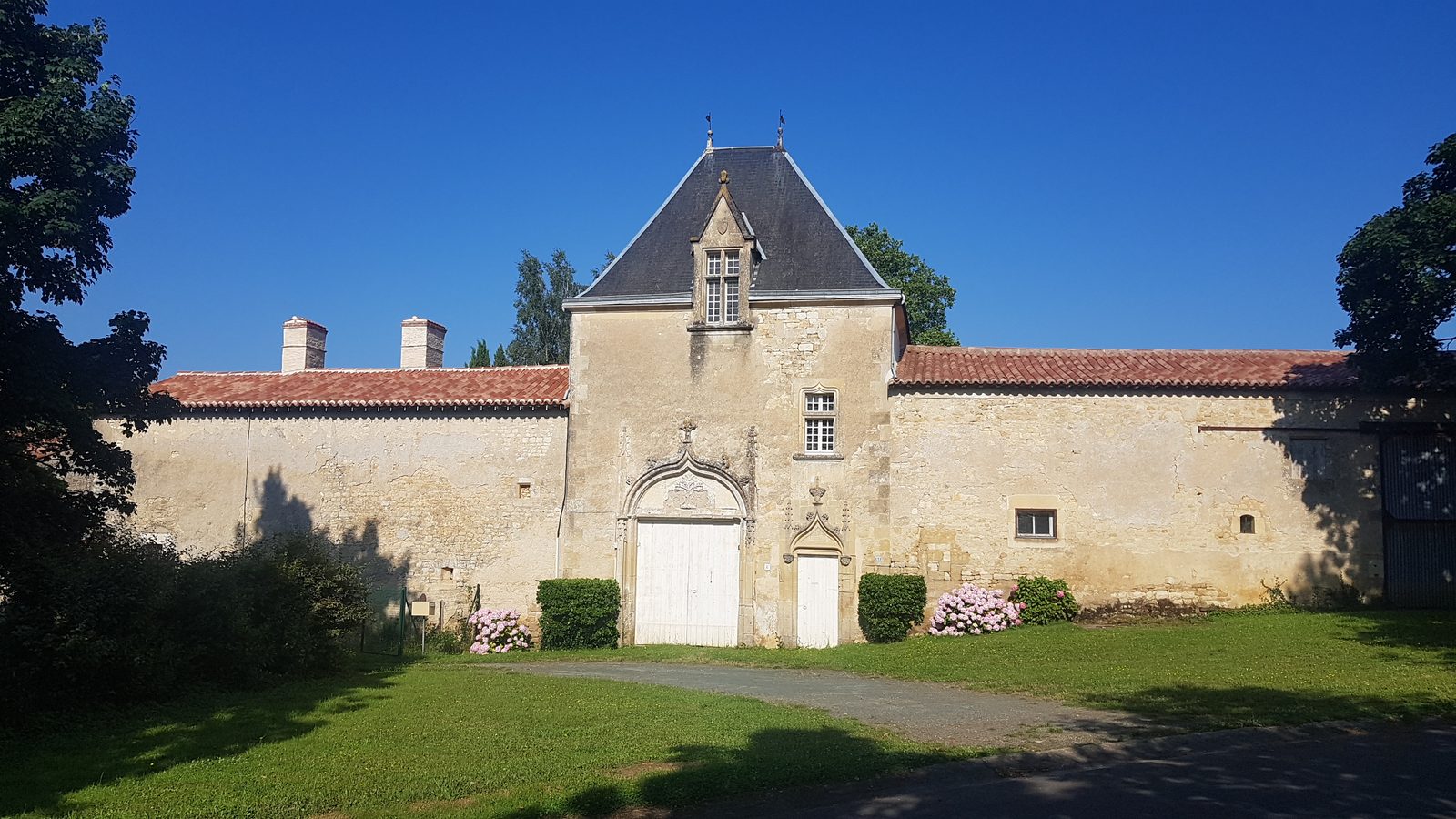
The Château de Saint-Michel-le-Cloucq, also known as the Château du Bourg, is a historic residence located in the heart of the village of Saint-Michel-le-Cloucq, in the Vendée department of the Pays de la Loire region in western France. The commune lies south of the Forêt domaniale de Mervent, at the boundary between the bocage to the north and the cereal plain to the south, a short distance from Fontenay-le-Comte.
The seigneury is mentioned from the 12th century. Guillaume de Saint Michel, écuyer, is recorded as seigneur in 1145. Later lords include Lancelot and Gillet de Saint Michau in the early 15th century, followed by the Bonneau family. The seigneury held rights of high, middle and low justice and depended on Vouvant. From the late 16th century (Jean de Chasteigner around 1580) the estate remained in the de Chasteigner family for nearly five centuries.
In 1935 the Comte de Chasteigner sold the domain to Louis Charon, mayor of Saint-Michel-le-Cloucq. It stayed with the Charon and then Charon-Kiéné family until 2014, when it was purchased by Jean-Jacques Gaboriau, a young building engineer passionate about historic architecture. He undertook a careful restoration over several years and received a regional prize for the quality of the work.
The building is a typical Vendéen Renaissance logis (or “logis bas-poitevin”), combining the seigneurial residence with the farm to form a homogeneous ensemble of buildings organised around one or two large courtyards that structured agricultural life. Its foundations likely date back to the 13th century, while the present main body displays 15th- and 16th-century characteristics, with later modifications continuing into the 19th century. Notable features include the sober, elegant façade of the main corps de logis, which opens onto the park by a horseshoe staircase; a private chapel; and the entrance porch with poterne, surmounted by a pediment decorated with fleurons, a sculpted tree and the coats of arms of the de Chasteigner family.
The château remains private property and is not open to the public on a regular basis. It is one of four historic private châteaux in the commune.
Take Mobile History with you
You are reading this text for free. Premium adds what matters on the road: descriptions read aloud, sites found through your camera, whole regions taken offline.
- Every description, including the ~17,700 Premium sites
- Audio guide: have descriptions read to you on location
- AR finder: see sites through your camera, with distance and bearing
- Unlimited saved sites
14 days free, then from €2.99 a month. Cancel anytime.
Source: Wikipedia · Licence: CC BY-SA 4.0 · Image: Jjgaboriau · Wikimedia Commons · CC BY-SA 4.0
This description draws on the facts documented in the linked Wikipedia article; Wikipedia content is licensed under CC BY-SA 4.0. Wording and editing: Mobile History.
Location: 46.4853, -0.7519