Abbey
MonasteryBuchau
Buchau Abbey
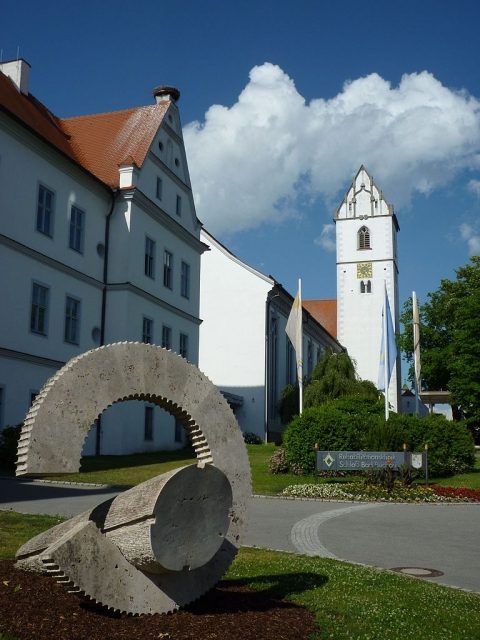
Buchau Abbey, otherwise the Imperial Abbey of Buchau (German: Reichsstift Buchau), was a self-ruling Imperial Estate and its abbess had a seat and vote at the Imperial Diet.
History+
According to tradition, the monastery was founded around 770 on an island in the Federsee by the Frankish Count Warin, his wife Adelindis von Buchau (still commemorated in the local Adelindisfest).
Whether Buchau was initially a house of canonesses regular or a Benedictine abbey is unclear. The abbey was put on a secure financial footing by Louis the Pious, who in 819 granted the nuns property in Mengen. In 857, Louis the German declared it a private religious house of the Carolingian Imperial family, appointed as abbess his daughter Irmingard (died 16 July 866), and granted the abbey lands at Saulgau. In the 13th century the town of Buchau, which had grown up in the immediate vicinity of the abbey, gained the status of a Free imperial city after a long period of strife between the townspeople and the abbey. From then on and until 1803, Buchau Abbey and the Imperial City of Buchau, both self-governing entities fully independent of each other, were compelled to coexist. Unlike most of the other Free Imperial Cities, Buchau was to remain Catholic in the course of the Reformation. In 1347, Buchau Abbey gained Imperial immediacy and the abbess was raised to the rank of Princess-Abbess. The abbey was an Imperial Estate and its abbess had a seat and vote at the Imperial Diet.
Source: Wikipedia · Licence: CC BY-SA 4.0 · Image: http://commons.wikimedia.org/wiki/File:Bad_Buchau_-_Kirche_mit_Schlo%C3%9F_und_Kunstwerk.jpg?uselang=de
This description is an excerpt from the linked Wikipedia article and was written by its authors. Like the original it is licensed under CC BY-SA 4.0 and may be reused under the same terms.
Location: 48.0675, 9.6116