Ancient BuildingRoma

Domus Augusti

Domus Augusti

The remains of the ancient town can be visited

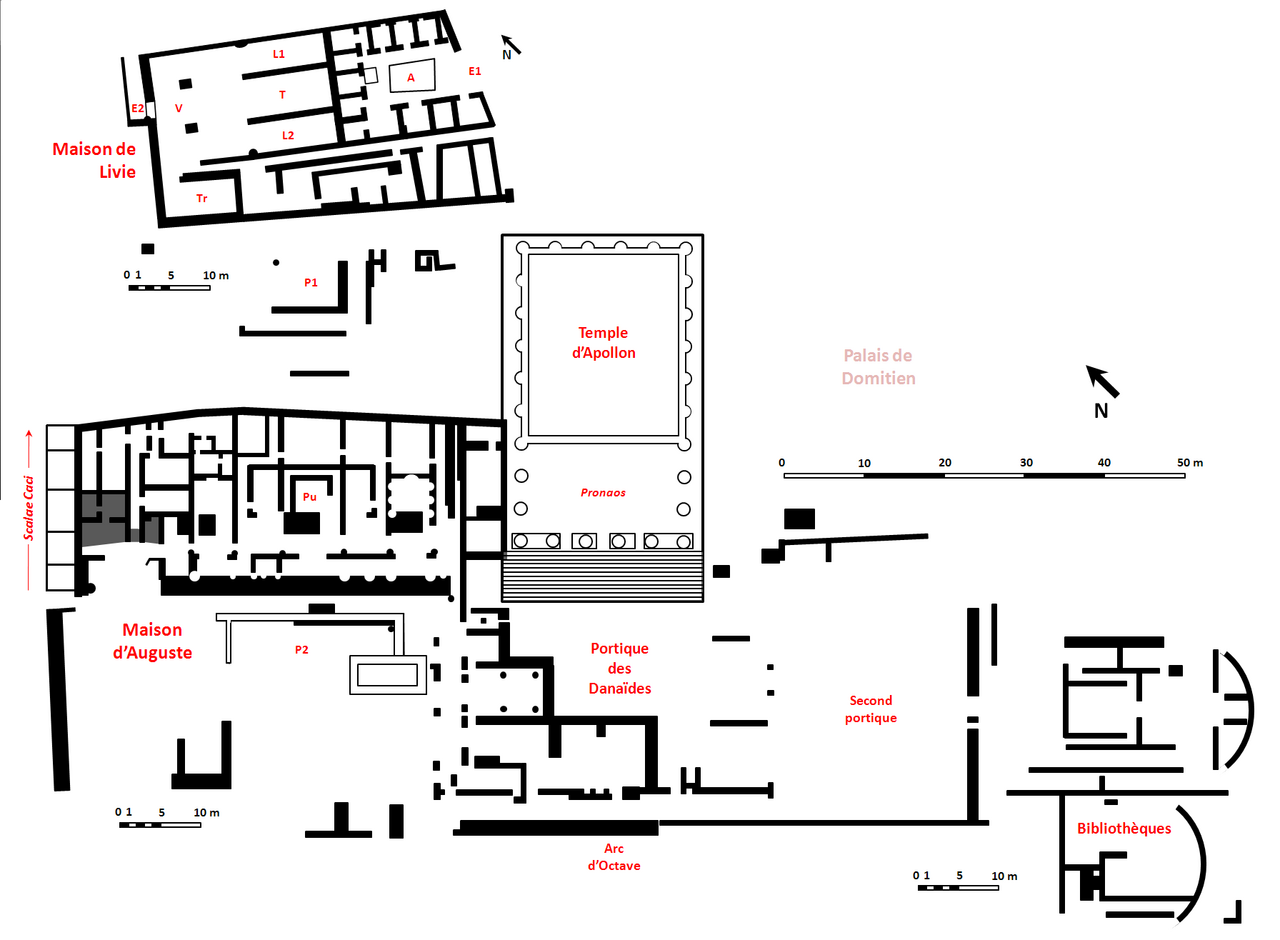
The House of Augustus, or the Domus Augusti (but also Domus Augustea), is the first major site upon entering the Palatine Hill in Rome, Italy. It served as the primary residence of Caesar Augustus during his reign. The Domus Augusti should not be confused with the Domus Augustana (also known as the Domus Augustiana), which is a part of the vast palatial complex constructed by Emperor Domitian on the Palatine in 92 AD, of which the Domus Flavia is another part.

Construction+

After being awarded tribunica potestas for life in 23 BC, Octavian decided to buy the house of Quintus Hortensius on the Palatine and make it his primary place of residence. The comparative modesty of the Domus Augusti was in keeping with the return to traditional ideals promoted during the Augustan period, as indicated by Suetonius in the quote below. The Domus Augusti was located near the Hut of Romulus and other sacred sites which relate to the foundation of Rome. In antiquity this residence contained two levels, each leading to a garden courtyard. The bottom floor is not accessible today, but it is possible to make out the basin of a fountain and the rooms beyond it that were paved in coloured marble.

The Domus Augusti in Contemporary Times+

Suetonius (c. 70 AD – after 130 AD), lawyer and secretary of the imperial palace, wrote of Augustus and his palace:

It is generally agreed that he was most temperate and without even the suspicion of any fault. He lived at first near the Forum Romanum, afterwards on the Palatine in a modest dwelling remarkable neither for size or elegance, having but a short colonnade with columns of local stone and rooms without any marble decorations or handsome pavements. For more than 40 years he used the same bedroom in winter and summer.

Later History+

According to L. Richardson, Jr.'s A New Topographical Dictionary of Ancient Rome, "The house burned, perhaps in AD 3, but was then rebuilt (Suetonius, Aug. 72.2.) and, made state property (Cass. Dio 55.12.4-5). Suetonius speaks of it in the past tense, so it may be presumed that it burned during the fire of Nero. It has recently been identified as a house northwest of the Temple of Apollo, between this and the Scalae Caci," (p. 118).

Take Mobile History with you

You are reading this text for free. Premium adds what matters on the road: descriptions read aloud, sites found through your camera, whole regions taken offline.

  • Every description, including the ~17,700 Premium sites
  • Audio guide: have descriptions read to you on location
  • AR finder: see sites through your camera, with distance and bearing
  • Unlimited saved sites

14 days free, then from €2.99 a month. Cancel anytime.

Source: Wikipedia · Licence: CC BY-SA 4.0 · Image: Cassius Ahenobarbus / CC BY-SA 3.0 via Wikimedia Commons

This description draws on the facts documented in the linked Wikipedia article; Wikipedia content is licensed under CC BY-SA 4.0. Wording and editing: Mobile History.

Location: 41.8888, 12.4853