The Castle can be visited
CastleDungiven
Dungiven Castle
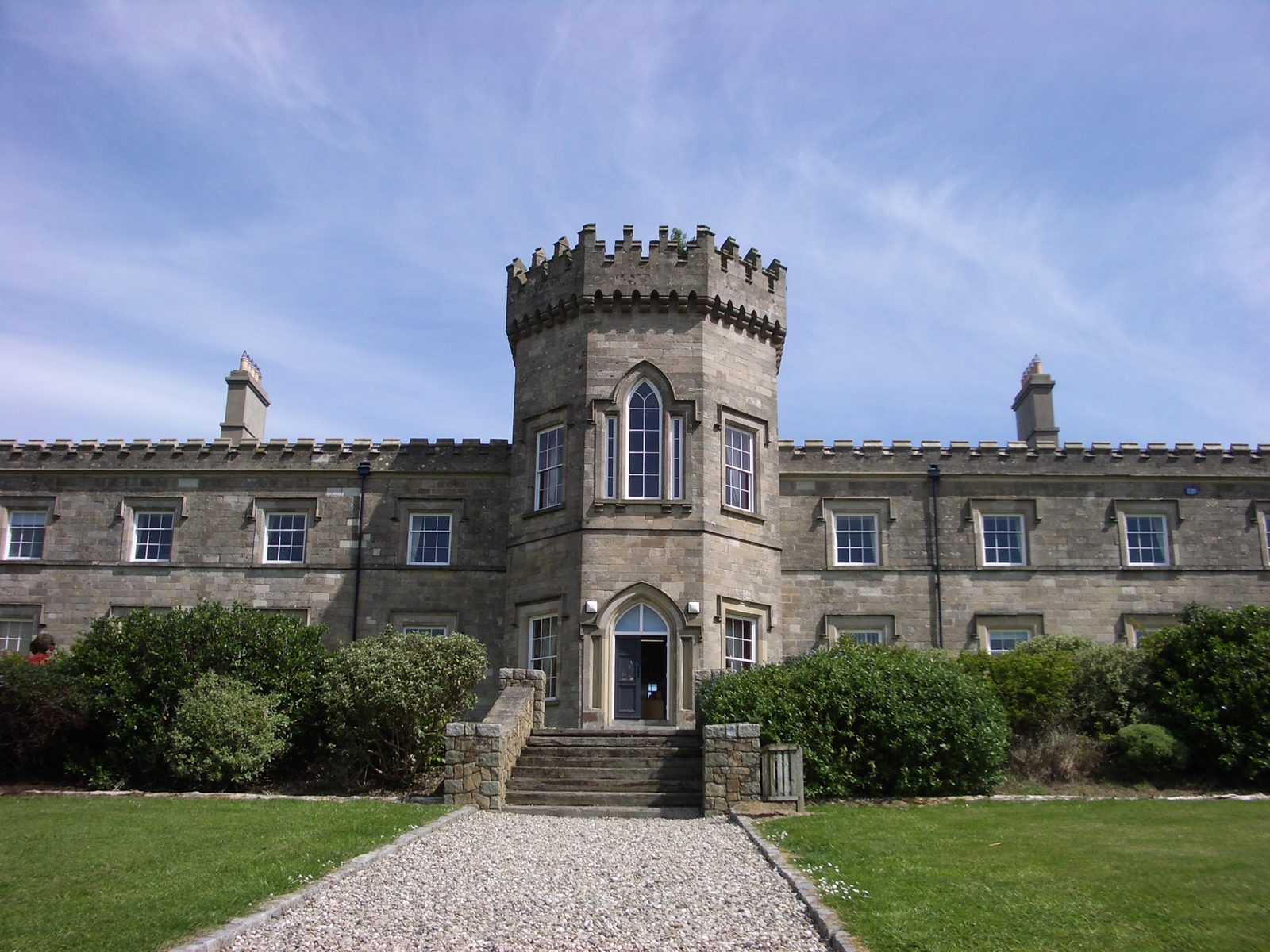
Dungiven Castle is a 19th century castle in Dungiven, County Londonderry, Northern Ireland.
Plantation of Ulster+
In 1610 James I ordered the Great Twelve Livery Companies to undertake the settlement, or plantation, of the Ulster counties of Londonderry and Tyrone. Of the livery companies, the Great Twelve Livery Companies are: The lands to be settled were divided into lots. The Skinners' Company drew lot number 12. Its lands came to be known as the Manor of Pellipar. They, in turn, leased their estate to Sir Edward Doddington in 1616 who built a castle in Dungiven of "22 foot broad, four stories high whereof some part of the walls were standing before; and is now by him well finished and slated". When Sir Edward died in 1618 the lease passed to his widow, Lady Doddington (née Beresford) who later married Sir Francis Cooke and on her death, she demised the Manor of Pellipar to Edward Carey, her grand-nephew. Captain Edward Carey constructed the basis for Dungiven Castle in the mid-17th century as a simple single-story courtyard castle. At this time, castles were falling out of favour so it could be viewed as a manor house with castle-like features. From 1696, the Carey family lived in this property. Edward's son, Henry Carey, got a new lease on 11 January 1742 at a rent of £500 following a down payment of £5,637. Only the bawn walls of it remain on the grounds of Dungiven Castle today. The Carey family continued to hold the estate throughout the rest of the 18th century until 1794, when Robert Ogilby, of Pellipar House, paid Carey £10,000 for his interest in the remainder of the lease before securing a new lease from the Skinners Company on a down payment of £25,000 and a yearly rent of £1,500 with a deposit of £10,000 as security for the rent.
The Ogilbys+
The Ogilvy clan suffered much in the service of the Stewart monarchs, supporting the Jacobite cause and fighting for the Stewart family in both 1715 and 1745. A regiment of Ogilvy's also took part in the Battle of Culloden in 1746. After the defeat, the chief of the Ogilvy clan escaped to France and entered royal service there. By this time, the title of Earl of Ogilvy had been tainted and it was not until 1896 that an Act of Parliament restored the earldom to the family. Alexander's son, Robert Ogilby, a lessee of the estates of the Skinners Company, bought the lease of the Dungiven estate from the Careys in 1794 and built the castle which we see today on top of Carey’s castle which had been badly damaged in a fire between 1836 and his death in 1839. Robert Ogilby (1762-1839), of Pellipar House, Dungiven, wedded firstly, in 1782, Mary, daughter of John Marland, of Dublin; and secondly, in 1809, Joice, eldest daughter of James Scott, of Willsboro', County Londonderry. Whilst the structure had been completed prior to his death in 1839, the interior had not and his nephew, whom his estate passed to, had no interest in completing it. Upon his death, the Skinners Company resumed direct control and drew up plans to restore it, however they never advanced these and instead put the castle up for sale when it was again purchased by the Ogilby family.
The McCloskeys+
James McCloskey, an American, purchased Dungiven Castle from the Ogilbys in 1925 and converted it into four flats. which provided homes for a number of families. However during World War II, the Castle became the home for some of the troops from the second increment of the MAGNET force US Army.
Source: Wikipedia · Licence: CC BY-SA 4.0 · Image: bixentro · Wikimedia Commons · CC BY 2.0
This description is an excerpt from the linked Wikipedia article and was written by its authors. Like the original it is licensed under CC BY-SA 4.0 and may be reused under the same terms.
Location: 54.9248, -6.9210