The Castle can be visited
CastleDurham
Durham Castle
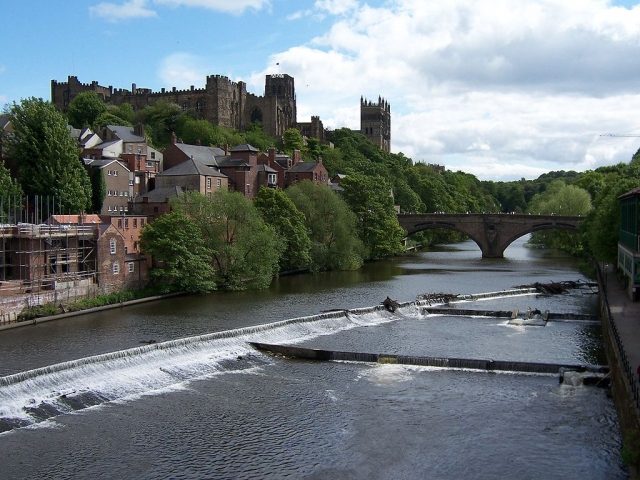
Durham Castle, a Norman fortress, stands on a hill above the River Wear in Durham, County Durham, England. This structure, once serving to protect the Bishops of Durham, is an example of the Norman motte-and-bailey design with over 900 years of continuous occupation.
History+
The origins of Durham Castle date back to the 11th century, when the Normans, following their conquest of England in 1066, erected a fortification to protect the Bishop of Durham. In the early 14th century, Bishop Antony Bek commissioned the Great Hall, which was the largest of its time in Great Britain before being reduced in size by Bishop Richard Fox in the late 15th century. The castle houses two chapels: the Norman Chapel, built around 1078, the oldest accessible part of the castle with Saxon architecture, and Tunstall's Chapel from 1540, which was expanded in the late 17th century. In 1837, Bishop Edward Maltby donated the castle to the newly founded University of Durham to house students, thus becoming University College. The decaying keep was reconstructed according to original plans and opened in 1840. Since 1986, Durham Castle, along with Durham Cathedral, has been a UNESCO World Heritage Site.
Source: Wikipedia · Licence: CC BY-SA 4.0
This description draws on the facts documented in the linked Wikipedia article; Wikipedia content is licensed under CC BY-SA 4.0. Wording and editing: Mobile History.
Location: 54.7755, -1.5764