To be privately owned
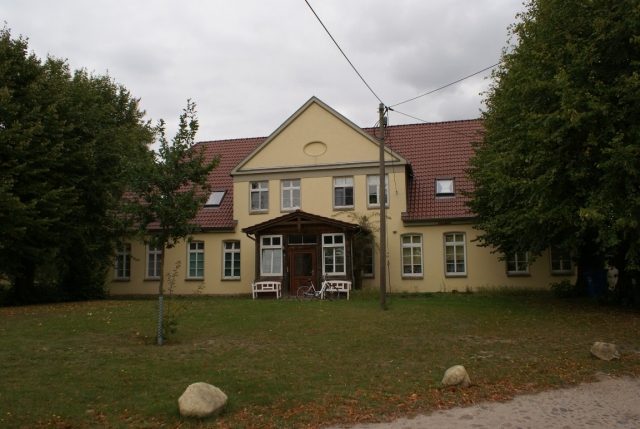
Hilgendorf Manor

The Manor House of Goseck+
A Journey Through Time+
The manor house of Goseck, a building steeped in history, is located in the picturesque village of Goseck in Saxony-Anhalt. Its origins date back to the 19th century, when it was erected on the foundations of a previous building. This predecessor building, probably a medieval knight's seat, already bore witness to a long and eventful past.
The manor house, as it stands today, is a impressive example of the historicist architectural style, which was popular in the 19th century. It combines elements of various epochs and styles, giving it a unique and charming appearance.
From Aristocratic Residence to People's Property+
For centuries, the manor house of Goseck was the residence of various aristocratic families who shaped the history of the region. They were not only landowners, but also patrons of art and culture, and played an important role in the social and economic development of Goseck and its surroundings.
However, this era came to an abrupt end in 1945. With the end of the Second World War and the subsequent occupation by the Soviet Union, the political landscape in Germany changed fundamentally. The owners of the manor house, like many other landowners in the Soviet occupation zone, were dispossessed and expelled by the communists. The manor house became "people's property" and was subsequently used for various purposes, including as a refugee accommodation and a school.
The Manor House Today+
After the reunification of Germany in 1990, the manor house of Goseck was extensively renovated and restored. Today, it shines in new splendor and is a popular destination for tourists and history enthusiasts. It houses a museum that documents the history of the house and its former inhabitants, as well as a cultural center that regularly hosts concerts, exhibitions, and other events.
The manor house of Goseck is not only a historical monument, but also a vibrant place of culture and encounter. It is a testament to a moving past and a symbol of hope for the future.
Architecture and Features
- Built in the 19th century on the walls of a predecessor building.
- Historicist architectural style with elements of various epochs.
- Extensive park with old trees and a pond.
- Several outbuildings, including a stable and a barn.
Historical Events
- 19th century: Construction of the manor house.
- 1945: Dispossession and expulsion of the owners by the communists.
- After 1945: Use as refugee accommodation and school.
- After 1990: Renovation and restoration, conversion into a museum and cultural center.
Take Mobile History with you
You are reading this text for free. Premium adds what matters on the road: descriptions read aloud, sites found through your camera, whole regions taken offline.
- Every description, including the ~17,700 Premium sites
- Audio guide: have descriptions read to you on location
- AR finder: see sites through your camera, with distance and bearing
- Unlimited saved sites
14 days free, then from €2.99 a month. Cancel anytime.
Location: 53.8536, 11.2629