ManorZörbig-Schrenz

Schrenz Manor

Schrenz Manor

To be privately owned

The Manor House of Gut Saathain+

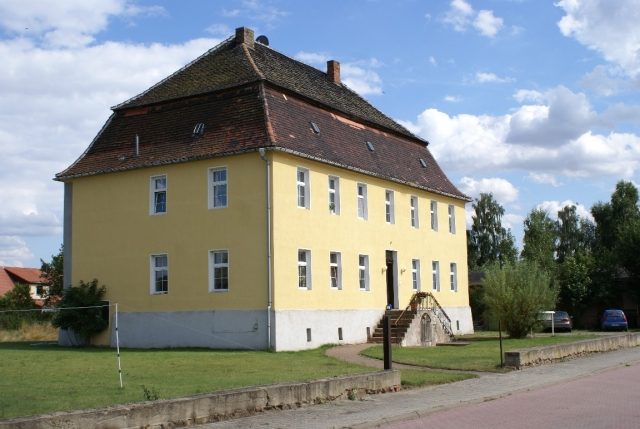
The manor house was built around 1900 and inhabited by the Maquet family until the forced expropriation by the communists in 1945. Today it is back in private hands.

History of the Manor House+

The manor house of Gut Saathain, built around 1900, served as the residence of the Maquet family for several decades. The family, who acquired the estate in the late 19th century, shaped the local agriculture and economy significantly. The manor house was not only a private residence but also the administrative center of the extensive estate.

In 1945, with the end of the Second World War and the subsequent land reform in the Soviet occupation zone, the Maquet family was dispossessed. The manor house, like many other estates in East Germany, was nationalized and subsequently used for various public purposes, including as a residential building for multiple families and as a municipal administration building.

After the German reunification in 1990, the manor house was privatized again. It was acquired by new owners who extensively renovated and restored it. Today, the manor house is once again privately owned and serves as a residential building, preserving its historic charm and significance.

Architecture and Features+

The manor house is an impressive example of the architecture of the turn of the century. It combines elements of historicism with regional building traditions. The facade is characterized by decorative details, large windows, and a stately entrance area.

Inside, the manor house still boasts many original features, such as stucco ceilings, wooden paneling, and historic doors. The spacious rooms and high ceilings reflect the former splendor and representative character of the building. A special feature is the well-preserved staircase, which leads to the upper floors.

The manor house is surrounded by a large park, which was also part of the original estate. Although the park has undergone changes over time, some old trees and parts of the original layout are still preserved, contributing to the picturesque overall impression of the property.

The Maquet Family+

The Maquet family played a central role in the history of Gut Saathain. They were known as progressive farmers and entrepreneurs who introduced modern agricultural methods and promoted the local community. Their influence extended beyond the estate itself and shaped the entire region.

The family's commitment was not limited to agriculture; they also supported social and cultural projects in the surrounding villages. Their legacy lives on in the memory of the local population and in the preserved buildings of Gut Saathain.

Current Use and Future+

Today, the manor house is privately owned and serves as a residence. The current owners are committed to preserving the historic substance and maintaining the building in accordance with monument protection guidelines. Regular maintenance and careful renovations ensure that the manor house retains its beauty and structural integrity.

The manor house of Gut Saathain remains an important historical monument and a living testimony to the region's past. It symbolizes the changing history of Germany and the efforts to preserve cultural heritage for future generations.

Take Mobile History with you

You are reading this text for free. Premium adds what matters on the road: descriptions read aloud, sites found through your camera, whole regions taken offline.

  • Every description, including the ~17,700 Premium sites
  • Audio guide: have descriptions read to you on location
  • AR finder: see sites through your camera, with distance and bearing
  • Unlimited saved sites

14 days free, then from €2.99 a month. Cancel anytime.

Location: 51.5887, 12.0711