Museum
ManorMünster-Gievenbeck
Rüschhaus Manor
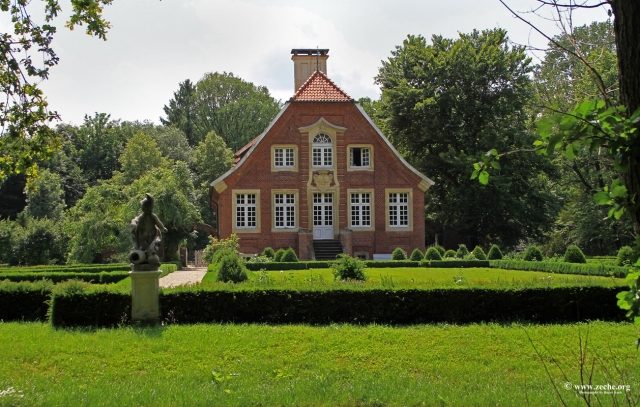
In Münster-Gievenbeck, Haus Rüschhaus is a manor and country house that combines the elegance of a country estate with the design of a Westphalian moated farm.
History+
The estate was constructed between 1745 and 1748 based on designs by Johann Conrad Schlaun, who initially used it as his summer residence. Schlaun harmonized French stylistic elements with regional building traditions. The sculptor Johann Christoph Manskirch also contributed to the embellishment. In 1825, Baron Clemens-August II von Droste zu Hülshoff, father of the poet Annette von Droste-Hülshoff, acquired the country house. After her father's death in 1826, Annette von Droste-Hülshoff moved here with her mother and sister Jenny and lived at Haus Rüschhaus until 1846, with interruptions for stays at Schloss Eppishausen and Burg Meersburg. During this period, works such as ballads, verse epics, “Die Judenbuche,” and parts of the poetry cycle “Das geistliche Jahr” were created. After her, her mother and later two of her nephews inhabited the house. One of the nephews, Moritz von Droste zu Hülshoff, had a neo-Gothic wayside shrine erected in 1883.
Source: Wikipedia · Licence: CC BY-SA 4.0 · Image: http://www.zeche.org/
This description draws on the facts documented in the linked Wikipedia article; Wikipedia content is licensed under CC BY-SA 4.0. Wording and editing: Mobile History.
Location: 51.9855, 7.5512