Hotel
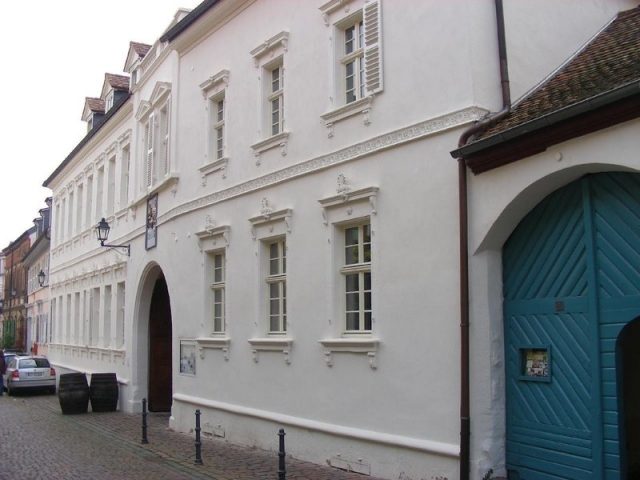
Nagelscher Hof Manor

The Historic Building: A Journey Through Time+
Location and Initial Construction+
The historic building is located in the heart of the old town, nestled between winding alleys and picturesque squares. Its origins date back to the 14th century, with the first documented mention in 1342. Initially, it served as a residential house for a wealthy merchant family.
Architectural Features and Transformations+
Over the centuries, the building underwent numerous transformations, reflecting the changing architectural styles and needs of its inhabitants. The original Gothic elements are still visible in the vaulted cellar and parts of the ground floor. In the 16th century, a Renaissance facade was added, characterized by ornate window frames and a richly decorated portal. The 18th century brought Baroque alterations, including the addition of a grand staircase and stucco ceilings.
Notable Residents and Historical Events+
The building has been home to many notable personalities throughout its history. In the 17th century, it housed a famous alchemist who was rumored to have discovered the philosopher's stone within its walls. Later, in the 19th century, it served as a meeting place for a secret society of revolutionaries. During World War II, the building miraculously survived heavy bombing, a testament to its robust construction.
Current Use and Preservation Efforts+
Today, the historic building is a protected monument and houses a museum dedicated to the city's history. Extensive preservation efforts have been undertaken to restore the building to its former glory, while also ensuring its structural integrity for future generations. Visitors can explore the various rooms, admire the historical artifacts, and learn about the fascinating stories that unfold within these ancient walls.
Future Outlook+
The historic building continues to be a vibrant part of the city's cultural landscape. Plans are underway to expand the museum and create new exhibition spaces, further enhancing its role as a center for historical education and cultural exchange. The building stands as a timeless symbol of the city's rich past and its enduring commitment to preserving its heritage.
Additional Information
The courtyard complex was built in the 16th century, and rebuilt in the 18th and 19th centuries. A coat of arms/inscription tablet bears the year 1588.
Take Mobile History with you
You are reading this text for free. Premium adds what matters on the road: descriptions read aloud, sites found through your camera, whole regions taken offline.
- Every description, including the ~17,700 Premium sites
- Audio guide: have descriptions read to you on location
- AR finder: see sites through your camera, with distance and bearing
- Unlimited saved sites
14 days free, then from €2.99 a month. Cancel anytime.
Source: Wikipedia · Licence: CC BY-SA 4.0 · Image: http://www.wehrbauten.de/thread.php?threadid=1338
This description draws on the facts documented in the linked Wikipedia article; Wikipedia content is licensed under CC BY-SA 4.0. Wording and editing: Mobile History.
Location: 49.5069, 8.2117