Church, meeting place
MonasteryAugsburg
St. Sebastian
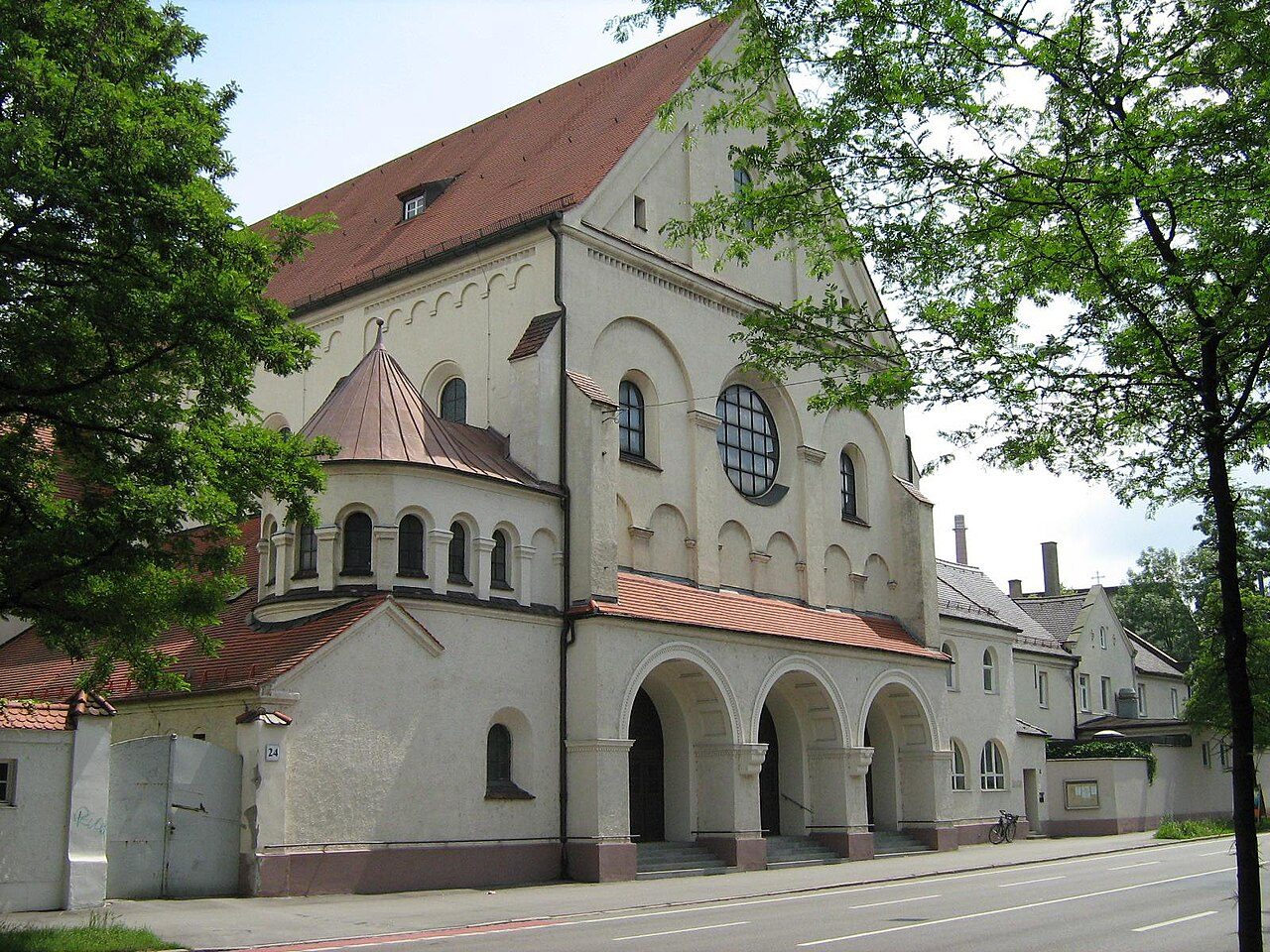
The Capuchin Monastery of St. Sebastian in Augsburg, a remarkable architectural monument in Bavaria, is distinguished by its Neo-Romanesque architecture and a rich history. Located in Augsburg-Oberhausen, surrounded by industrial premises and Sebastianstraße, it houses one of the few Augsburg churches that survived World War II undamaged.
History+
The history of the Capuchins in Augsburg began with the founding of the Monastery of St. Francis and Blessed Gualfardus in 1601 by the Fugger family, consecrated in 1602. This first monastery, however, was dissolved and demolished in 1809 during the secularization. A predecessor building of today's St. Sebastian Church, a chapel, was already erected in 1611–1612 by the city council as a hospital chapel and designed by Elias Holl. After its destruction in the Thirty Years' War and several reconstructions, a Baroque church emerged after 1724. The Capuchins returned to Augsburg in 1843 and settled at St. Sebastian, where they founded a new infirmary, which was elevated to a convent in 1908. Between 1907 and 1909, the monastery was expanded, and the current church was built in Neo-Romanesque style. The monastery, which from 1966 was called “Franciscan Center St. Sebastian” and was closely associated with a lay community, underwent extensive restoration in 1996 before its dissolution on October 26, 2008.
Location+
The former Capuchin Monastery of St. Sebastian is located in the city of Augsburg in Bavaria, Germany, in the Oberhausen district. It lies to the right of the Wertach river and is enclosed on three sides by the factory premises of an engineering company.
On site+
The Church of St. Sebastian, a three-aisled pillar basilica with strict Neo-Romanesque forms and Art Nouveau frescoes, is today a listed building. It houses significant artworks such as a larger-than-life Madonna by Hans Degler and the relics of Saints Wolfhard of Augsburg and Lucius of Chur. The church is co-managed by the parish of St. George and serves as a gathering place for the Croatian church community. Additionally, services in the Slavic-Byzantine rite (in German) take place here once a month. The organ, built in 1912 by H. Koulen & Sohn and restored in 1996, is the largest still-functioning organ by this Alsatian organ builder.
Nearby+
- Monastery St. Georg (sacred building, approx. 642 m away)
- Monastery St. Stephan (sacred building, approx. 725 m away)
- Cathedral of Our Lady (sacred building, approx. 996 m away)
- Episcopal Palace Augsburg (residence, approx. 1033 m away)
Take Mobile History with you
You are reading this text for free. Premium adds what matters on the road: descriptions read aloud, sites found through your camera, whole regions taken offline.
- Every description, including the ~17,700 Premium sites
- Audio guide: have descriptions read to you on location
- AR finder: see sites through your camera, with distance and bearing
- Unlimited saved sites
14 days free, then from €2.99 a month. Cancel anytime.
Location: 48.3817, 10.8957