The church can be visited
ChurchGdańsk (Danzig)
Brigitten Church Gdańsk
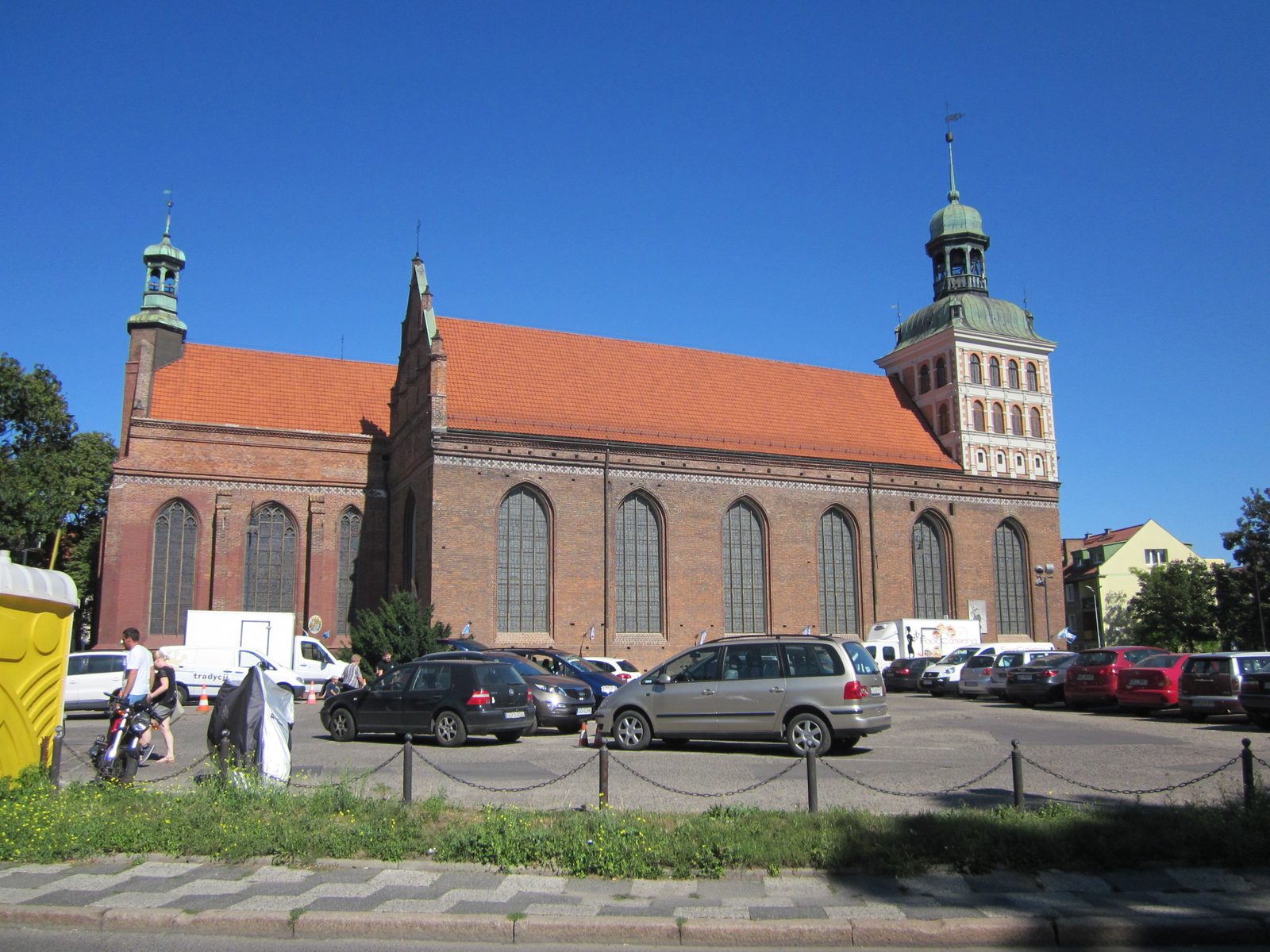
The Brigittenkirche (Polish Bazylika św. Brygidy) is located in Gdańsk's Old Town on Ulica Profesorska and borders the churchyard of St. Catherine's Church and the Radaune Canal to the east. The monastery buildings were located between the north wall of the church and the Radaune Canal until their demolition in 1849. In 1992, Pope John Paul II granted the church the status of a Basilica minor.
History+
The church's name goes back to Saint Birgitta of Sweden. In 1374, the body of Saint Birgitta, when it was brought from Rome to Sweden, was laid out for about two weeks in the small chapel of St. Mary Magdalene, which was located on the site of the present Brigittenkirche. On this occasion, in 1396, the Grand Master of the Teutonic Order, Konrad von Jungingen, had a single-nave church built instead of the chapel. The small nunnery next to the chapel was enlarged. He handed both over to the Bridgettine Order. At the beginning of the 16th century, the monastery still housed 80 nuns. In 1587, the church and the monastery burned down, and were not completely rebuilt and redesigned by the Bridgettine Order until 1602. The interior of the church, designed in Renaissance style, consisted of three naves, separated by ten pillars. In the nunnery, a cloister and a new dormitory were built in 1648. In 1673, a bell tower was built in the southeastern corner of the church. In the first half of the 18th century, the church and the monastery of the order received their final appearance. During the occupation of Gdańsk around 1807 by Napoleon's French troops, the church and the monastery were used as barracks. For the duration of the occupation, the nuns had to leave the monastery. Many precious objects and ornaments from the interior decoration of the church were lost. In 1817, in the course of the Prussian Reforms under King Frederick William III, the secularization of the monastery took place, which had to pass to Prussia after the death of the people living in the monastery. In 1849, the monastery buildings were demolished and the present rectory was built in their place. In the Second World War, in 1945, the church burned down and was largely destroyed. The last remaining fragments of the roof truss and one of the spires of the southern nave were destroyed by fire in 1957. In 1970, at the initiative of Father Henryk Jankowski, its reconstruction began, which lasted until 1987. In the sacristy, H. Hahn's painting of 1612 "Apotheosis of Saint Birgitta" was hung. During the Solidarność movement, it was a meeting place and action center for the young free trade union around Lech Wałęsa and gained fame. The provost of the Brigittenkirche, Henryk Jankowski, was Wałęsa's confessor and one of the first churchmen to openly support the strikers and their movement. In the choir there is an 11-meter-high monumental amber altar in the shape of a rising lily, dedicated to the memory of the 28 shipyard workers who died during protests in December 1970.
Take Mobile History with you
You are reading this text for free. Premium adds what matters on the road: descriptions read aloud, sites found through your camera, whole regions taken offline.
- Every description, including the ~17,700 Premium sites
- Audio guide: have descriptions read to you on location
- AR finder: see sites through your camera, with distance and bearing
- Unlimited saved sites
14 days free, then from €2.99 a month. Cancel anytime.
Source: Wikipedia · Licence: CC BY-SA 4.0 · Image: Claus-Joachim Dickow · Wikimedia Commons · CC BY-SA 3.0 de
This description is a machine translation of an excerpt from the linked Wikipedia article. The source text was written by its authors, the translation is by Mobile History; like the original it is licensed under CC BY-SA 4.0.
Location: 54.3546, 18.6522