Monastery (active)
MonasteryOstrach
Kloster Habsthal
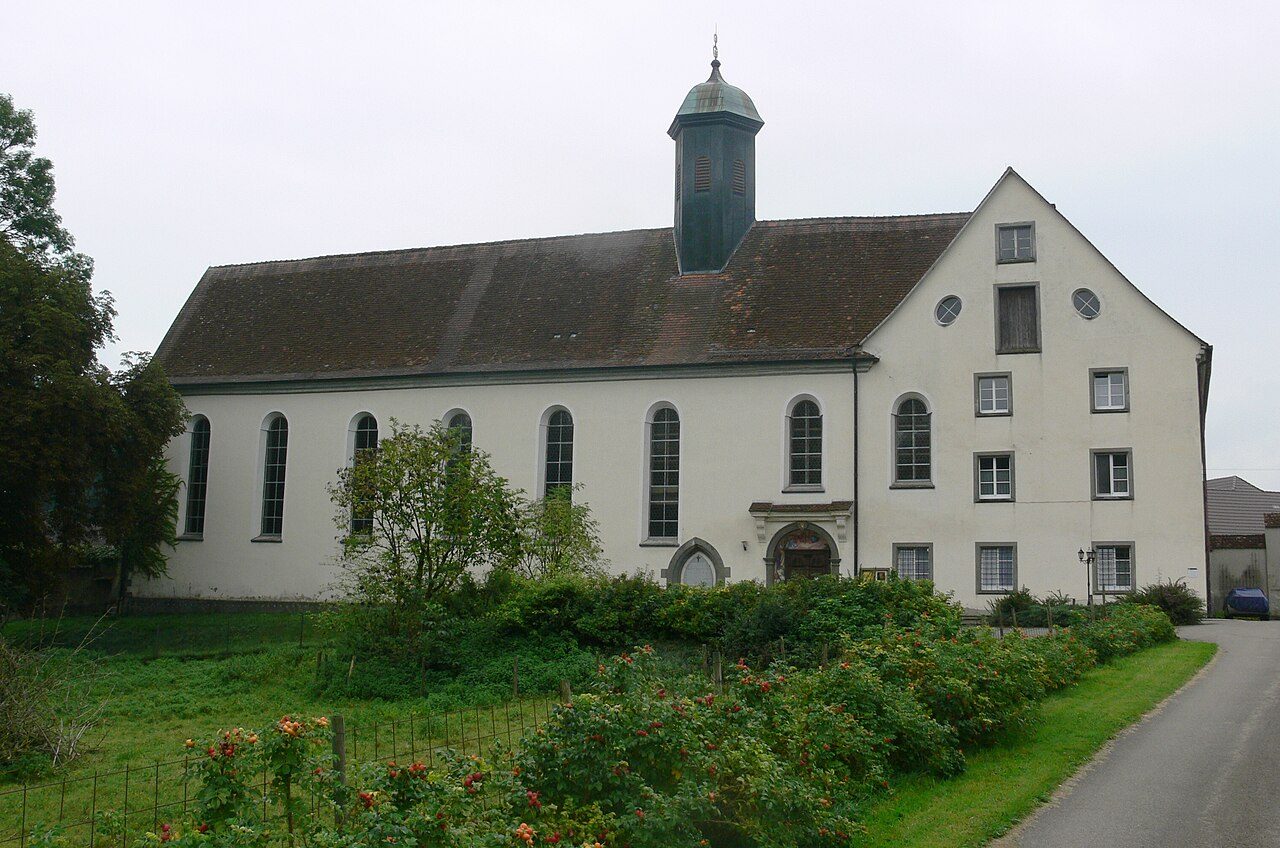
Habsthal Monastery, a Benedictine convent, is situated in Habsthal, a district of Ostrach in the Sigmaringen district. It is a lesser-known Baroque gem in Upper Swabia and is located on the Upper Swabian Baroque Route, the Upper Swabian Pilgrimage Route, and a section of the Habsthal St. James's Way.
History+
The monastery's origins trace back to Mengen, where a community of Beguines formed in the first half of the 13th century. These women dedicated themselves to caring for the sick, the poor, and orphans. With ecclesiastical recognition and the support of benefactors such as Count Palatine Hugo IV of Tübingen and King Rudolf of Habsburg, they moved to Habsthal in 1259. There, they joined the Dominican Order and subsequently lived according to the Rule of Saint Augustine, characterized by strict enclosure and choral prayer. The monastery, established between 1259 and 1266, acquired a small dominion in the districts of Habsthal, Rosna, and Bernweiler through donations and held lower jurisdiction. Napoleon dissolved the convent in 1806, and its possessions passed to the Principality of Hohenzollern-Sigmaringen. Although the nuns were allowed to continue living in the monastery under restrictions, the Dominican convent was finally dissolved in 1840. The buildings subsequently served as an educational institution and later as a penal and correctional facility. In 1892, Benedictine nuns from Switzerland acquired the monastery building and established the abbess's seat and the novitiate there. The monastery's patron saint is Mary.
Location+
Habsthal Monastery is located in Habsthal, a district of Ostrach, in the Sigmaringen district of Baden-Württemberg, Germany.
On site+
The monastery building is a four-wing complex with an eastward-facing church, constructed in the 13th century according to the St. Gall plan. A Baroque Mount of Olives, dating from around 1520, is situated slightly apart at its northwest corner. The monastery church of St. Stephen was partially rebuilt and expanded around 1650 after its destruction in the Thirty Years' War. Its Baroque furnishings were completed around 1750, presenting itself as a hall church with a straight choir. The church houses numerous artistic treasures that reflect the monastery's veneration of Mary over nearly 600 years. Since 2013, the monastic community has operated a monastery shop. Roof and facade renovations were completed in 2014.
Nearby+
- Wilhelmiten Monastery, then Benedictine Priory Mengen (Monastery, approx. 6279 m away)
- Krauchenwies Castle (Castle, approx. 6332 m away)
- Princely Country House (Castle, approx. 6460 m away)
- Sisters' Collection Mengen (Monastery, approx. 6456 m away)
Take Mobile History with you
You are reading this text for free. Premium adds what matters on the road: descriptions read aloud, sites found through your camera, whole regions taken offline.
- Every description, including the ~17,700 Premium sites
- Audio guide: have descriptions read to you on location
- AR finder: see sites through your camera, with distance and bearing
- Unlimited saved sites
14 days free, then from €2.99 a month. Cancel anytime.
Location: 47.9914, 9.3217