Monastery operation
Museum
MonasteryHaslach
Haslach Abbey
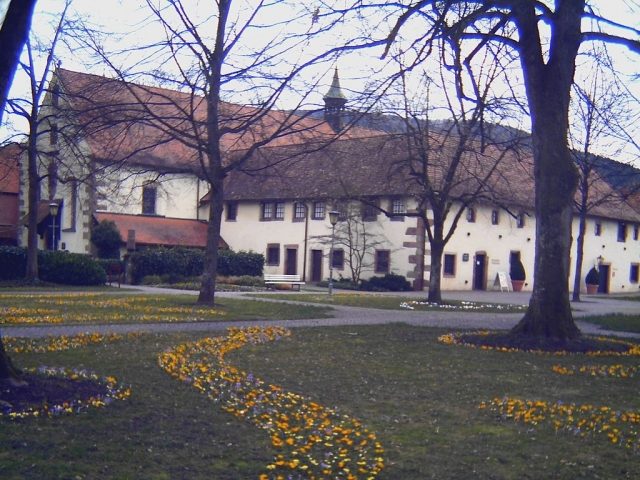
The Capuchin Monastery Haslach is located in the middle of the town of Haslach in the Kinzig Valley, Black Forest, Baden-Württemberg, Ortenaukreis.
The monastery was built between 1630 and 1632 by Count Christoph II von Fürstenberg, in the midst of the Thirty Years' War. The wealthy part of the Haslach population had to contribute to the construction of the monastery with donations. Maximilian Franz von Fürstenberg (1634–1681) had the Loreto Chapel, which belongs to the monastery, built in 1660. The Loreto pilgrimage sanctuary in Italy served as a model.
Haslach became the Fürstenberg family monastery during this time, which is also evident from the fact that three dynasties of the Fürstenbergs found their final resting place here in the monastery. The entire complex was built strictly according to the model of a mendicant order.
From the second half of the 18th century, the monastery increasingly had problems with guardianship by the authorities and the increase in enlightened ideas, which led to disputes within the monastery. In 1795, the monastery was plundered by French troops.
In 1802, the monastery came into the possession of the Princely House of Fürstenberg. The Capuchins were granted the right to remain. In 1806, the state of Baden became responsible for the monastery.
Source: Wikipedia · Licence: CC BY-SA 4.0 · Image: http://de.wikipedia.org/wiki/Datei:Kapuzinerkloster_1.jpg
This description draws on the facts documented in the linked Wikipedia article; Wikipedia content is licensed under CC BY-SA 4.0. Wording and editing: Mobile History.
Location: 48.2761, 8.0853