The Abbey can be visited
MonasteryHirsau
Hirsau Abbey
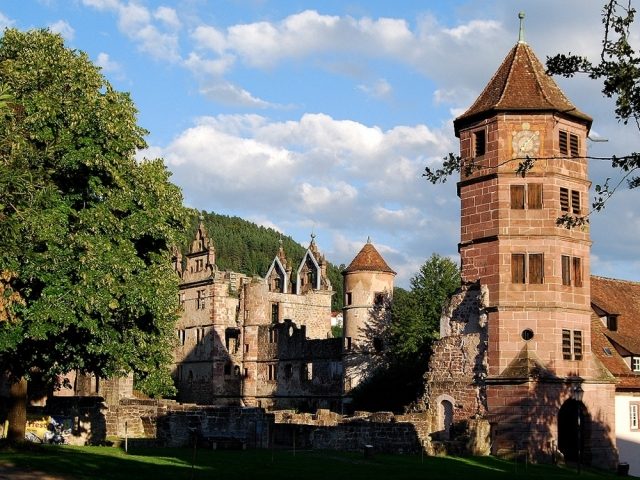
Hirsau Monastery, a former Benedictine abbey, is located in Calw in the Northern Black Forest. The complex, which was once one of the most significant monasteries in Germany, served as an early stronghold of the Cluniac reform movement and was the starting point for numerous monastic foundations and the renewal of existing communities through the Hirsau Reform.
History+
The origins of Hirsau Monastery date back to the 8th century, when a Nazarius Chapel was built around 765. Around 830, the relics of Saint Aurelius were transferred to Hirsau, leading to the foundation of an initial Aurelius Monastery, which existed until about 1000. In 1049, Pope Leo IX ordered the reconstruction of St. Aurelius Monastery, which began in 1059. A three-aisled Romanesque pillar basilica was erected. Due to a large influx of followers and reforms under Abbot Wilhelm (from 1069), the construction of the larger St. Peter and Paul complex became necessary. This complex was built in the late 11th century and was the largest monastery in the German-speaking world at the time of its construction. After the monks moved to St. Peter and Paul in 1092, St. Aurelius was converted into a priory. The dissolution of the monastery occurred during the Reformation in 1534/35. During the War of the Palatine Succession, the complex was burned down by French troops in 1692 and subsequently fell into disrepair.
Source: Wikipedia · Licence: CC BY-SA 4.0 · Image: http://de.wikipedia.org/wiki/Datei:Kloster_Hirsau_2010.jpg
This description draws on the facts documented in the linked Wikipedia article; Wikipedia content is licensed under CC BY-SA 4.0. Wording and editing: Mobile History.
Location: 48.7378, 8.7321