Monastery operation
MonasteryRöderhof
Huysburg Abbey (Röderhof)
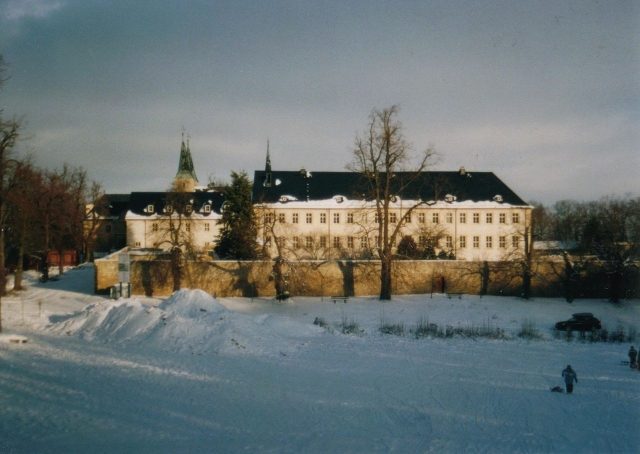
The Huysburg Monastery, a Benedictine abbey, is a stop on the Romanesque Road. Originally, under Emperor Charlemagne, Huysburg served as a military outpost to secure the border against Slavic peoples. After its strategic importance waned, Emperor Otto III granted sovereign rights to the Diocese of Halberstadt in 997. Bishop Burchard I subsequently had a small church built in honor of the Mother of God, which soon attracted hermits. In 1080, Cathedral Canon Ekkehard of Halberstadt, commissioned by Bishop Burchard II, founded a double monastery for men and women and was elected the first abbot. In the 15th century, the monastery joined the Bursfelde Congregation, which advocated for spiritual renewal. During the Peasants' War and the Thirty Years' War, the complex suffered multiple destructions and plunderings but was always rebuilt. As one of the few Catholic monasteries in the region, it maintained its existence even after the Reformation. In the course of secularization, the abbey was dissolved by Prussia in 1804, and the lands became a state domain. King Frederick William III gifted the domain in 1823 to Karl Friedrich von dem Knesebeck, who had large parts of the monastery demolished to build a castle in Röderhof.
Source: Wikipedia · Licence: CC BY-SA 4.0
This description draws on the facts documented in the linked Wikipedia article; Wikipedia content is licensed under CC BY-SA 4.0. Wording and editing: Mobile History.
Location: 51.9602, 11.0019