The Remains of the Abbey can be visited
MonasteryLorsch
Lorsch Abbey
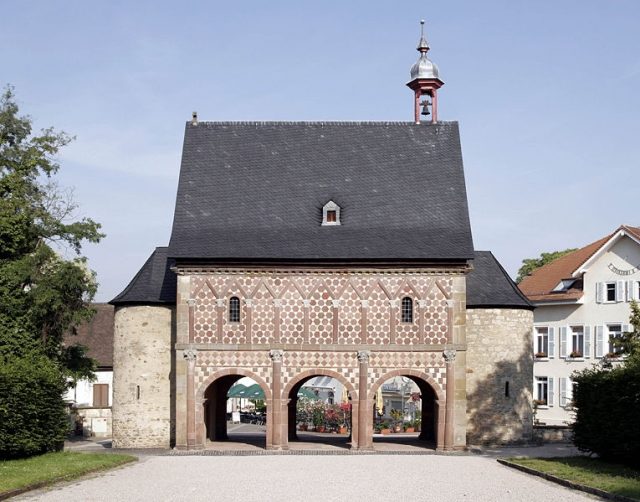
Lorsch Abbey, a former Benedictine monastery in Southern Hesse, founded in 764, is today a UNESCO World Heritage site, a crucial testament to Carolingian architecture.
History+
Lorsch Abbey was founded in 764 by the Robertian Cancor and his mother Williswinth. Initially conceived as a proprietary monastery, it became a pilgrimage destination in 765 with the transfer of the relics of Saint Nazarius by Pope Paul I. After Cancor's death in 771, Abbot Gundeland transferred the monastery to Charlemagne, thereby elevating its status to an imperial abbey and placing it under royal protection. This secured the free election of abbots and immunity. In 774, Charlemagne himself consecrated the new abbey church. Under Abbot Richbod, Lorsch developed into an educational center with a scriptorium and a monastic library. In the 9th century, the Ecclesia varia was built as a burial site for the Carolingians, where Louis the German, among others, found his final resting place. By the end of the 11th century, the abbey's possessions grew considerably through numerous donations.
Source: Wikipedia · Licence: CC BY-SA 4.0 · Image: http://de.wikipedia.org/wiki/Datei:Kloster_Lorsch_03.jpg
This description draws on the facts documented in the linked Wikipedia article; Wikipedia content is licensed under CC BY-SA 4.0. Wording and editing: Mobile History.
Location: 49.6539, 8.5689