Museum
MonasteryKonstanz-Petershausen
Petershausen Abbey
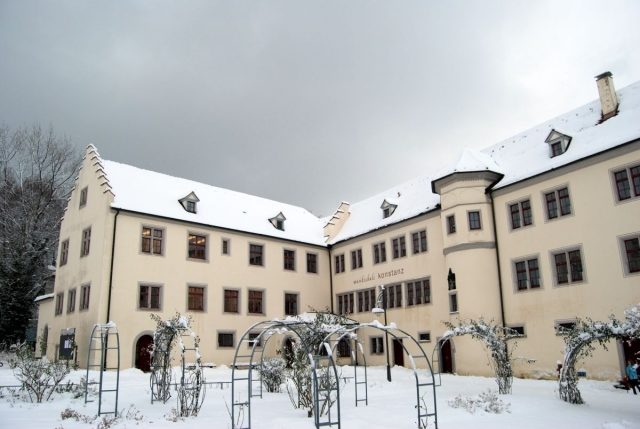
In the Petershausen district of Konstanz in Baden-Württemberg is Petershausen Monastery, a former imperial abbey of the Benedictine order. Originally built outside the city walls at the mouth of the Rhine, its buildings now house, among other things, the central exhibition of the Archaeological State Museum of Baden-Württemberg.
History+
The Petershausen Monastery was founded before 983 by Gebhard II, Bishop of Konstanz. The first monastery buildings and a church, modeled after St. Peter's Basilica in Rome, were erected in 983. The Latin name Petri domus, which later became Petershausen, derives from this inspiration. The consecration of the church in honor of Pope Gregory the Great took place in 992. In the 11th century, the monastery experienced a decline in monastic spirit, prompting Bishop Gebhard III to bring monks from the reform monastery of Hirsau. Abbot Theoderich reformed the monastery. After a fire in 1159, the abbey was rebuilt between 1162 and 1180 and later expanded several times. Under Frederick II, Petershausen gained imperial immediacy, separating from the diocese. During the Council of Konstanz (1414–1418), King Sigismund was a guest at the monastery. In the 15th and 16th centuries, the city of Konstanz attempted to gain control over the monastery, but failed.
Source: Wikipedia · Licence: CC BY-SA 4.0 · Image: http://schloesserrundschau.de/bawue/schloesser/konstanz04.html
This description draws on the facts documented in the linked Wikipedia article; Wikipedia content is licensed under CC BY-SA 4.0. Wording and editing: Mobile History.
Location: 47.6680, 9.1785