Abbey
MonasteryPlankstetten
Plankstetten Abbey
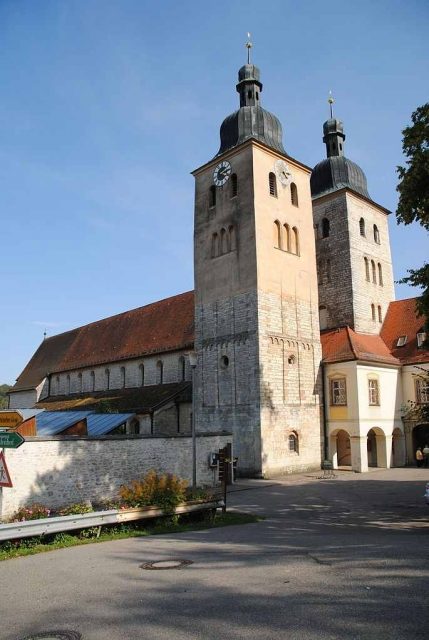
Plankstetten Abbey is a Benedictine monastery in Bavaria, located in Plankstetten, a district of Berching, south of Neumarkt in der Oberpfalz. It has an active monastic community.
History+
The Benedictine monastery of Plankstetten was founded in 1129 as an episcopal proprietary monastery. The initiative came from Count Ernst von Hirschberg and his brother Gebhard von Hirschberg, who was Bishop of Eichstätt. The Romanesque crypt from this early period is still preserved. In the 15th century, the monastery experienced a decline in morals, which Abbot Ulrich IV. Dürner (1461–1494) counteracted with a reform and the establishment of a brewery. During the Peasants' War (1525) and the Thirty Years' War (1618–1648), large parts of the monastery were damaged or destroyed. Renovation work only began in the mid-17th century, with major construction measures following at the end of the 17th century. Abbot Romanus Dettinger (1694–1703) had the Baroque gatehouse with the former abbot's residence and the corner tower built. His successor, Abbot Dominikus II. Heuber (1704–1711), continued the Baroque construction style and relocated the sacristy; the brewery building also originated during his time. Abbot Dominikus IV. Fleischmann (1757–1792) dedicated himself to the monastery church, had the Chapel of the Cross built, and erected the guesthouse. In the course of secularization, the monastery was dissolved in 1806 and its buildings auctioned off. A reconstruction attempt in 1856 failed due to a lack of permits. It was not until 1904 that Plankstetten was re-established as a priory of Scheyern Abbey with financial support from the Barons von Cramer-Klett.
Source: Wikipedia · Licence: CC BY-SA 4.0
This description draws on the facts documented in the linked Wikipedia article; Wikipedia content is licensed under CC BY-SA 4.0. Wording and editing: Mobile History.
Location: 49.0686, 11.4538