The Abbey can be visit
MonasterySchöntal
Schöntal Abbey
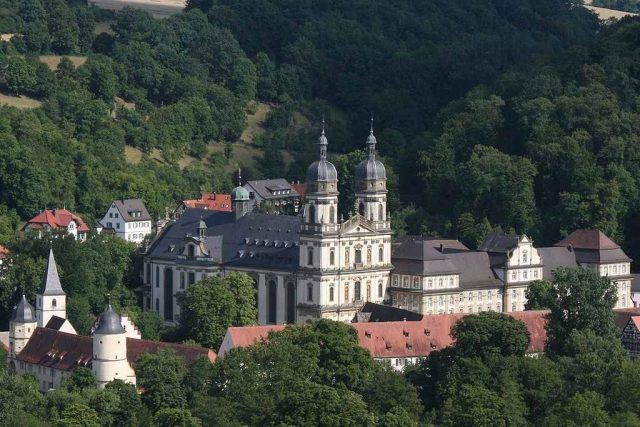
Kloster Schöntal, a former Cistercian abbey with a Baroque church, is a historical monument in Baden-Württemberg. Originally founded in the 12th century, the complex now shapes the district of the same name within the municipality of Schöntal.
History+
The abbey was founded in 1153 in Neusaß by Wolfram von Bebenburg as a filial monastery of Maulbronn Abbey. As the original site proved unsuitable, the community relocated to Schöntal an der Jagst between 1157 and 1163. The Lords of Berlichingen provided the new land and, in return, received the right to burial sites in the abbey's cloister, where Götz von Berlichingen also found his final resting place. In the early 13th century, the monastery faced financial difficulties and was transferred to Kaisheim Abbey in 1282, which settled its debts. Schöntal recovered and was granted imperial immediacy in 1418, which it retained until 1495. During the German Peasants' War in 1525, the abbey was plundered and severely damaged. Despite the Reformation, its dissolution was prevented, but the buildings became uninhabitable. Under Abbot Theobald Fuchs, the Old Abbey was built in 1617/18. The Thirty Years' War brought renewed looting and the flight of the monks.
Source: Wikipedia · Licence: CC BY-SA 4.0 · Image: https://commons.wikimedia.org/wiki/File:Kloster_Schoental_20080725_2.jpg
This description draws on the facts documented in the linked Wikipedia article; Wikipedia content is licensed under CC BY-SA 4.0. Wording and editing: Mobile History.
Location: 49.3285, 9.5055