retirement and nursing home
MonasteryTrier
St. Irmine Abbey
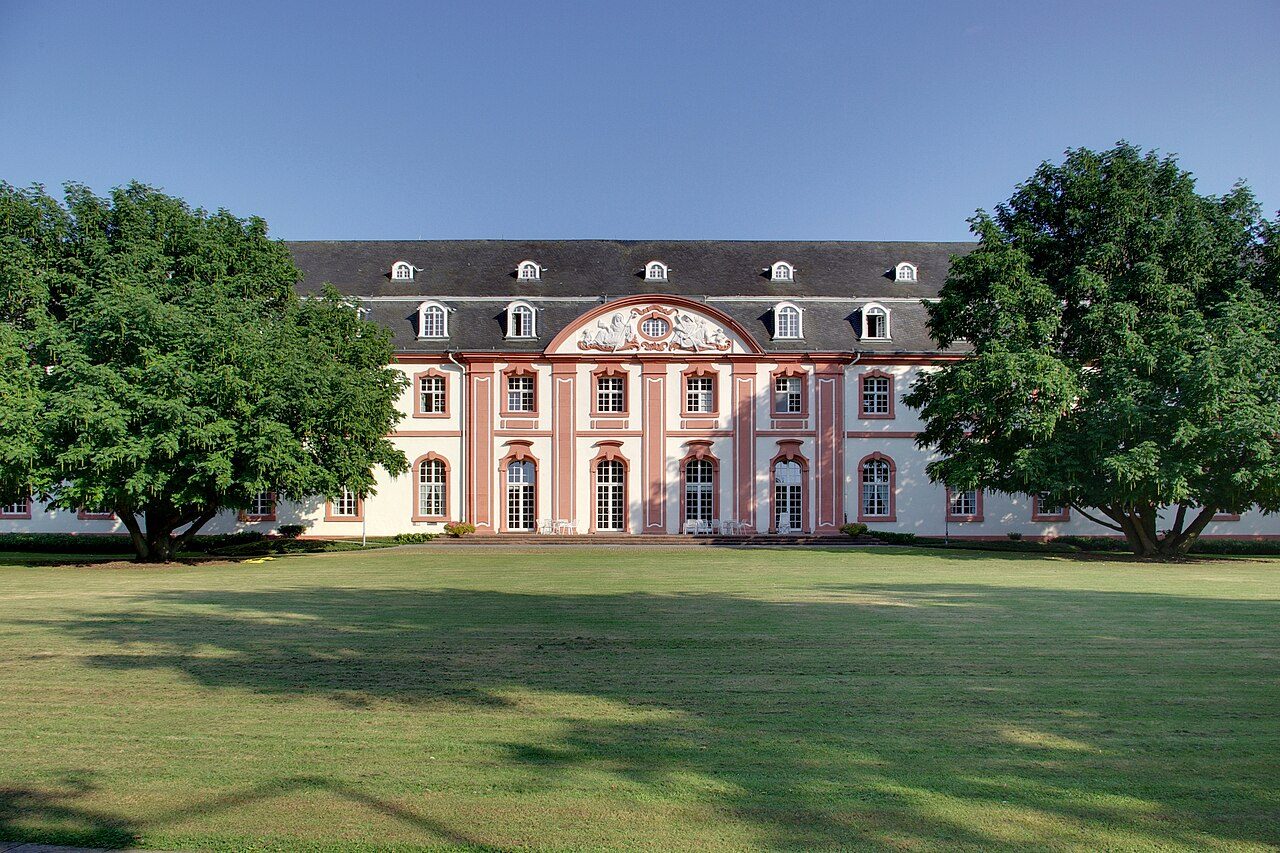
The former St. Irminen Monastery in Trier, Rhineland-Palatinate, is a cultural monument in Germany whose history dates back to Roman times. Originally founded as a Benedictine monastery, it developed into an important spiritual center and is now part of the United Hospices.
History+
The monastery's origins lie in Roman port halls, which, after the fall of Rome, became Frankish royal property. King Dagobert I gifted the land to Trier's Archbishop Modoald, who initially founded a Benedictine monastery there, later converted into a Marian monastery. In 645, it was established as a royal Marian monastery in the ruins of Roman port warehouses by the first abbess Modesta. The name "Oeren" derives from the Latin "horrea" for port warehouses. Between 659 and 704, Irmina, the later namesake, is said to have been the second abbess. The Benedictine Rule was applied at least from 953. From the year 1000, the monastery was subordinated to the Archbishop of Trier. Between 1148 and 1152, it was reformed according to the Augustinian Rule, but was dissolved again in 1495 and the Benedictine Rule reintroduced, closely linked to the Benedictine Abbey of St. Matthias. In the 12th and 18th centuries, the monastery underwent extensive structural changes, including the construction of the hall-like Irminen Church in 1768/69. After repeated damage from wars and epidemics, most recently in 1794, the monastery was secularized in 1802. From 1804, it was converted into a hospital and in 1811 incorporated into the "Vereinigte Hospitien". Almost completely destroyed in a bombing raid in 1944, reconstruction began in 1945. Since 1960, it has primarily served as a retirement and nursing home.
Location+
The former St. Irminen Monastery is located in the city of Trier in Rhineland-Palatinate, Germany, at the present-day Irminenfreihof.
On site+
Today, the building complex houses a retirement and nursing home and is part of the "Vereinigte Hospitien". Remains of the Roman port halls are still visible. The Rococo church of St. Irminen, rebuilt after its destruction in World War II, remains in use. The preserved southeastern tower of the church houses a four-bell carillon.
Nearby+
- Roman Viehmarktthermen Augusta Treverorum (Trier) (Ancient Buildings, approx. 668 m away)
- Roman Bridge Augusta Treverorum (Trier) (Ancient Buildings, approx. 706 m away)
- Palais Kesselstatt (Trier) (Residence, approx. 806 m away)
- Roman Barbarathermen Augusta Treverorum (Trier) (Ancient Buildings, approx. 826 m away)
Take Mobile History with you
You are reading this text for free. Premium adds what matters on the road: descriptions read aloud, sites found through your camera, whole regions taken offline.
- Every description, including the ~17,700 Premium sites
- Audio guide: have descriptions read to you on location
- AR finder: see sites through your camera, with distance and bearing
- Unlimited saved sites
14 days free, then from €2.99 a month. Cancel anytime.
Location: 49.7574, 6.6318