Church community center
MonasterySt. Peter
St. Peter Abbey
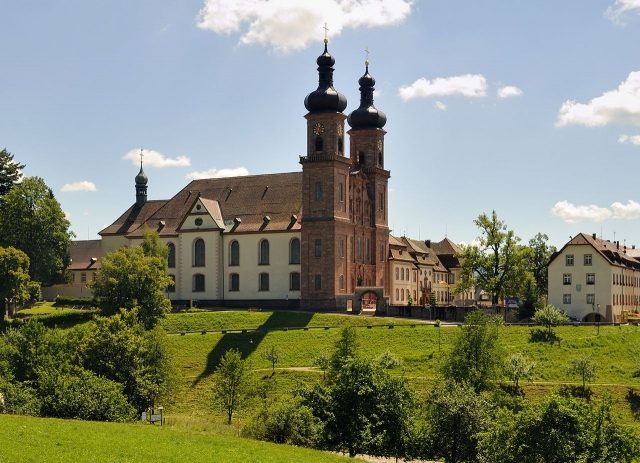
The Monastery of St. Peter, once a Benedictine monastery, served as the house monastery and burial site for the Zähringer dynasty. Its Baroque architecture is prominent today.
History+
The origins of St. Peter Monastery trace back to a private monastery in Weilheim, founded before 1073. Following warlike events during the Investiture Controversy, it came into the possession of Duke Berthold II of Zähringen via Hirsau Abbey. Around 1090, he relocated the community to St. Peter in the Black Forest, where the monastery was completed by 1093. Berthold's wife, Agnes of Rheinfelden, endowed the Burgundian possessions of Buchsee as its foundation. St. Peter quickly developed into a Benedictine reform monastery and was placed directly under papal authority in 1095. Through donations from the Zähringer and their ministerials, the monastery acquired wealth, documented in the Rotulus Sanpetrinus. The Zähringer exercised the Vogtship, which passed to Count Egino the Younger of Urach after the death of Berthold V. Later, the Vogtship went to the Counts of Freiburg, whose arbitrary actions led the monastery to seek imperial protection under Emperor Charles IV in 1361.
Source: Wikipedia · Licence: CC BY-SA 4.0 · Image: http://commons.wikimedia.org/wiki/File:Klosterkirche_St._Peter_-_Gesamtansicht.jpg
This description draws on the facts documented in the linked Wikipedia article; Wikipedia content is licensed under CC BY-SA 4.0. Wording and editing: Mobile History.
Location: 48.0166, 8.0325