Apartments
MonasteryZell am Main
Unterzell Abbey
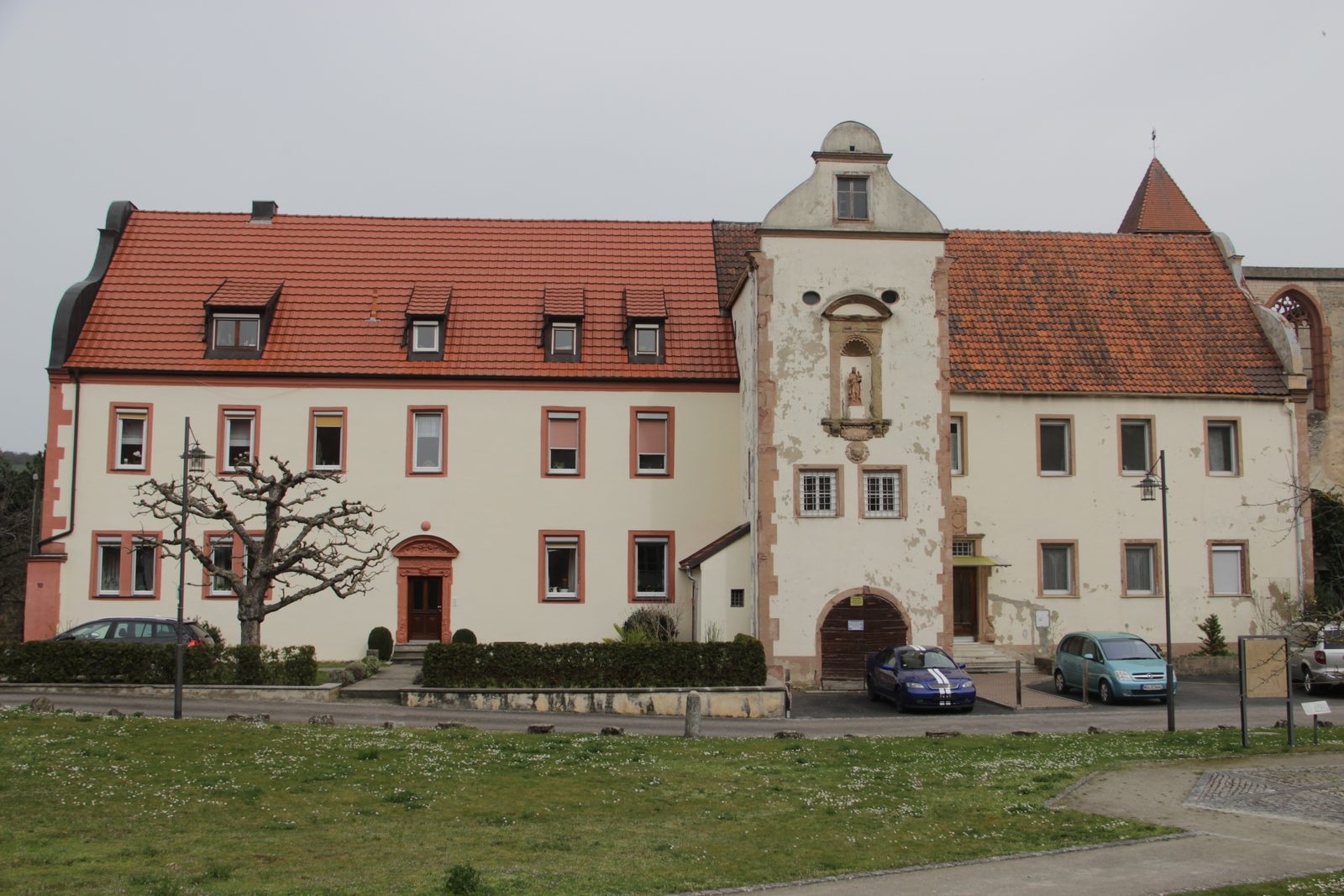
The Unterzell Monastery is a former monastery of the Premonstratensian nuns in Zell am Main near Würzburg in Bavaria in the Diocese of Würzburg.
Dedicated to the Virgin Mary and Cecilia of Rome, Unterzell Monastery was founded around 1230 by Hermann I von Lobdeburg. As Bishop of Würzburg, he relocated the convent of women, which was affiliated with Oberzell Monastery. Rebellious serf peasants plundered the monastery in 1525 during the German Peasants' War. In 1562, under Prince-Bishop Friedrich von Wirsberg, it came under the administration of the Prince-Bishops of the Prince-Bishopric of Würzburg. In 1642, a new convent of choir nuns was formed. A dark chapter in the history of Unterzell Monastery is the fate of Superior Maria Renata Singer von Mossau, who was condemned to death and executed in 1749 during the witch hunts in the Prince-Bishopric of Würzburg. The monastery was dissolved in 1803 during the secularization in Bavaria and sold to interested parties. The church space temporarily served as a goat stable. The high altar and two side altars went to Alt St. Josef in Oberdürrbach.
Jewish Life in the Former Monastery+
In the wake of the Hep-Hep riots in 1819, many yeshiva students and other Jews fled from Würzburg to the surrounding area, including to Theilheim near Werneck to Rabbi Mendel Rosenbaum. Rosenbaum, with others, acquired the former monastery and moved there with his family and Lazarus Bergmann in 1822. Together with some of the fleeing Würzburgers, they founded a new Jewish community there and subsequently also a Talmud school. In addition to his livelihood as a cattle and merchandise dealer, Rosenbaum established a colonial goods trade and a nail forge in Unterzell. From 1825, Bergmann managed the nail forge. After his aliyah with his wife and children in 1834, Rosenbaum's eldest son Moses Rosenbaum continued it.
Market Rights for Zell+
Rosenbaum's economic ventures in Unterzell, along with the high-speed printing press factory of Friedrich Koenig (1774–1833) and Andreas Bauer (1783–1860) located in Oberzell, were decisive in Oberzell and Unterzell being merged as Zell am Main in 1833 and receiving market rights.
War Damage+
An air raid on March 31, 1945 – after the bombing of Würzburg on March 16, 1945 – destroyed the monastery and church. The monastery church remained a ruin, while the monastery building was converted into apartments in the post-war period.
New Ecclesiastical Life from 1971+
The owners of the church property were the former farmer Heinrich Weckesser, his daughter, and her husband. Weckesser, by his own account, was born in the choir, which was then used as living space. As the vault over the nave was in danger of collapsing, the Würzburg District Office issued a demolition order to the owners dated December 7, 1966. Weckesser informed the head of the building department of the District Office, Regierungsrat Hans-Joachim Wachsmuth, that he would not comply with the demolition order; as a pensioner, he could not afford the demolition costs. Wachsmuth suggested he consider selling the church ruin. The buyer could then cover the demolition costs. Wachsmuth thought of the Protestant church as a possible interested party.
Source: Wikipedia · Licence: CC BY-SA 4.0 · Image: Björn Sothmann · Wikimedia Commons · CC BY-SA 4.0
This description is a machine translation of an excerpt from the linked Wikipedia article. The source text was written by its authors, the translation is by Mobile History; like the original it is licensed under CC BY-SA 4.0.
Location: 49.8107, 9.8724