The Abbey can be visited
MonasteryWalkenried
Walkenried Abbey
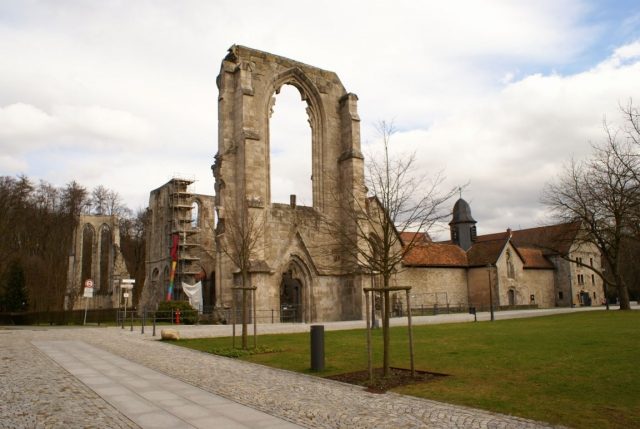
Walkenried Abbey, a former Cistercian monastery, is situated on the southern edge of the Harz Mountains in Lower Saxony, near Osterode am Harz. The complex is notable for the ruin of its abbey church and the largely preserved Gothic cloister building, and has been part of the UNESCO World Heritage since 2010.
History+
The foundation of Walkenried Abbey took place in 1127/1129. Adelheid, likely a sister of Count Berengar I of Lohra, endowed the third Cistercian monastery in the German-speaking area. Monks from Kamp Abbey on the Lower Rhine settled on the offered land, which met the Cistercian site criteria: a low-lying area with a watercourse, sufficient distance from settlements, and potential for economic development. Construction of the Romanesque church began, and Emperor Lothar III confirmed the foundation in 1132. Subsequently, the daughter monasteries of Pforta (1132) and Sittichenbach (1141) were founded. In 1144, the monks began draining and cultivating the Upper Ried. In the 12th and 13th centuries, the abbey developed into one of the wealthiest and most politically significant Cistercian monasteries, engaging in mining, smelting, and agriculture. The Gothic abbey church was consecrated in 1290, and the cloister building was completed around 1330.
Source: Wikipedia · Licence: CC BY-SA 4.0 · Image: Roland Neubert, Halle (Saale)
This description draws on the facts documented in the linked Wikipedia article; Wikipedia content is licensed under CC BY-SA 4.0. Wording and editing: Mobile History.
Location: 51.5830, 10.6192