Cultural Events
MonasteryZinna
Zinna Abbey
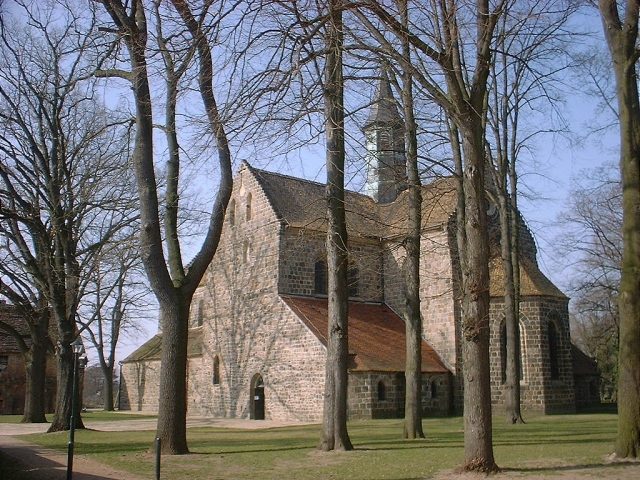
Kloster Zinna is a former Cistercian abbey situated in the Kloster Zinna district of Jüterbog in the Teltow-Fläming administrative region. It is located approximately 60 kilometers south of Berlin, along federal highway B101.
History+
The foundation of Kloster Zinna took place in 1170, initiated by Wichmann von Seeburg, then Archbishop of Magdeburg. The initial monks came from Altenberg Abbey near Cologne. As early as 1179, the monastery was attacked by Duke Casimir I of Pomerania. Following a period of uncertainty and a failed plan to relocate the site, construction of the abbey church, built from granite ashlar, began around 1215, with its consecration occurring in 1226. Subsequently, the monastery experienced significant economic growth. In 1285, it acquired the town of Luckenwalde and eleven surrounding villages. By 1307, the monastic estate reached its peak, covering nearly 300 square kilometers. By the end of the 15th century, the abbey owned 39 villages, 14 mills, a salt well, a pitch hut, and a brickworks. The monastery also held extensive lands in the southeastern Barnim region, including the Rüdersdorf limestone quarry.
Source: Wikipedia · Licence: CC BY-SA 4.0
This description draws on the facts documented in the linked Wikipedia article; Wikipedia content is licensed under CC BY-SA 4.0. Wording and editing: Mobile History.
Location: 52.0255, 13.1019