RuinBurghasungen

Hasungen Abbey (Ruin) (Castlehasungen)
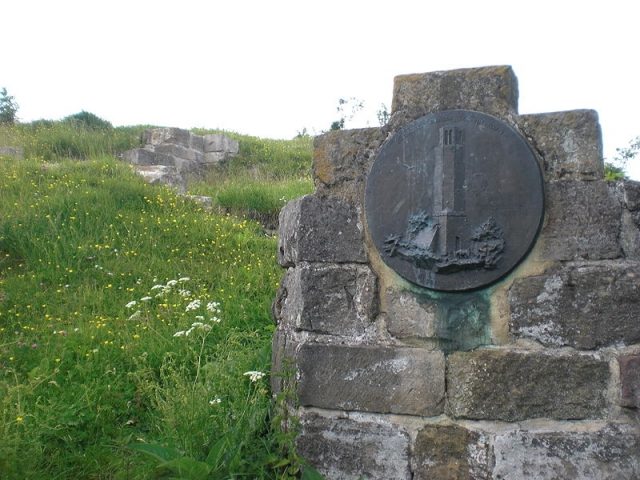
Hasungen Abbey (Ruin) (Castlehasungen)

The remains of the Castle can be visited

Hasungen Abbey, also known as Burghasungen Abbey, was a Benedictine monastery on the plateau of Burghasunger Berg (formerly: Hasunger Berg), which rises in the Habichtswald Nature Park directly east of the Zierenberg district of Burghasungen in the North Hessian district of Kassel.

The holy Heimerad worked on the mountain. The monastery, which existed since 1080/81, was long considered one of the richest and most beautiful monasteries in Hesse. In the Middle Ages, it was a well-known pilgrimage site.

Wandering Preacher Heimerad

The history of Hasungen Abbey begins with the Swabian wandering preacher Heimerad, who traveled via Memleben, Kirchberg, and Kirchditmold to Hasunger Berg. On the mountain, he took care of the local Michael's Chapel and became known regionally as a miracle worker. After Heimerad's death in 1019, Archbishop Aribo of Mainz had a chapel built on his grave in 1021.

Founding and Flourishing of the Monastery

In 1074, Archbishop Siegfried I of Mainz founded a canonry and collegiate church on Hasunger Berg, which was converted into a Benedictine monastery of the Hirsau Observance in 1080/81. The first abbot of the convent, called from Hirsau, was the chronicler Lampert of Hersfeld, although he had sharply attacked Archbishop Siegfried as an opponent of Hersfeld in the "Thuringian Tithe Dispute". This implausible procedure in the Investiture Controversy is explained by the fact that Siegfried had incurred the enmity of King Henry IV and had lost his metropolis Mainz in 1077. In addition, Siegfried of Mainz ensured that Hasungen opened itself to the Cluniac reform by staffing the monastery with Hirsau monks.

After Lampert's death in 1081, Gieselbert became his successor, but could only exercise his position as abbot until the death of Archbishop Siegfried of Mainz in 1084, as his successor, Archbishop Wezilo, was absolutely devoted to the German king. Wezilo forced Gieselbert's renunciation of the abbacy in 1085 and appointed an abbot loyal to the emperor and a Hessian monastic convent.

The Hessian count Werner IV, Vogt of Kaufungen and Fritzlar, united all judicial rights of the monasteries of Hasungen and Breitenau, the St. Petri Foundation Fritzlar, and Kaufungen Abbey in 1113. The monastery acquired property in numerous surrounding villages, and a dispute arose over property claims between the city of Zierenberg and Hasungen Abbey. Werner's possessions and rights in the Hessengau passed first to the Gisonen and then to the Ludowinger after Werner IV's death.

After the death of Henry Raspe, the last Ludowingian Landgrave of Thuringia, in 1247, the Thuringian-Hessian War of Succession broke out between Henry III of Meissen on the one hand and Sophie of Brabant and her still underage son Henry I (the Child) on the other. The war finally ended with the secession, under Henry I, of the new Landgraviate of Hesse from Thuringia. Archbishop Werner of Mainz accused Sophie and her son Henry of withholding the fiefs due to him after the death of Henry Raspe. In 1263, in the Peace of Langsdorf, the disputed Mainz fief of the monastic Vogtship was assigned to the Hessian Landgrave.

In 1330, citizens of Zierenberg burned down the monastery, but had to rebuild it by 1336. In the 14th century, Hasungen Abbey appointed the city school of Wolfhagen, which was also attended by the chronicler and author of the Limburger Chronik, Tilemann Elhen von Wolfhagen.

In 1494, the monastery was reformed. In 1505, it joined the Bursfelde Congregation. Reports of unrest during the Peasants' War came from the surrounding villages in 1525.

Reformation and Decline

In 1527, the monastery was dissolved in the course of the Reformation and the monks were compensated.

During the Thirty Years' War, the monastery complex was severely damaged. Landgrave Moritz the Learned considered using the remaining buildings for the construction of a castle. He personally sketched a conversion plan for this project, but later discarded the plan. Numerous stones were later used, among other things, for the construction of Wilhelmstal Castle near Calden.

The monastery church was only demolished in the course of a new church construction between 1795 and 1800.

On July 1, 1876, a lightning strike split the still preserved bell tower, and in 1896 it finally collapsed completely. Already in 1839, the consecration inscription and a Gothic fragment of a tombstone from 1320, made of red sandstone, were discovered on Hasunger Berg. These finds were attached as spolia to the new classical Burghasungen church.

Today, only the Hasungen Monastery Museum in the village community center, some piles of stones, tower remains, and two commemorative plaques on and around Burghasunger Berg commemorate the monastery.

Museum+

Individual archaeological finds are displayed in the "Hasungen Monastery Museum," an outpost of the "Regionalmuseum Wolfhager Land" in Burghasungen. A new museum building is to be built in the village by 2011.

Take Mobile History with you

You are reading this text for free. Premium adds what matters on the road: descriptions read aloud, sites found through your camera, whole regions taken offline.

  • Every description, including the ~17,700 Premium sites
  • Audio guide: have descriptions read to you on location
  • AR finder: see sites through your camera, with distance and bearing
  • Unlimited saved sites

14 days free, then from €2.99 a month. Cancel anytime.

Source: Wikipedia · Licence: CC BY-SA 4.0

This description draws on the facts documented in the linked Wikipedia article; Wikipedia content is licensed under CC BY-SA 4.0. Wording and editing: Mobile History.

Location: 51.3228, 9.2749