The remains of the Castle can be visited
CastleKrayenberggemeinde-Kieselbach
Krayenburg Castle
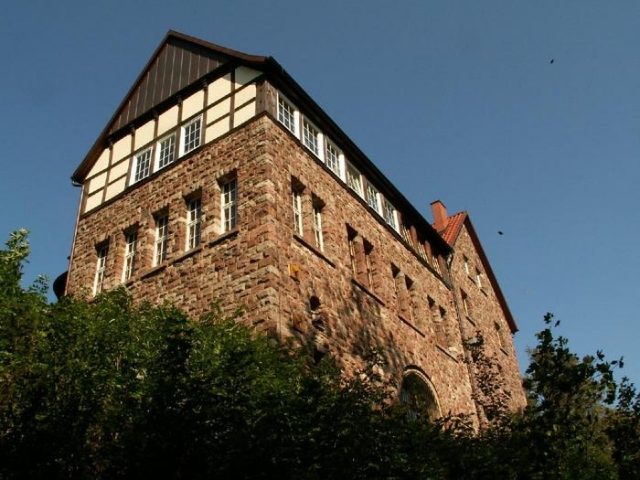
The Krayenburg, a historic castle ruin, is situated on a conical mountain in the Werra Valley. It is one of the oldest stone castles in the region.
History+
The Krayenburg was first documented in 1155 as a possession of Hersfeld Abbey. The noble family of Frankenstein administered the castle as a fief and developed it into a Romanesque complex. Emperor Frederick I Barbarossa confirmed the ownership in 1184. In 1270, it even served as a refuge for Margaretha of Staufen, a daughter of Emperor Frederick II. Later, the castle was also designated for the protection of the Cistercian convent of Frauensee. Following disputes with Fulda Abbey, the Frankensteins lost their feudal rights, and the castle frequently changed hands. In 1407, Hersfeld Abbey pledged the Krayenburg to the Thuringian Landgraves, before it passed to the Duchy of Saxe-Weimar in 1567. From 1567 to 1879, the castle was the residence of the Counts of Beichlingen and the seat of the Kraynburg administrative district. During the Thirty Years' War, the Krayenburg was plundered by Croatian imperial troops in 1640 and subsequently fell into disrepair. Goethe visited the ruin in 1782 and made a drawing. In the 19th century, Romanesque columns were even removed from the palace windows and taken to Wartburg Castle.
Source: Wikipedia · Licence: CC BY-SA 4.0 · Image: http://www.wehrbauten.de/thread.php?threadid=615
This description draws on the facts documented in the linked Wikipedia article; Wikipedia content is licensed under CC BY-SA 4.0. Wording and editing: Mobile History.
Location: 50.8366, 10.1290