Museum
CastleMainz
Electoral Palace
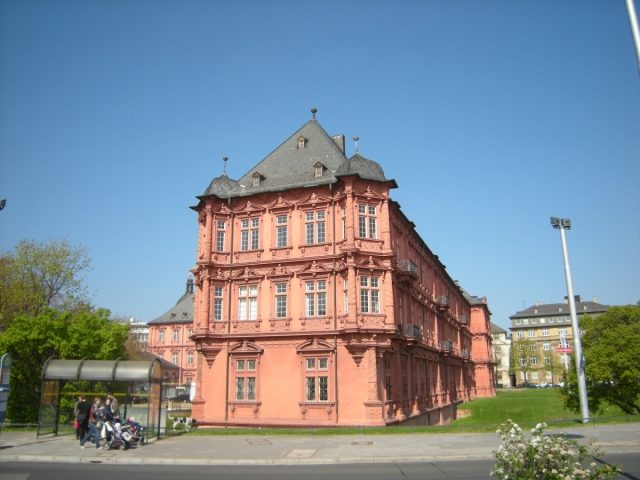
The Electoral Palace in Mainz, a former city residence of the Archbishops and Electors of Mainz, is a building of the German Renaissance. Originally built as a replacement for the residence near the cathedral, it today serves as a cultural hub of the city.
History+
The Archbishops of Mainz originally resided directly at the cathedral. After the election of Diether von Isenburg in 1475, he committed to building a castle in Mainz. Thus, from 1478, the Martinsburg was erected on the banks of the Rhine, completed in 1480, serving as the new residence for the archbishops. Following destruction in the Margrave War of 1552, the castle was rebuilt in Renaissance style and expanded with a chancellery building and the palace church of St. Gangolf. During the Thirty Years' War, construction of the current Electoral Palace began in 1627 under Archbishop Georg Friedrich von Greiffenklau. This construction, whose Rhine wing was only completed in 1687, was delayed due to wartime events and the War of the Palatine Succession.
Source: Wikipedia · Licence: CC BY-SA 4.0 · Image: http://schloesserrundschau.de/pfalz/schloesser/mainz20.html
This description draws on the facts documented in the linked Wikipedia article; Wikipedia content is licensed under CC BY-SA 4.0. Wording and editing: Mobile History.
Location: 50.0067, 8.2706