CastleDresden

Linger Castle

Linger Castle

Cultural Events

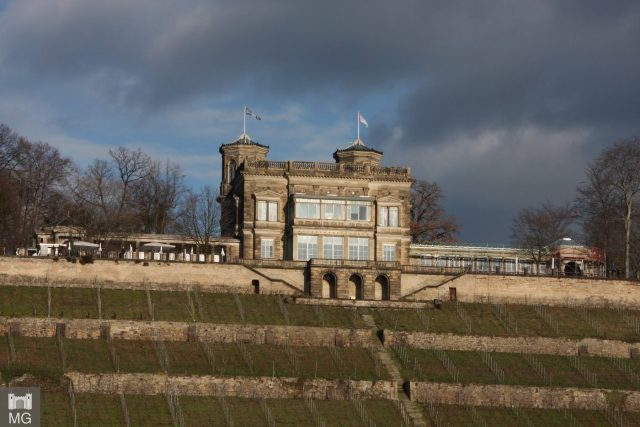
Lingner Castle, actually Villa Stockhausen, is the geographically central of the three Elbe Castles in Dresden. Located in a central position of the former World Heritage Site Dresden Elbe Valley, its terrace offers an imposing view of a large part of the protected area and it was chosen as the seat of the World Heritage Centre. The name "Lingner Castle" (colloquially given after the most famous former owner and resident of the building, Karl August Lingner) is now more common than the original name "Villa Stockhausen".

Origin under Albrecht of Prussia+

It was built from 1850–1853 on behalf of Albrecht of Prussia on one of the vineyard properties that had been owned by the English Earl Lord James Ogilvy, 7th Earl of Findlater, after 1803. It was intended as a residence for Baron von Stockhausen, chamberlain to Prince Albrecht of Prussia, and was built in connection with the neighboring Albrechtsberg Castle. Until the completion of Albrechtsberg Castle, the Prince himself lived in the building.

State architect Adolph Lohse was the architect of the neoclassical building. He also designed the interiors. A park was laid out around the castle. A vineyard also belonged to the area. In 1891, the Dresden sewing machine manufacturer Bruno Naumann acquired the castle and had it rebuilt.

Use by Karl August Lingner+

In 1906, the Dresden entrepreneur, inventor, and patron Karl August Lingner bought the estate. The marketer of Odol mouthwash was not only a successful entrepreneur but also the founder of the Hygiene Museum in Dresden. Lingner loved unusual solutions and ideas. He had the castle and park redesigned in this spirit. He even created a small zoo. An organ was constructed for Lingner, whose sounds could be transmitted to friends by telephone. The architect Wilhelm Kreis, with the collaboration of the painter Franz von Stuck, created a new interior for Lingner's "castle".

Hans Poelzig, in collaboration with Georg Kolbe, built a mausoleum in the park, where Lingner was buried in 1921. A special attraction was a private funicular railway from the castle to the Elbe Valley, whose mountain station and route are still preserved.

Lingner's Will

In his will of May 22, 1916, which he drew up two weeks before his death, Lingner bequeathed the estate to the city of Dresden. However, this was subject to the following conditions:

  • The public is granted free access to the park; the entire castle should also be made accessible to them.
  • The main building should house a café or restaurant with the lowest prices in the vicinity.
Recent Use+

Lingner Castle was spared from the attacks of February 13, 1945. Afterwards, it served in various capacities as a military hospital, commandant's office, and dormitory. In 1957, the Club of Intelligence, also known as the "Dresden Club," moved into the premises. This meeting place for artists, scientists, and other personalities was co-initiated by Manfred von Ardenne. During the renovation of the building in 1956/57, a large part of the historical interior was lost. From 1993, the building stood empty, leading to serious damage due to lack of maintenance and vandalism.

On the initiative of a Dresden company, citizens founded the Förderverein Lingnerschloss e.V. in 2002, which advocates for renewed use. The total of 70 volunteers and approximately 320 members consist of Dresden citizens, 62 entrepreneurs and associations, friends from outside, and other supporters. The concept envisions transforming Lingner Castle into an open house with a café, restaurant, and terrace dining after renovation. The rooms are planned to host exhibitions and guided tours, events, a library, club rooms, and facilities for meetings and conferences. The legal framework for this is a 66-year hereditary building right agreement with the city of Dresden, which was approved by the city council in 2003 with a cross-party majority vote.

The renovation costs are estimated at eleven million Euros, of which five million have already been raised, with 10 percent coming from public funding programs and grants from the German Foundation for Monument Protection and other institutions. Renovation work began in 2004. Since that year, some rooms have been used again for events, and the outdoor terrace has been gastronomically operated during the summer months. In May 2010, the restaurant in the east wing was reopened. There, in fulfillment of Lingner's will, a changing non-alcoholic drink is offered at the low price of 75 cents.

From 2007 to 2009, the Dresden Elbe Valley World Heritage Centre was located in part of the castle rooms.

Take Mobile History with you

You are reading this text for free. Premium adds what matters on the road: descriptions read aloud, sites found through your camera, whole regions taken offline.

  • Every description, including the ~17,700 Premium sites
  • Audio guide: have descriptions read to you on location
  • AR finder: see sites through your camera, with distance and bearing
  • Unlimited saved sites

14 days free, then from €2.99 a month. Cancel anytime.

Source: Wikipedia · Licence: CC BY-SA 4.0 · Image: Mobile Geschichte

This description draws on the facts documented in the linked Wikipedia article; Wikipedia content is licensed under CC BY-SA 4.0. Wording and editing: Mobile History.

Location: 51.0641, 13.7978